


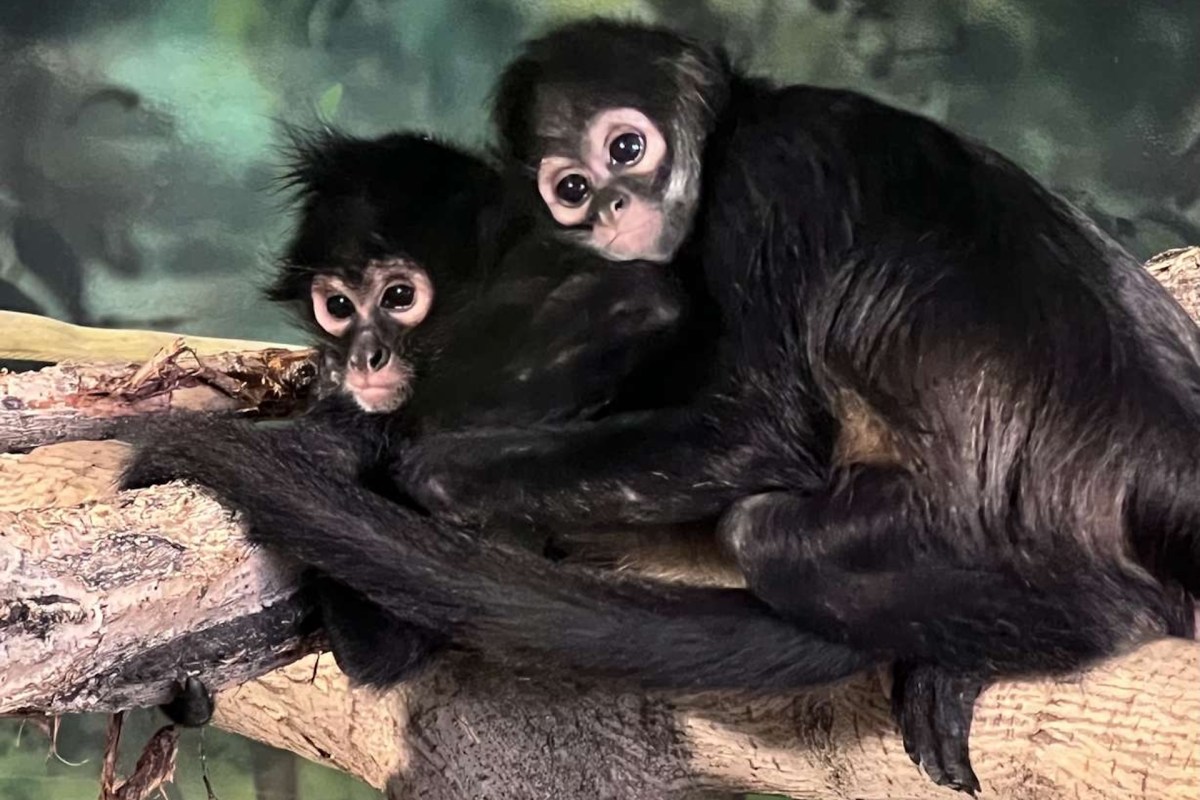
At Utah's Hogle Zoo, two trafficked baby spider monkeys are getting a fresh start after being confiscated from wildlife traffickers at the U.S. border. Initially transferred from a Texas zoo, the monkeys offer a small but powerful glimpse of what recovery can look like: not just survival, but safety, social connection, and a permanent home.
Here's what to know
According to KSL, Romina, believed to be about 2, and Eve, believed to be about 1, are now in the care of Hogle Zoo.
The Association of Zoos and Aquariums' spider monkey species survival plan placed them in Utah, while the Wildlife Confiscation Network helped connect the confiscated animals with a facility equipped for their specialized care.
Clair Hallyburton, Hogle Zoo's associate director of animal care, said the Texas zoo handled the most urgent phase of the rescue.
"Our colleagues at the Gladys Porter Zoo performed the initial round-the-clock work required to save these infants immediately following their confiscation at the border, treating their initial trauma, medical needs and hand-rearing them. Our role now is to welcome them into their permanent home, integrate them into an appropriate social troop and ensure they continue to thrive," Hallyburton said.
Now living in the zoo's Primate Forest habitat, the young monkeys have begun introductions with resident spider monkeys Lemon and Ebony as staff work to establish the stable social group these highly social animals require.
TCD Picks » Quince Spotlight
💡These best-sellers from Quince deliver affordable, sustainable luxury for all




More background
Romina and Eve arrived as infants after being taken from traffickers, and their behavior still reflects that trauma.
Hogle Zoo said Romina and Eve have responded differently as they adjust to their new surroundings.
"Romina is described as showing more confidence than Eve. She's often first to investigate her environment with curiosity and even a little mischief. Eve is more reserved and prefers spending time in the tallest parts of her habitat, carefully observing everything," Hogle Zoo said in a statement.
That coordination allows specialized institutions to share the burden of rehabilitation rather than leaving traumatized animals in temporary holding situations that may not meet their social and medical needs.
What's being done?
First, keepers focused on helping the young monkeys feel secure in their new environment. That trust-building work involved getting Eve and Romina comfortable taking food from their hands and learning how to move through unfamiliar spaces.
After the pair settled in further, staff changed the habitat to better encourage climbing and other natural movement.
"Once that bond formed, the pair felt confident enough to begin exploring their new indoor spaces. The team also added more perching options so the monkeys can climb higher, along with additional vines that encourage them to move through their habitat in ways that reflect their natural behaviors," Hogle Zoo said.
Only then did the zoo move to a "howdy" introduction, placing the newcomers beside Lemon and Ebony with mesh between them so the monkeys could adjust to each other's presence before direct contact.
Hogle Zoo said the process has advanced to the point that all four spider monkeys now share indoor spaces and show positive interactions.

Get TCD's free newsletters for easy tips, smart advice, and a chance to earn $5,000 toward home upgrades. To see more stories like this one, change your Google preferences here.






