


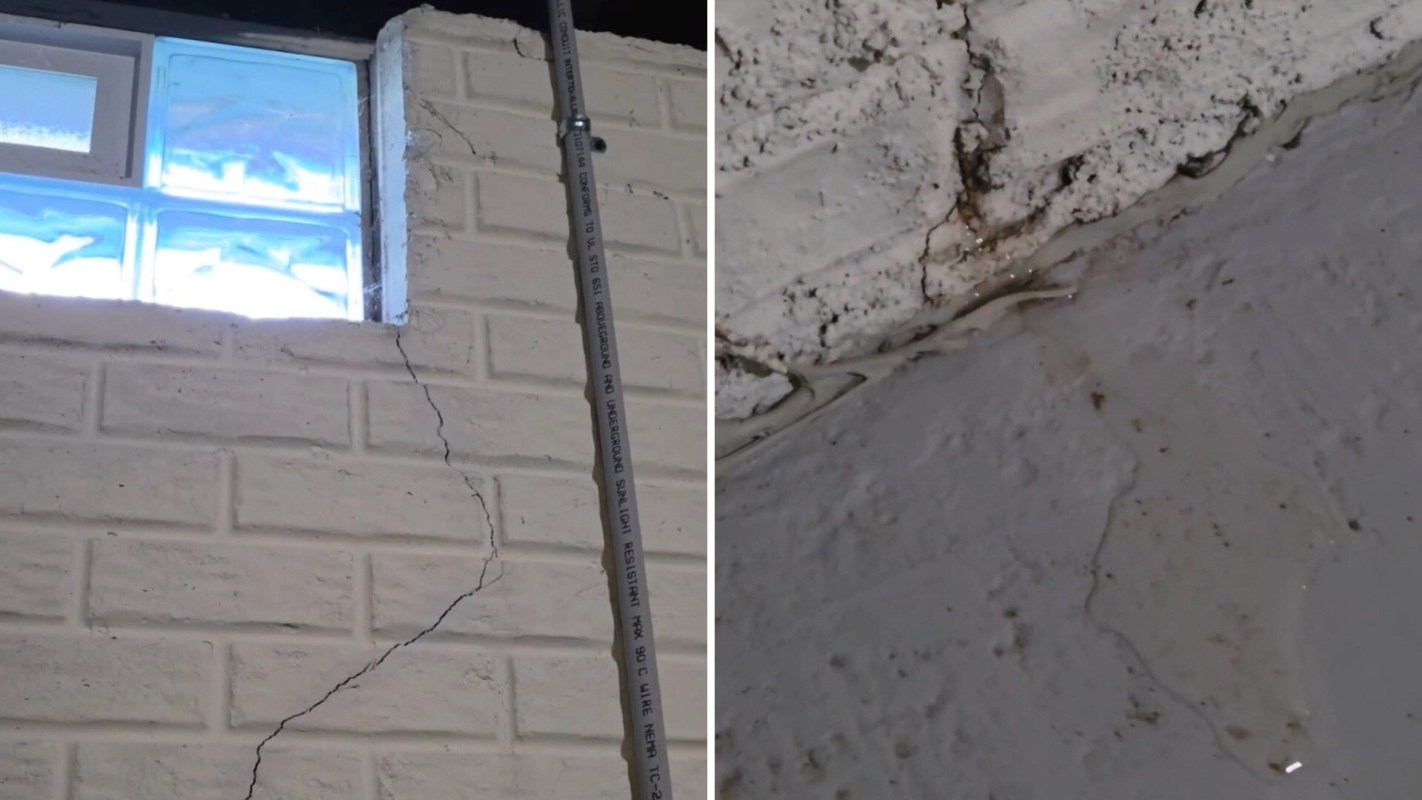
A plan to finish a basement was put on hold after a homeowner said a hose test caused water to appear through cracks in a poured foundation wall almost immediately.
The seepage was limited but still enough to stop the family from installing carpet and moving ahead with the project.
Here's what to know
On Reddit, the homeowner said the problem had been lingering. The cracks were already visible during a home inspection, but they were described as normal settling.
The original poster put the cracks to the test. They set a hose against the foundation and saw "water coming in through some cracks in the basement."
They said several usual suspects for such cracks had already been checked and eliminated as the source of the leak: the gutters were clean and connected, the sump pump was working, the grading was not sloping toward the house, and a damaged section of exterior drain pipe crushed by a tree had been replaced after a camera inspection.
"We want to finish our basement and can't do that until we solve this issue," they wrote.
TCD Picks » Quince Spotlight
💡These best-sellers from Quince deliver affordable, sustainable luxury for all




(Click here to watch the embedded video if it doesn't appear.)
With those first suspects ruled out, the homeowner was left considering more expensive proposals, including an interior waterproofing setup with a new perimeter drain and wall system, as well as options like carbon fiber straps.
They also said there was no standing water, which pushed attention back toward the foundation cracks themselves.
What can be done?
A number of commenters said the priority should be stopping water before it gets into the wall at all.
Responses in the thread largely broke into two very different cost levels.
One commenter suggested, "Exterior waterproofing of the basement walls. This requires the whole exterior to be excavated to well below the footers, French drain installed, rubber membrane entire exterior basement wall, etc."
The OP responded, "While I was afraid this would be the answer, it's the one that makes the most sense to me. Because it solves the problem of water getting in. I feel like interior waterproofing isn't solving that problem."
"Interior waterproofing is a bandaid," another commenter added.
One person suggested a lower-cost DIY option. First, they said to call the relevant utility providers to check whether any lines were buried underground. If the area was clear, they said the OP should dig down to the leaking crack from outside, clean and widen it, then seal and patch it.
Another commenter shared, "We had some cracks leak; structural engineer deemed not structural and to either diy inject them with a [Polyurethane injection] kit or find an honest contractor."
"I would spray the hell out of the siding with flex seal, but I'm also an idiot," one Reddit user joked.
The clearest theme in the replies was that the fix should focus on keeping water away from the foundation, not just handling it once it reaches the basement.

Get TCD's free newsletters for easy tips, smart advice, and a chance to earn $5,000 toward home upgrades. To see more stories like this one, change your Google preferences here.






