


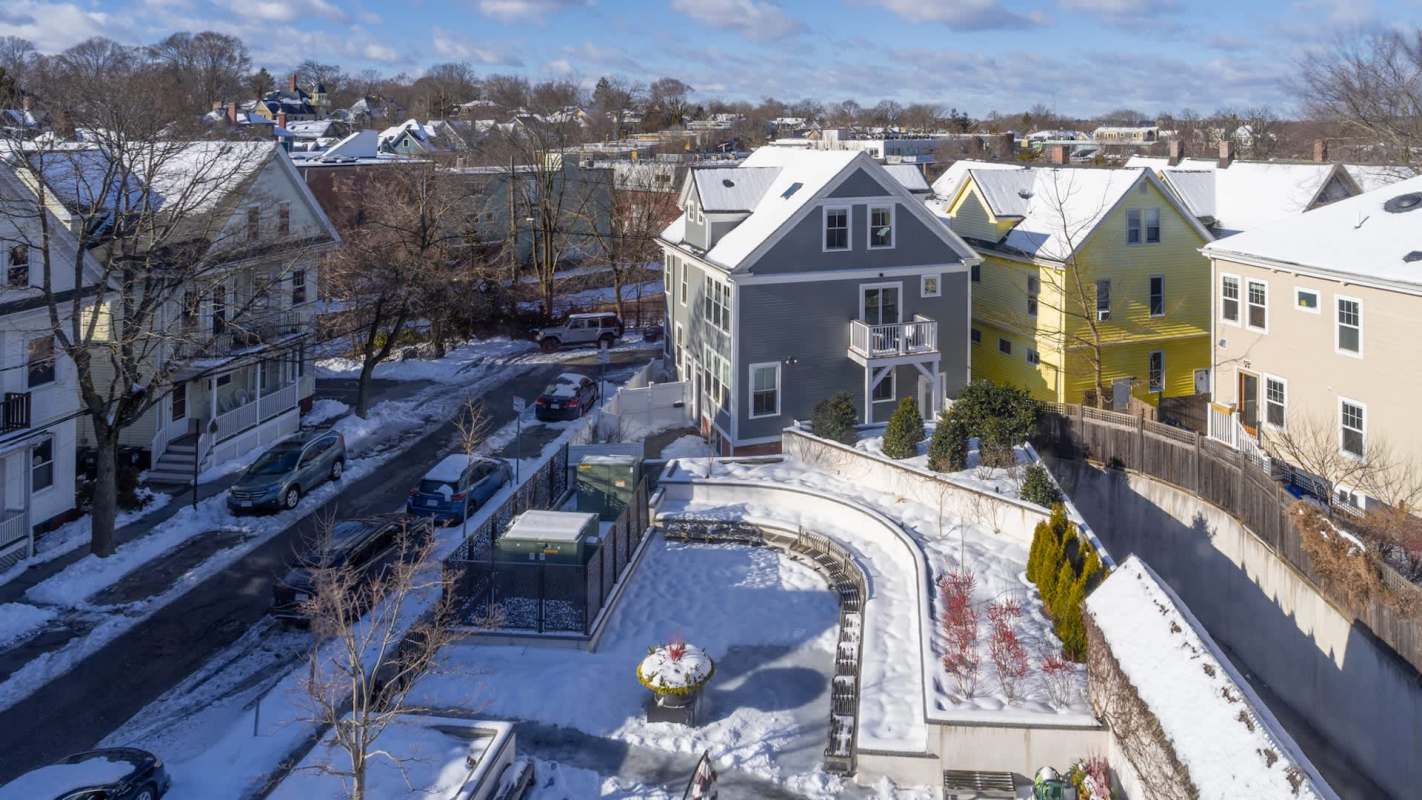
Somerville, Massachusetts, has long embraced both triple-deckers and accessory dwelling units as practical ways to make housing more attainable.
But a quirk in the state's updated accessory dwelling unit rules could force the city to allow something far stranger: three-story backyard homes that function like tiny triple-deckers.
Here's what to know
Since 2025, Massachusetts has required municipalities to permit accessory dwelling units in areas zoned for single-family homes, so long as the units satisfy state standards.
Somerville's zoning makes the issue more complicated: the same districts permit duplexes and triple-deckers, which city officials said could mean an accessory dwelling unit in the rear yard qualifies for the height and story allowances that apply to a triple-decker, The Boston Globe reported.
Officials became more alarmed after the Massachusetts Executive Office of Housing and Livable Communities released an FAQ stating that if the main building is a triple-decker, the accessory dwelling unit must get the least restrictive dimensional rules available to that housing type within the district.
To Ben Ewen-Campen, a Somerville city councilor, that reading of the law did not seem to match what legislators meant to authorize.
TCD Picks » Quince Spotlight
💡These best-sellers from Quince deliver affordable, sustainable luxury for all




"The state has created a situation where by right you can put a miniature triple-decker behind every triple-decker," he said. "I just can't believe that was the legislative intent."
State rules still limit an accessory dwelling unit to 900 square feet and require it to remain a single dwelling rather than being divided into multiple apartments or condos. Somerville officials nonetheless said those limits may still leave room for a slim building spread across three stories.
More background
City leaders said this is not just a theoretical concern, because they have already watched backyard-housing rules drift beyond the modest use they were supposed to serve.
In 2019, Somerville allowed "backyard cottages" at just under 600 square feet and up to one-and-a-half stories, envisioning them as small homes for aging family members or a source of limited rental income.
Developers sometimes sidestepped those restrictions by elevating basements by as much as six feet, creating structures that read more like two-and-a-half-story single-family houses. According to online real estate listings cited by the Globe, some reached nearly 1,800 square feet and later sold as condos for over $1.3 million.
That illustrates how zoning loopholes can shift a housing measure away from affordability and toward maximizing size and sales price. Instead of yielding modest units that help households remain in an expensive community, the outcome can be disputes over backyard bulk, privacy, and cost.
Mayor Jake Wilson said a repeat of that pattern could undercut housing progress in a city that is already trying to build more. He argued that support for broader reform becomes harder to sustain when state requirements appear out of sync with on-the-ground neighborhood conditions.
What's being done?
Wilson and other city officials have looked at local changes that would lower the square-footage ceiling for these backyard units to push projects back toward the smaller and more functional homes residents were initially promised.
Senator Patricia Jehlen, who represents Somerville and voted for the accessory dwelling unit law, said the state's current reading of the measure deserves another look.
"I think [the state office] should change their regs and follow the law," she noted.
The state housing office disagreed that the situation is likely to produce a wave of outsized backyard buildings. A spokesperson for the state housing office said, "Three-story accessory dwelling units are highly unlikely given state size limits, building requirements and construction costs."
The spokesperson said the state had approved nearly 2,100 accessory dwelling unit permits since January 2025, and zero were three stories.
Wilson said the dispute also reflects a larger statewide imbalance: suburbs resisting additional housing, followed by state-imposed rules that become more rigid and less tailored. In his view, that approach can fit poorly in a place like Somerville, which is already adding homes.
Wilson urged, "We need to get this right and make sure that we're ending up with zoning that actually makes sense for our city and leads to the kind of outcomes that we're looking for, which I would say would not be gigantic houses in people's backyards."

Get TCD's free newsletters for easy tips, smart advice, and a chance to earn $5,000 toward home upgrades. To see more stories like this one, change your Google preferences here.






