


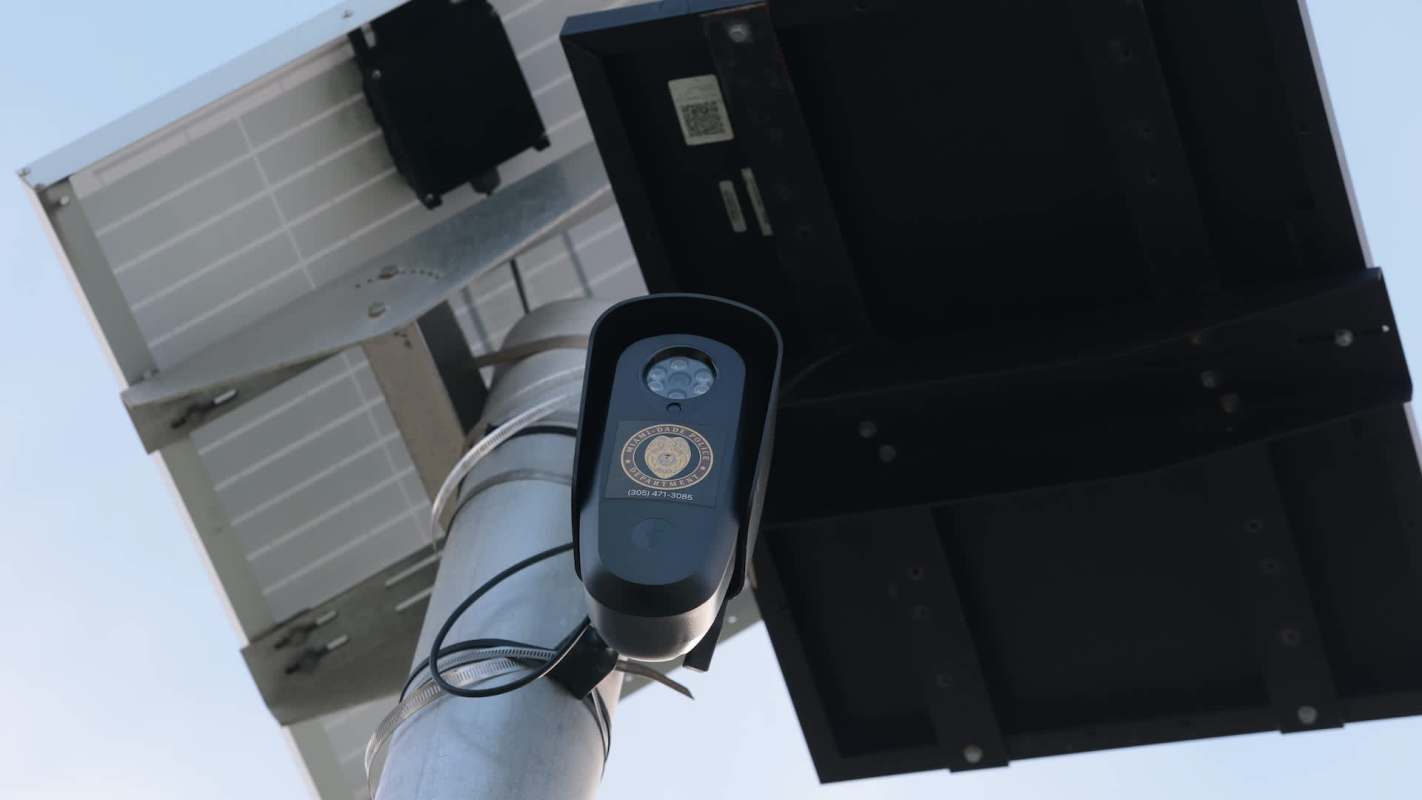
Charles Brownlee is using a federal appeal to challenge his 60-year armed robbery sentence, arguing that police should not have been able to use Flock cameras to reconstruct his travel around the Dallas-Fort Worth area.
The case could become a major test of whether AI-powered license plate readers have advanced faster than Fourth Amendment protections against unreasonable searches.
Here's what to know
According to The Texas Tribune, investigators connected Brownlee to five 2024 armed robberies in North Texas by using Flock data to assemble what his lawyers described as a "pattern of life." His attorneys say this kind of after-the-fact tracking should require a judge-signed warrant.
At an Oct. 5 hearing, Brownlee's lawyer, Matthew Wright, told the 5th U.S. Circuit Court of Appeals that the Flock system gives officers surveillance capabilities beyond anything earlier policing tools offered.
"No mortal human has ever possessed" such an ability to effortlessly and immediately reconstruct any person's movements, Wright said, per the Tribune, later adding, "I'm not sure that the full capabilities of these systems have been either revealed or litigated."
Flock stores data on vehicles that pass roughly 13,000 cameras across Texas, and police can search that database without first getting a warrant. Before trial, Brownlee asked U.S. District Judge Terry Means to suppress the evidence, but Means denied the request; Brownlee was convicted, and the appeal followed.
TCD Picks » Quince Spotlight
💡These best-sellers from Quince deliver affordable, sustainable luxury for all




More background
A March decision from the 5th Circuit found no Fourth Amendment problem with a Mississippi case involving a single Flock camera, saying one camera could not capture "the whole of an individual's physical movements." But the court also acknowledged that stored camera data can be used later to reconstruct where someone has been.
Brownlee's attorneys contend the search in his case was far more sweeping. Wright said investigators found, within "two and a half hours," "literally a needle in a haystack," even though they "didn't even know the needle they were looking for when they started looking," according to the Tribune.
They also argued that in a place like Dallas-Fort Worth, where daily life often depends on driving, avoiding road-based tracking can be harder than going without a cellphone.
What's being done?
Another issue before the court is whether Brownlee can challenge the search at all, because Justice Department attorney Michael Weisbuch said the database search involved Brownlee's sister's car and Brownlee was only a passenger. Prosecutors also told the court that traditional surveillance footage and cellphone data helped identify him, not just Flock records.
The case is unfolding as some Texas Republicans call for new limits on the cameras. Brenham Sen. Lois Kolkhorst said she intends to introduce legislation in the 2027 session targeting the largely unregulated systems, and wrote in an op-ed shared on social media, "My legislative actions on this issue will be founded in the Fourth Amendment," the Tribune reported. McKinney U.S. Rep. Keith Self has also backed a proposal that would require federal agencies to secure warrants before using Flock data.
An Oklahoma decision issued Oct. 1 could strengthen that push. U.S. District Judge Sara Hill suppressed drug evidence after a Tulsa County sheriff's officer used Flock records to track Melisa Kyle's trips between Missouri and California, saying the officer searched the car "for no apparent reason other than the fact that it had a California license plate," per the Tribune.
The 5th Circuit has not set a timetable for its ruling. According to the Tribune, during arguments, Chief Judge Jennifer Walker Elrod said, "We're trying to figure out whether or not we're there [in the Brownlee case], and when is the tipping point."

Get TCD's free newsletters for easy tips, smart advice, and a chance to earn $5,000 toward home upgrades. To see more stories like this one, change your Google preferences here.






