


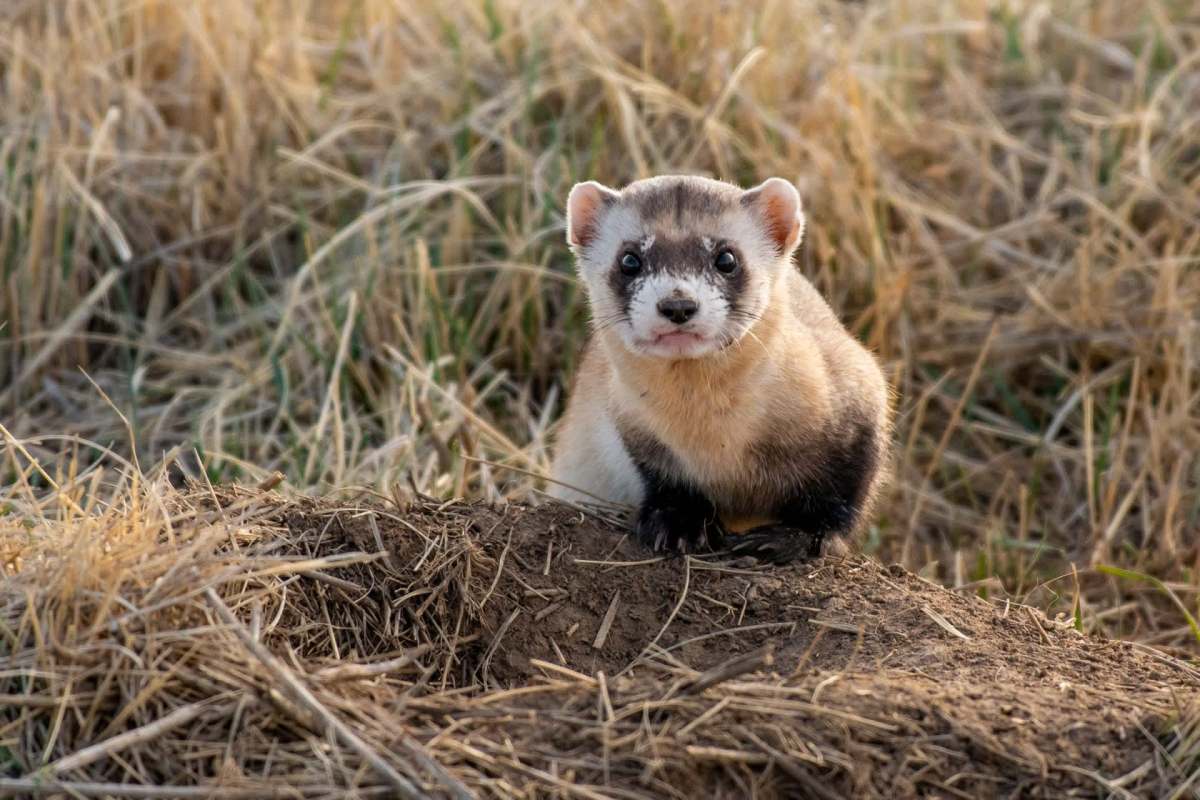
A late-August survey found no black-footed ferrets in the Wyoming foothills near Meeteetse, where the species' comeback began after the animal was presumed extinct — a grim development for ranchlands long linked to one of North America's most precarious wildlife recoveries.
Here's what to know
According to WyoFile, wildlife crews logged "a couple hundred hours" searching about 4,000 to 5,000 acres in the Meeteetse reintroduction area and found no ferrets. The result sharpened concern that the reintroduced population there may have collapsed.
By 2025, only a single ferret had been documented in the area, and the decline had been unfolding for years. Sylvatic plague struck the region in 2018 and 2019, leaving just one confirmed ferret by 2020. Managers then tried to rebuild with captive-raised releases, including 18 animals in 2022, before plague returned in 2023.
Allen Hogg, a Meeteetse rancher whose family property is closely connected to the ferret's history, said the news was painful. "I'm really disappointed, of course," Hogg told WyoFile. "They might be gone. But just because they didn't find them doesn't mean they're not there, either. I'm not saying all hope is lost."
More background
A major concern is what drought has done to prairie dogs, the black-footed ferret's main prey, across a working landscape shared by wildlife and livestock.
"We've heard a lot about deer, elk, pronghorn, and cattle having hard times," Andy Gygli, a small carnivore biologist with the Wyoming Game and Fish Department, said, according to WyoFile. "It's the same with our other herbivores. Prairie dogs also have to eat, and lack of [vegetation] coverage can result in low recruitment, which can result in downstream effects."
TCD Picks » Quince Spotlight
💡These best-sellers from Quince deliver affordable, sustainable luxury for all




After the 2023 plague outbreak, the Game and Fish Department found only about 3,800 active acres of prairie dog colonies around Meeteetse. Around the time of the 2016 ferret reintroduction, that total was over 6,000 acres. Gygli also said prairie dog densities per acre are low, reducing the food supply for any ferrets that may still be present.
The same drought-related pressure has shown up elsewhere. Citing biologist Travis Livieri, WyoFile reported that weaker prairie dog reproduction cut the South Dakota Conata Basin/Badlands population — the largest wild group of black-footed ferrets — from 250 to 70 from 2024 to 2025.
Meeteetse became central to the species' modern rescue after Hogg's parents' blue heeler brought home a dead ferret 45 years ago, leading biologists to more than 100 others on and near the family ranch. That rediscovery helped save the species; by early 1987, only 18 black-footed ferrets remained in the world.
What's being done?
Managers are giving the area breathing room. According to WyoFile, Gygli redirected 10 captive-raised ferrets planned for Meeteetse to Shirley Basin, another Wyoming site with a stronger track record. The goal was to avoid adding predation pressure on the already stressed prairie dog population.
"There are prairie dogs there. They just need some time and some good conditions to come back," Gygli said, per WyoFile. "Rodents reproduce. That's part of their strategy — they reproduce really quick."
Wildlife officials are also continuing plague treatments across the landscape by applying prophylactic insecticide to kill fleas. Crews treat 4,000 acres a year for $100,000, with most of that funding covered by the Bureau of Land Management.
Managers may deliberately leave Meeteetse without ferrets while prairie dogs recover. Gygli said the best-case scenario would be enough recovery to support another release in 2027, even as retired Game and Fish Nongame Wildlife Supervisor Bob Oakleaf has questioned whether the area can support a ferret population.
"This is a place that we're going to continue to work on," Gygli told WyoFile. "It's the place where ferrets persisted."
Where can I learn more?
For a closer look at how wildlife agencies and researchers handle recoveries, reintroductions, and setbacks, these stories follow similar efforts to rebuild fragile populations.
• In Colorado, lawmakers advanced the best chance of restoring wolverines to the state's high country.
• In California, researchers said an iconic predator could return after a century of absence.
• In Illinois, experts reintroduced herds of a threatened species after a 200-year absence.

Get TCD's free newsletters for easy tips, smart advice, and a chance to earn $5,000 toward home upgrades. To see more stories like this one, change your Google preferences here.







