


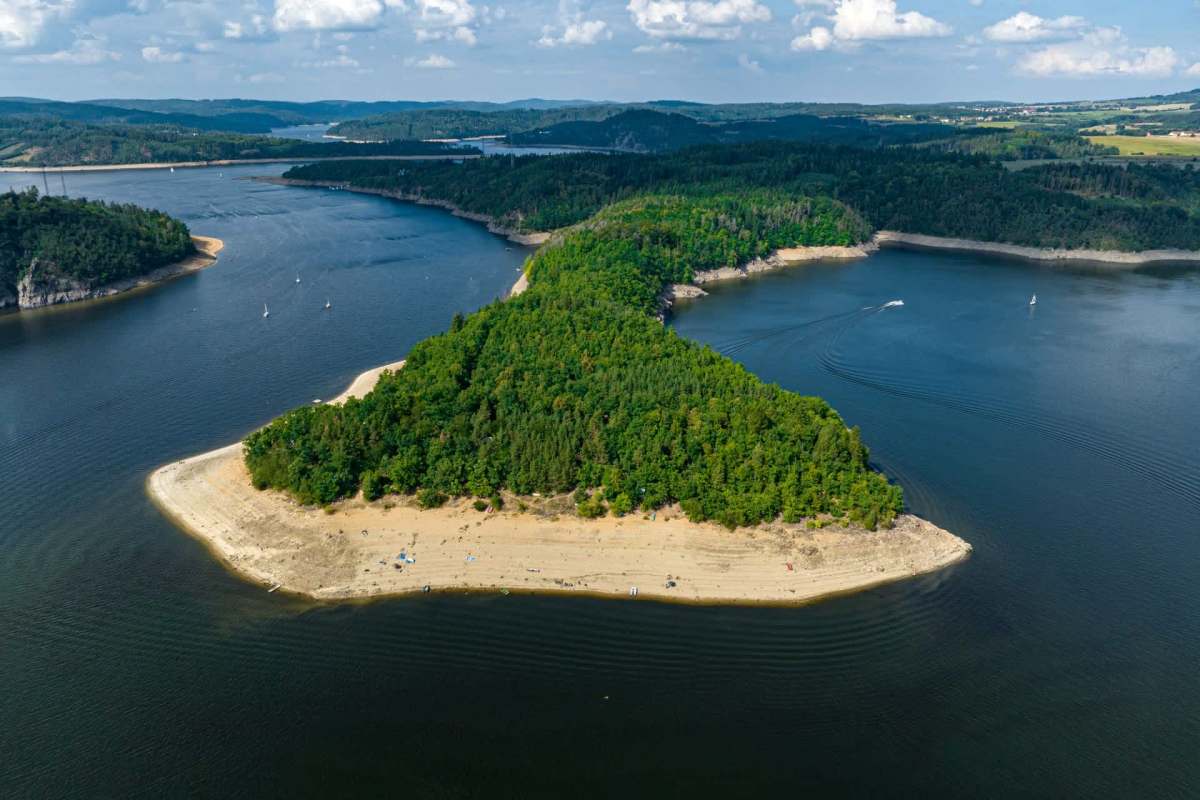
Drought has lowered the Orlík reservoir enough that the area beneath Czechia's Podolský Bridge is no longer fully underwater. As a result, visitors can now see old house foundations, forgotten roads, and traces of a river crossing that vanished beneath the water decades ago.
These remains trace the footprint of a community lost when the Vltava valley was flooded to create one of Czechia's biggest reservoirs.
Here's what to know
As Expats.cz reported, a dry summer pulled back the shoreline, uncovering traces of former communities alongside old weirs, industrial ruins, and wartime defenses. Water levels at Orlík were about 49 feet (15 meters) below normal.
People visiting Podolsko can now walk across ground that had been underwater for decades. Building foundations show where families once lived, and old roads are again visible across the site beside the Vltava.
The low reservoir has also brought back signs of an older crossing. The chain bridge once near Podolsko was taken down and reassembled across the Lužnice River, where it now stands as the Stádlec Bridge, and traces of its original site at Orlík have resurfaced.
A historical account from iDNES.cz put the toll at around 1,600 displaced people and between 500 and 600 buildings in the flooded area, many of which were demolished before the valley was filled.
TCD Picks » Quince Spotlight
💡These best-sellers from Quince deliver affordable, sustainable luxury for all




More background
Falling water has exposed evidence of a settlement beneath Zvíkov Castle, the base of a former hotel near Červená nad Vltavou, and what was once a hydroelectric plant that powered the Protivín brewery.
The newly exposed landscape shows how drought can uncover buried history while also signaling stress in the water systems people rely on for daily life, industry, and river management.
Prolonged drought in the Vltava basin reduced stored water in a major reservoir. That put greater pressure on downstream river flow and reservoir management.
Climate-linked extremes don't arrive only as floods or storms. Long dry periods can reshape entire landscapes, expose settlements submerged for generations, and force officials to make difficult decisions about how much water remains available.
What's being done?
Orlík helps keep water flowing downstream during dry spells, releasing stored supply when natural inflow runs short. As its level dropped, officials began tapping reserves at the Slapy reservoir to keep that system working.
On October 7, officials in Central Bohemia declared the Vltava and Elbe region in a water shortage, a step meant to manage the dwindling supply more carefully.
Officials also cleared the way to cut the minimum flow at Vrané, from 1,236 cubic feet per second (35 cubic meters per second) down to as low as 706 cubic feet per second (20 cubic meters per second) should conditions call for it. The Agriculture Ministry framed the move as a way to buy time for Slapy and Orlík until rain arrives.
As of that announcement, permitted water users faced no new restrictions, with the response focused on reservoir operations and flow management rather than wider limits on approved use.
The drop also shows how much water has already been drawn down to keep the Vltava running, with the reservoir now about 49 feet (15 meters) below its normal level.

Get TCD's free newsletters for easy tips, smart advice, and a chance to earn $5,000 toward home upgrades. To see more stories like this one, change your Google preferences here.






