


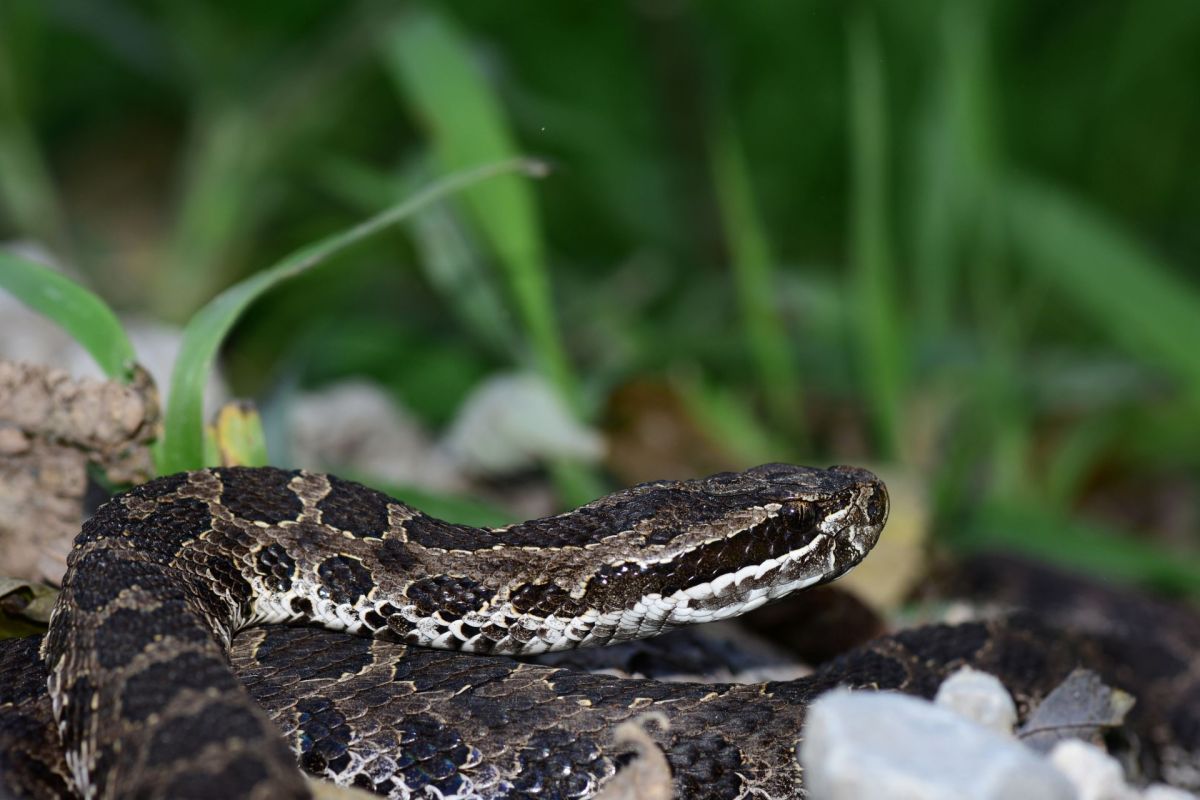
A toddler in Ontario is recovering after trying to pick up a rattlesnake at a family cottage and winding up in intensive care.
The 15-month-old, Wells Gladwish, needed treatment at two hospitals and 18 vials of antivenom after the bite.
Here's what to know
At his family's cottage in Cape Chin North on the Bruce Peninsula, Wells was bitten on the thumb while near a bonfire, CBC News reported.
Matt Huggett, his father, said the toddler came across a snake and reached for it. Within roughly five minutes, the boy's thumb had started to turn white.
After the family rushed Wells to Lion's Head Hospital, staff made multiple attempts to place an IV before giving a test dose and then 10 vials of antivenom.
A family member's photo was used to identify the snake as an eastern massasauga rattlesnake, Ontario's only venomous snake species.
TCD Picks » Quince Spotlight
💡These best-sellers from Quince deliver affordable, sustainable luxury for all




An emergency discussion involving doctors and toxicology specialists led to the decision to transfer Wells to Victoria Hospital at London Health Sciences Centre for more treatment.
With the Ornge air ambulance transfer delayed, a nurse pressed for Wells to receive the hospital's remaining four vials and to continue to London by land ambulance.
More background
Dr. Rishi Ganesan, a pediatric critical care physician at London Health Sciences Centre's Children's Hospital, said his team does not stock antivenom in London. Additional doses had to be sent from the Toronto area with a police escort before Wells arrived.
Ganesan said that even after 10 years in Canada, he had never previously treated a venomous snakebite, though the eastern massasauga is native to parts of Ontario.
By the time his care in London was complete, Wells had received two more double doses, bringing the total to 18.
Ganesan told CBC News that eastern massasaugas generally avoid people and most often bite only when they are provoked, attacked, or stepped on by accident.
What can be done?
Ganesan told CBC News that anyone bitten by a rattlesnake should call 911 immediately because people at the scene cannot know whether venom was injected.
According to CBC News, antivenom is based on the amount of venom delivered rather than the patient's size, although children can become seriously ill faster because the same venom has a greater effect relative to their body size.
Doctors monitored Wells for swelling and for changes in blood tests because venom can injure tissue, disrupt clotting, and reduce blood flow to a limb.
After he was discharged and returned home to Sarnia, the family also kept watching for serum sickness, a delayed reaction to antivenom.
Ganesan said that in Massasauga habitat, people should watch where they step, avoid putting their hands into hidden spaces, and leave snakes alone.
According to CBC News, Wells appears to be using his thumb normally, though a blister remains at the bite site.
Ganesan said, "With timely care, full recovery is a normal outcome in these situations. The danger is actually the delay, not the snake."

Get TCD's free newsletters for easy tips, smart advice, and a chance to earn $5,000 toward home upgrades. To see more stories like this one, change your Google preferences here.







