


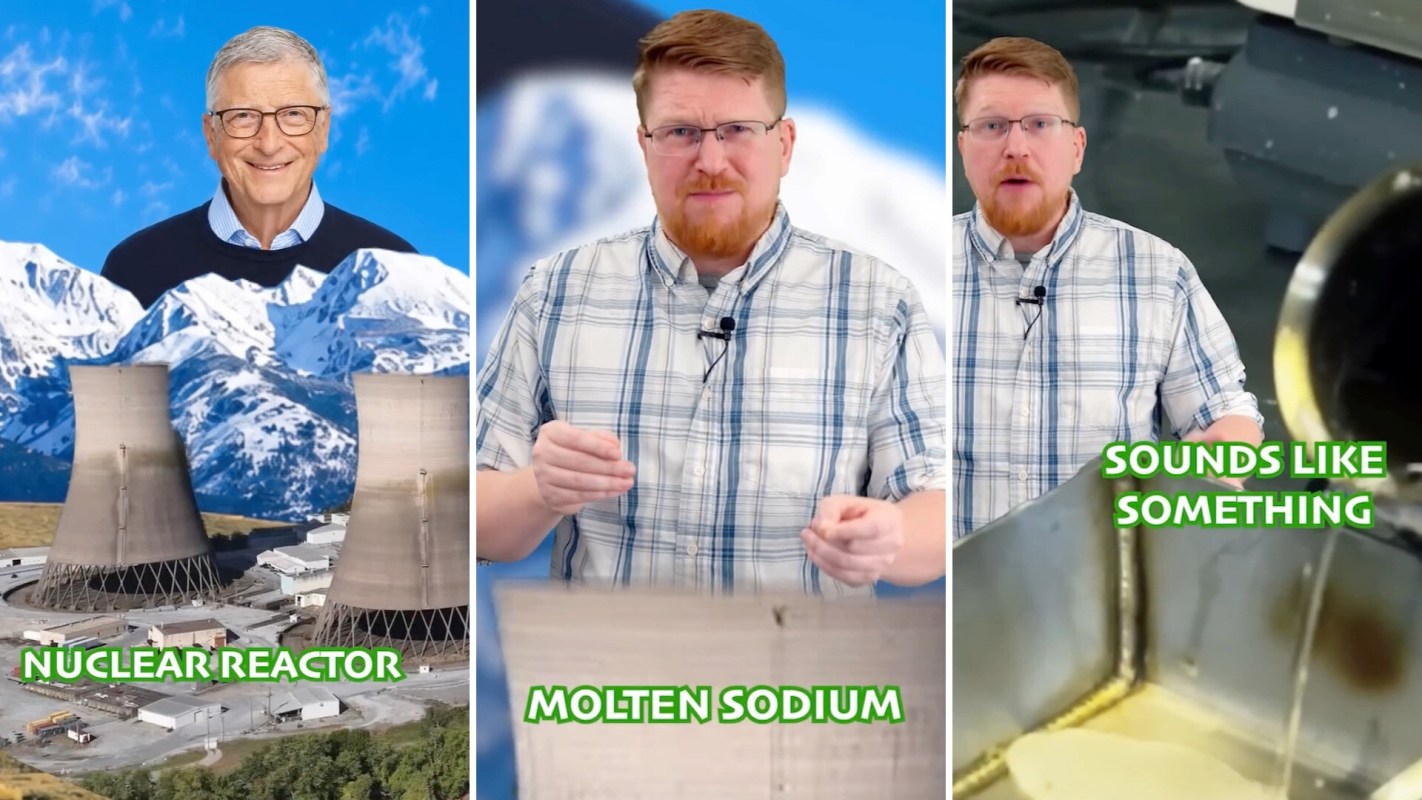
Bill Gates, the billionaire behind TerraPower, is backing a reactor design built around molten sodium. That is raising eyebrows because liquid sodium reacts violently with water.
Here's what to know
As described in a YouTube video hosted by Justin Pack of EcoBits (@EcoBitsOfficial), TerraPower is developing a nuclear reactor that would use liquid sodium, not water, as its coolant.
Because sodium does not boil until about 1,616 degrees Fahrenheit, the reactor could operate at high temperatures without the extreme pressurization conventional U.S. water-cooled reactors use to keep their coolant from boiling.
That coolant choice cuts both ways, Pack explains. TerraPower says the lower-pressure approach could allow simpler cooling and safety systems than conventional reactors, but sodium is also highly reactive and can ignite when it touches water, so the same characteristic that may ease one part of the engineering brings its own safety concerns.
Its planned output would not be fixed, either. The plant is expected to produce about 345 megawatts most of the time, then rise to roughly 500 megawatts for several hours by storing extra heat in large molten sodium tanks.
In practice, that would let the reactor increase supply when demand jumps or when wind and solar generation falls.
TCD Picks » Quince Spotlight
💡These best-sellers from Quince deliver affordable, sustainable luxury for all




More background
What sets TerraPower's concept apart is not only the coolant choice, but also the role the reactor is meant to play on the grid.
Conventional nuclear stations usually deliver a steady stream of electricity, whereas this sodium-based system is intended to vary its output by saving heat and using it later. The idea isn't to replace wind and solar, but to make nuclear power better suited to an electric grid increasingly reliant on those sources by helping cover their gaps.
When weather changes cut renewable generation, grids need dependable backup. By storing heat in molten sodium tanks and then using it to boost output for several hours, this kind of reactor could help manage those swings without relying as heavily on fossil-fuel plants during shortfalls.
Nuclear power can deliver large amounts of low-carbon electricity, but it also comes with longstanding concerns over radioactive waste, accident risk, high upfront construction costs, and links to weapons proliferation.
A YouTube commenter expressed optimism on this front.
"He's spending billions researching future energy tech so I'd venture to guess it's gonna be safe enough," they wrote. "Or at least as safe as can be expected."
TerraPower's sodium design does not erase those concerns, though it aims to address one practical challenge of how to make nuclear energy work more smoothly alongside renewables.
What's being done?
TerraPower's answer is to redesign both the reactor and the storage system around molten sodium.
The plant would replace the high-pressure water systems used in traditional reactors with a liquid metal that stays stable at much higher temperatures, potentially reducing the complexity of conventional cooling.
Flexibility is also being built into how the plant would run. Instead of delivering the same amount of electricity at all times, the reactor is meant to store extra heat in large sodium tanks and turn that reserve into additional power when the grid needs it most.
Where can I learn more?
TerraPower's sodium-cooled reactor plan is one piece of a broader advanced-nuclear push.
• TerraPower and its partners are building a global nuclear supply chain for advanced reactors.
• Researchers have tackled corrosion with safer, scalable nuclear energy technology for molten-salt reactors.
• Startup Newcleo says high degree of inherent safety can reshape future nuclear plants.
• In China, engineers are testing the world's first meltdown-proof plant for low-carbon power.

Get TCD's free newsletters for easy tips, smart advice, and a chance to earn $5,000 toward home upgrades. To see more stories like this one, change your Google preferences here.






