


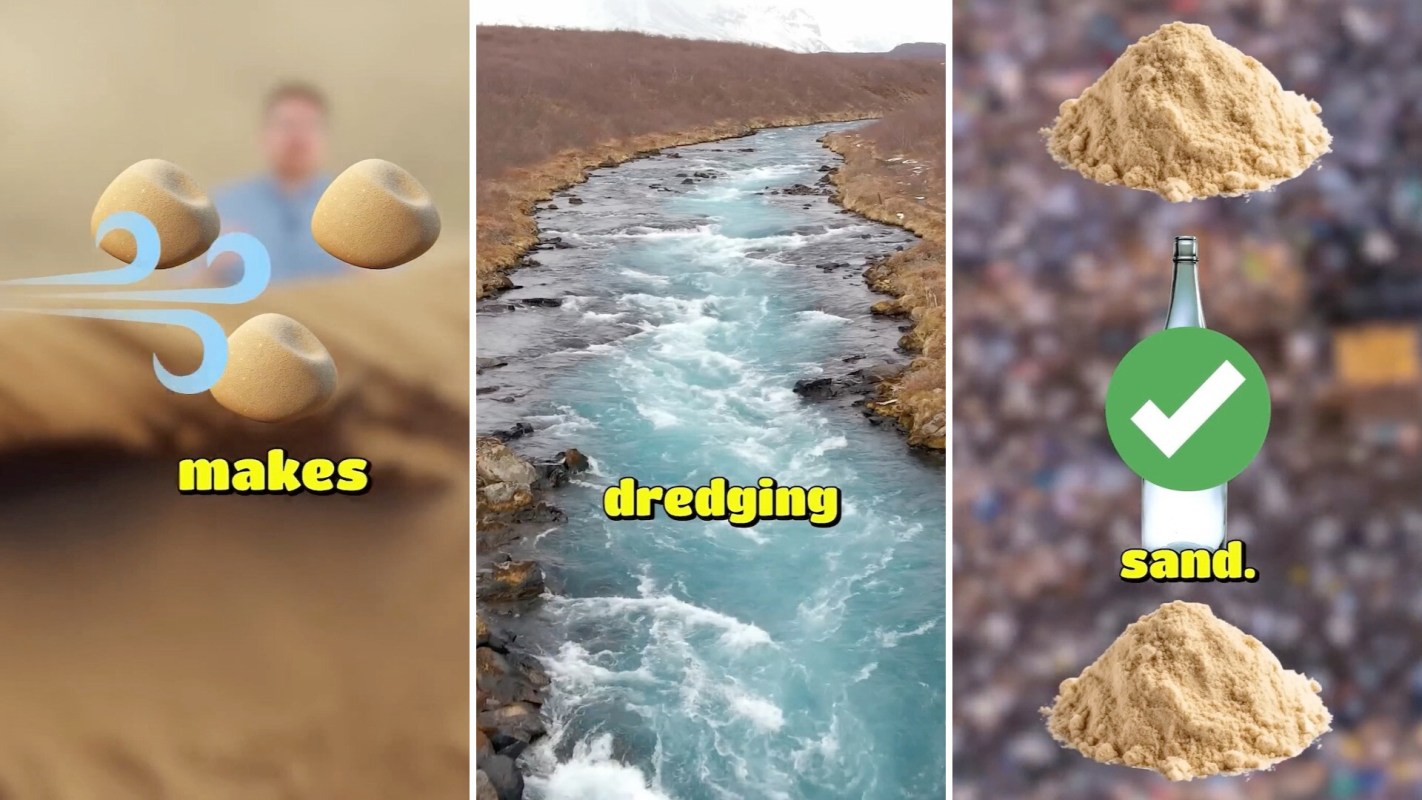
The world uses an astonishing 50 billion tons of sand every year, which is more than nature can replenish. One possible replacement is hiding in plain sight: the glass bottles people throw away.
Here's what to know
Eco Bits (@EcoBitsOfficial) explained in a YouTube short why sand is becoming such an unexpected pressure point. The issue is that not all sand works the same; modern projects depend on the right kinds of sand for things like concrete, roadbuilding, and coastline repair.
"We're running out of sand. I know, I know that sounds impossible because this exists," the host of the video said, pointing to an image of massive sand dunes.
As the creator explained, "Desert sand can't be used because wind erosion makes the grains too smooth, preventing them from interlocking." Because of that limitation, extraction often shifts toward rivers, beaches, and other ecosystems instead.
That puts sand just behind the top spot among the planet's most-used resources. The video said people use about 50 billion tons a year, faster than nature can replace it.
More background
The creator tied the shortage to a separate waste stream: "Millions of glass bottles are ending up being thrown away every year." Since glass bottles are made from sand, discarded containers can also be seen as a potential source of usable material.
TCD Picks » Quince Spotlight
💡These best-sellers from Quince deliver affordable, sustainable luxury for all




Commenters noted that many people are thinking about the economics.
One wrote, "Correction: we are running out of CHEAP sand that companies don't have to pay a lot for."
Another added, "You described down-cycling. It's cheaper to recycle old bottles than make more."
Those reactions do not resolve the debate, but they show how quickly a basic material can become both a consumer issue and a cost issue.
What's being done?
One example in the video focused on a business trying to make use of the waste. According to the video, Glass Half Full in New Orleans takes in discarded bottles and crushes them back into sand.
A bottle set aside for recycling could become a practical material again instead of ending up in a landfill. According to the creator, that recycled material can then be used in building, landscaping, disaster response, and coastal restoration.
It offers a direct path from household waste to projects communities actually need. That does not solve a 50-billion-ton problem on its own, and the video acknowledged as much.
In places with programs like Glass Half Full, old bottles can help replace at least some newly extracted sand while supporting local restoration and rebuilding efforts.
Still, the creator described it as a limited but worthwhile step: "It's not going to replace all of the sand the world uses, but it's a small step towards addressing a major environmental problem."
Where can I learn more?
You'll find more on the sand shortage, the damage caused by extraction, and efforts to turn waste into useful material in these articles.
• Around the world, illegal mining ravages rivers and coasts as builders chase usable sand.
• In India, old plastic toys become part of a home's structure.
• In Bangladesh, BRAC is turning river and beach litter into valuable material.
• In the U.S., only 5% is recycled, showing how weak the system remains.
• Across the U.S., recycling supports 603,000 local jobs alongside its environmental role.

Get TCD's free newsletters for easy tips, smart advice, and a chance to earn $5,000 toward home upgrades. To see more stories like this one, change your Google preferences here.






