


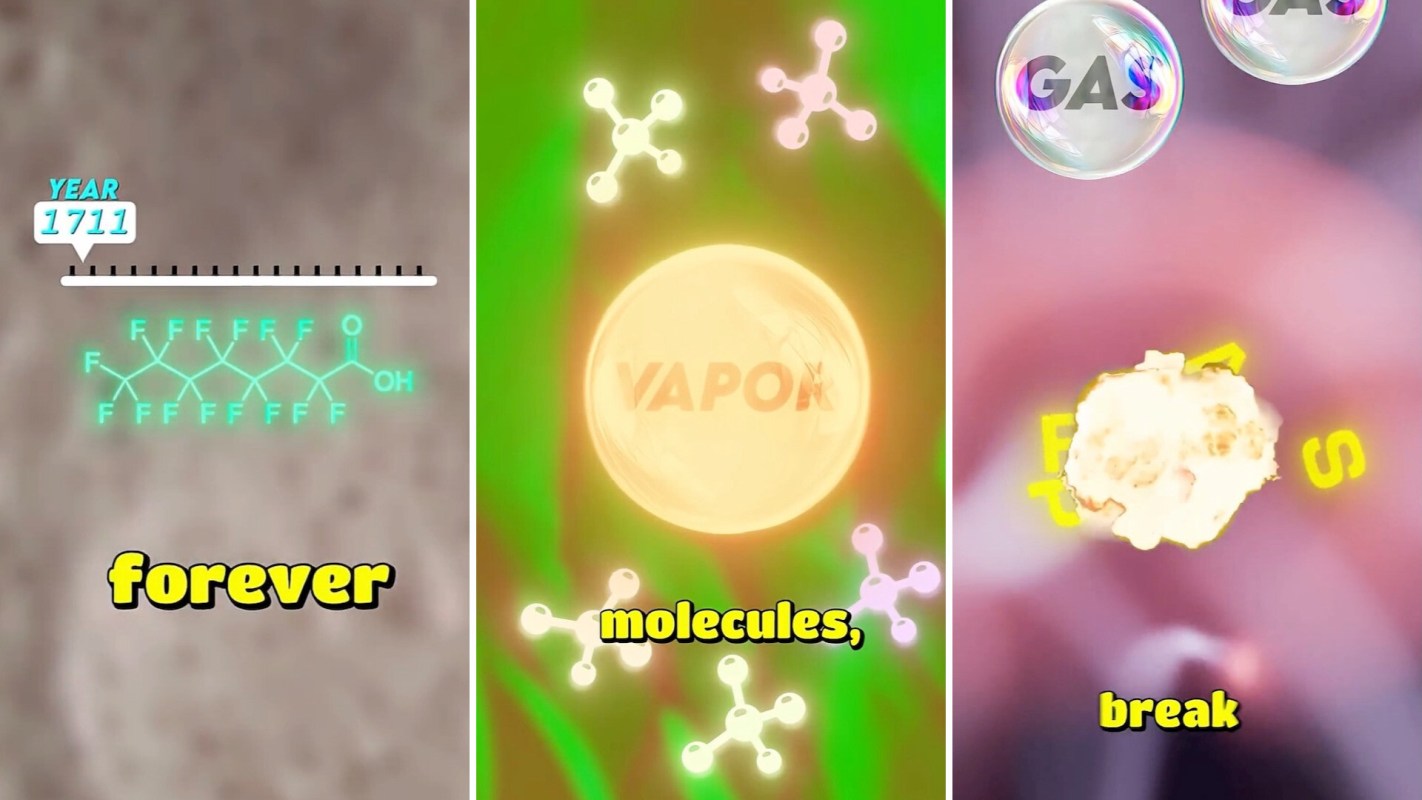
PFAS — the "forever chemicals" found in drinking water, wildlife, and human bodies — may no longer be beyond scientists' reach.
Here's what to know
A YouTube Shorts explainer outlines two promising techniques to get rid of forever chemicals and says PFAS are present in products including nonstick cookware, waterproof jackets, and firefighting foam. The same durability that makes PFAS valuable in those items is also what has allowed them to become persistent pollutants.
The creator behind Eco Bits (@EcoBitsOfficial) explained that one technique uses imploding vapor bubbles to create intense heat and reactive molecules that split PFAS apart, while the other combines cold plasma with rising gas bubbles that bring the chemicals to the surface for breakdown.
As the video puts it, "We can destroy forever chemicals." Without action, the video explains that PFAS "barely break down in nature" and can remain for decades or even centuries.
Viewers responded with optimism in the comments. One commenter called the development a "nice breakthrough," while another wrote, "Hell yeah."
More background
PFAS pollution is especially concerning because the chemicals have already been detected far beyond factory or disposal sites. Testing has identified them in drinking water, wildlife, and human blood.
TCD Picks » Quince Spotlight
💡These best-sellers from Quince deliver affordable, sustainable luxury for all




For people, PFAS have been linked to high cholesterol, an increased likelihood of high blood pressure, and a higher risk of certain cancers.
For contamination that can show up in water and living organisms, true chemical destruction would mark a bigger breakthrough than simply moving the substances from one place to another.
The creator noted, "It's still early research and there's a long way to go before we can use it large scale, but forever may not be forever after all."
Where can I learn more?
For more on how scientists and policymakers are tackling PFAS, these stories cover the science, risks, and policy response.
• At Purdue, engineers developed technology to eliminate hazardous chemicals from water.
• PFAS are used in many products yet linger for years in bodies and water.
• In the EU, officials pushed for a broad PFAS ban for common consumer products.
• Researchers have linked PFAS exposure to increased brain cell death, deepening health concerns.

Get TCD's free newsletters for easy tips, smart advice, and a chance to earn $5,000 toward home upgrades. To see more stories like this one, change your Google preferences here.






