


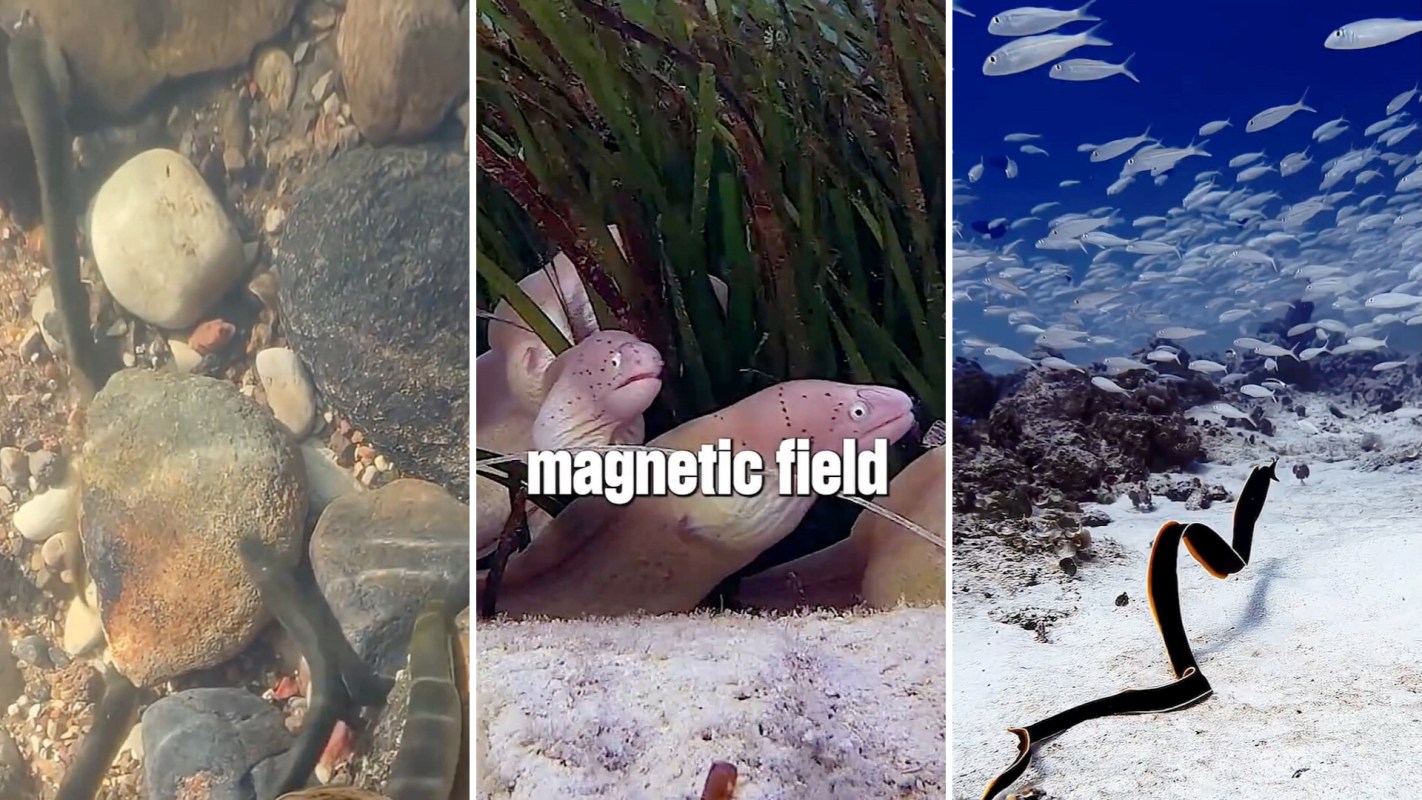
European eels swim more than 3,000 miles into the Atlantic to reproduce. Even after researchers traced part of that migration, they still have not found the species' exact nursery.
Here's what to know
An Eco Bit YouTube Short (@EcoBitsOfficial) describes a life cycle in which European eels stay in freshwater for most of their lives and then head into the ocean as adults. It says scientists have traced that migration toward the Sargasso Sea, which is widely viewed as the species' main spawning region.
Even with the destination narrowed to that part of the Atlantic, the video says that "scientists still haven't definitely pinpointed exactly where European eels reproduce."
The video says European eel populations "have declined dramatically" and suggests that understanding where and how the animals reproduce could be important to protecting them.
More background
Researchers have shown that adult eels can travel more than 3,000 miles across the Atlantic and use the Earth's magnetic field to navigate. For centuries, scientists did not know where adult European eels went after leaving inland waters, but that route is now better understood.
The life cycle still has a strange gap: adults leave freshwater and disappear into the ocean, and, as the video puts it, "Then years later, some teenage eels show up."
TCD Picks » Quince Spotlight
💡These best-sellers from Quince deliver affordable, sustainable luxury for all




Because European eels rely on both nearby freshwater ecosystems and faraway ocean habitat, filling in the remaining gaps could help shape efforts to conserve a species already in decline.
Where can I learn more?
These stories offer more context on the migration challenges and conservation questions surrounding eels and other migratory aquatic species.
• Mature "silvering" eels have been spotted in Cyprus, the easternmost confirmed reports of the species.
• In Japan, glass eel migration patterns are shifting, raising new concerns about survival.
• Across freshwater systems, migratory fish populations have plunged.
• Scientists warn migratory animals face rising risks as climate change disrupts long-distance travel.
• Portugal's Azores have expanded marine protected area networks across Atlantic waters critical to migration.

Get TCD's free newsletters for easy tips, smart advice, and a chance to earn $5,000 toward home upgrades. To see more stories like this one, change your Google preferences here.






