


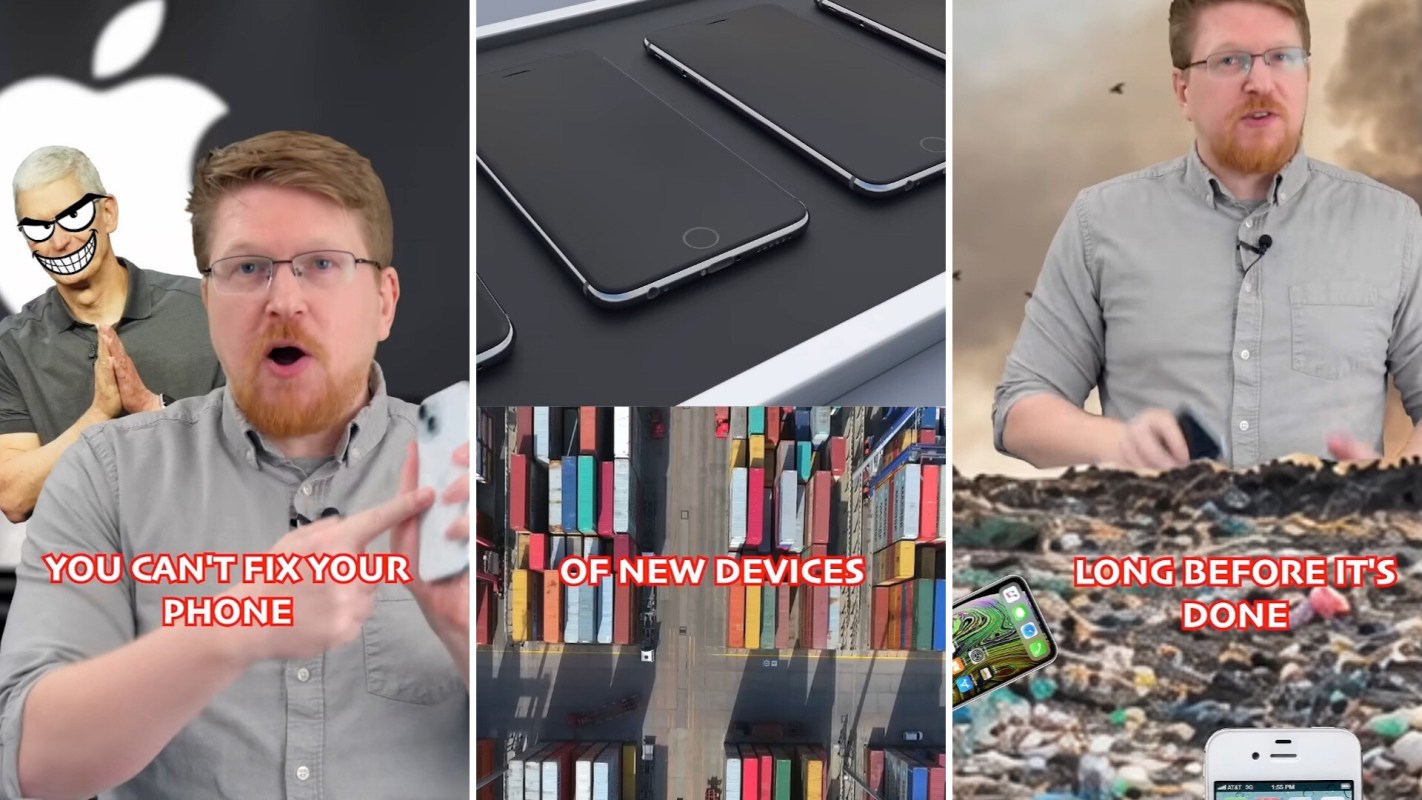
Many electronics are thrown away while they still have useful life left, and a big reason is that manufacturers have made repairs more difficult than they need to be.
California's right-to-repair push is aimed squarely at that expensive, wasteful cycle.
Here's what to know
In an EcoBits (@EcoBitsOfficial) video on YouTube, right-to-repair campaigner Nathan Proctor (@nathanproctor6174) argues that some manufacturers limit repair by withholding replacement parts, diagnostic software, and other tools needed by consumers or independent shops.
As Proctor put it, "You can't fix your phone, and big companies like Apple designed it that way."
A device failure does not always mean the entire product is worn out. In many cases, the real barrier is not the broken part itself. Instead, it's the manufacturer's decision to control who gets to fix it. The video also highlighted parts pairing as one way that happens.
"The perfectly good replacement components won't work fully unless the device's software approves it," Proctor explained.
TCD Picks » Quince Spotlight
💡These best-sellers from Quince deliver affordable, sustainable luxury for all




That kind of restriction can make a device that still has years of life left more expensive or inconvenient to keep using. As an example of a policy response, the video referenced California's SB 244, which requires that consumers and repair shops be able to obtain tools, parts, and repair documentation for certain products for three years.
More background
According to the video, e-waste totaled a record 68.3 million tons (62 million metric tons) worldwide in 2022, an 82% increase from 2010.
It also said much of the climate damage tied to electronics happens before a replacement device ever reaches a store shelf. Most of the carbon footprint comes from making and shipping new products, so replacing devices early can be far more harmful than keeping them in use longer.
Proctor further cited a European analyst who estimated that keeping smartphones, laptops, and washing machines in use for one extra year would avoid roughly 4.4 million tons (4 million metric tons) of CO2-equivalent pollution by 2030.
One commenter wrote: "Everyone always talks about recycling but what about the first 2? Reduce and reuse first."
When companies promote recycling while making repair difficult, that disconnect can start to look a lot like greenwashing.
"Big corporations constantly tell us to reuse and recycle but they also make sure their products are almost irreparable," a user wrote.
What's being done?
The clearest solution raised in the video is stronger right-to-repair policy. Rather than relying on manufacturers to voluntarily loosen restrictions, these laws require them to share the materials needed to keep products working.
What makes California's SB 244 notable is that it opens access to several repair bottlenecks at the same time, including tools, replacement parts, and repair documentation. When consumers and independent repair shops can get those resources, a minor problem is less likely to force someone into buying a new device.
That kind of policy also pushes back against business practices that separate buyers from the products they already paid for. Repair is not just a convenience issue. It is also a consumer-cost issue and a waste issue, tied directly to how products are designed and controlled after purchase.
"Sometimes the greener choice isn't recycling, it's just being allowed to fix the stuff you already bought," Proctor concluded.
Where can I learn more?
The decisions ranging from product design to warranty policies, help determine whether electronics get repaired, reused, or tossed.
• Fairphone is betting a repairable phone solves the throwaway cycle built into modern devices.
• Anker drew backlash when a gutted power bank showed how hard simple fixes can be.
• Razer faced criticism after destroying a gaming mouse became part of a warranty claim.
• Redwood Materials offers a place for old cables and small electronics instead of landfill.

Get TCD's free newsletters for easy tips, smart advice, and a chance to earn $5,000 toward home upgrades. To see more stories like this one, change your Google preferences here.






