


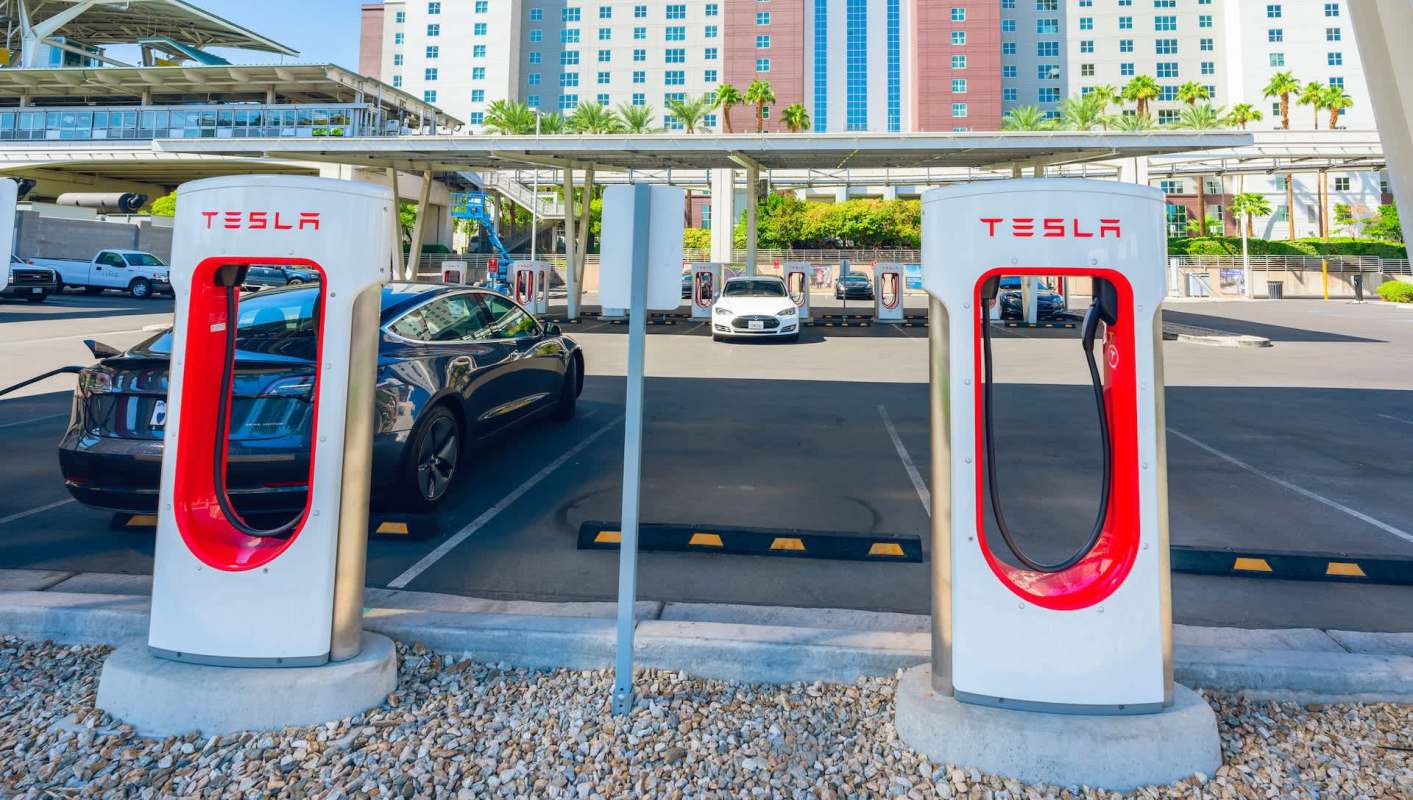
Tesla is giving its home EV charger a larger role in household power management, moving it beyond basic scheduled charging.
Here's what to know
According to Not a Tesla App, version 26.34 adds new smart-charging capabilities to Tesla's Powerwall and Gen 3 Wall Connector.
On X, Tesla owner EVStraya (@EVStraya) highlighted the rollout, writing that the "Wall connector can now utilise charge on solar for smart charging."
NEW! 26.34 for both Powerwall and Gen 3 wall connector support new charging features. Wall connector can now utilise charge on solar for smart charging! ☀️ 🔋 🚗 https://t.co/2npzWjDudH
— EVStraya (@EVStraya) October 7, 2026
The Wall Connector now follows the charging behavior of the Powerwall mode already in use. If the home is set to Savings mode, Low-Cost Charging uses the utility rate plan and solar production to time charging for cheaper periods, which may be especially useful for people on time-of-use rates.
In Self-Powered mode, extra solar generation can be routed to the vehicle battery instead. Tesla has also extended the feature to older Powerwall 2 systems, not just newer ones.
For homeowners considering their own backup setup, adding battery storage is one of the best ways to protect a home during outages, cut power costs, and gain more energy independence. It may be worth exploring EnergySage for home battery storage options and competitive installation estimates. EnergySage has also teamed up with electrification brand Qmerit to help homeowners get the best price on home battery storage solutions.
More background
These changes make Tesla's home charging setup behave more like an automated home energy system than a charger that only follows a fixed schedule.
Instead of setting each charging window manually, owners can let the system react to changing electricity prices and available solar power.
Crushed by your bills? See instant solar savings from vetted installers in just a few clicks With energy prices through the roof, there's never been a better time to go solar — and EasyHome can help you find the best prices from the best installers in your area. EasyHome takes the guesswork and headaches out of energy upgrades by showing you estimated savings from a network of vetted local partners. To get started, just enter your ZIP and share a few details about your home — seeing your estimate is really that easy. |

For drivers who plug in every evening, that could mean charging more during low-cost periods, while homes with solar may keep more of their generated electricity on-site instead of relying as much on grid power.
Battery storage also remains one of the strongest tools for resilience during outages. It can help keep critical home systems running during a blackout while giving families more control over when and how they use electricity. For shoppers comparing options, Pila offers strong battery backup options, and its plug-and-play batteries cost a fraction of a whole-home backup system.
Tesla is also expanding the part its EVs can play in home energy. The company launched Powershare Home Backup for the Model 3 and Model Y, allowing those vehicles to power a home during an outage in a way similar to the Cybertruck.
What's being done?
Tesla is already rolling out the feature through firmware 26.34, and some systems may enable it automatically.
Homes already using Self-Powered mode will switch the Wall Connector to Charge on Solar by default after the update.
Drivers who want charging based strictly on the cheapest available electricity can switch the Powerwall to Savings mode and confirm that the utility rate plan in the app is current. That gives Tesla the price data it needs to schedule charging more strategically.
Tesla says setup is handled in the app under Settings, then Vehicle Charging, then the selected Wall Connector, followed by Set Charging Configuration. The Wall Connector must share the Powerwall's Wi-Fi network, and you can set up smart charging for only one Wall Connector at a time.
Not a Tesla App noted that the company also recommends plugging in frequently and setting "a low minimum charging target and departure time that matches your daily driving needs." That gives the system more flexibility to wait for sunshine or cheaper rates while still working toward the driver's charging target.
As firmware 26.34 reaches more homes, smart charging is becoming a more standard part of Tesla's home energy ecosystem, and Charge on Solar "may change how much your car charges daily."
Where can I learn more?
For more context on how Tesla is tying EV charging into home energy, these stories cover the trend from a few angles.
• Tesla owners can now use excess solar energy stored in Powerwall batteries for EV charging.
• Researchers have built a smart-charging system that shifts EV demand away from grid stress.
• Homeowners installing a Level 2 charger can cut charging times dramatically.

Get TCD's free newsletters for easy tips, smart advice, and a chance to earn $5,000 toward home upgrades. To see more stories like this one, change your Google preferences here.






