


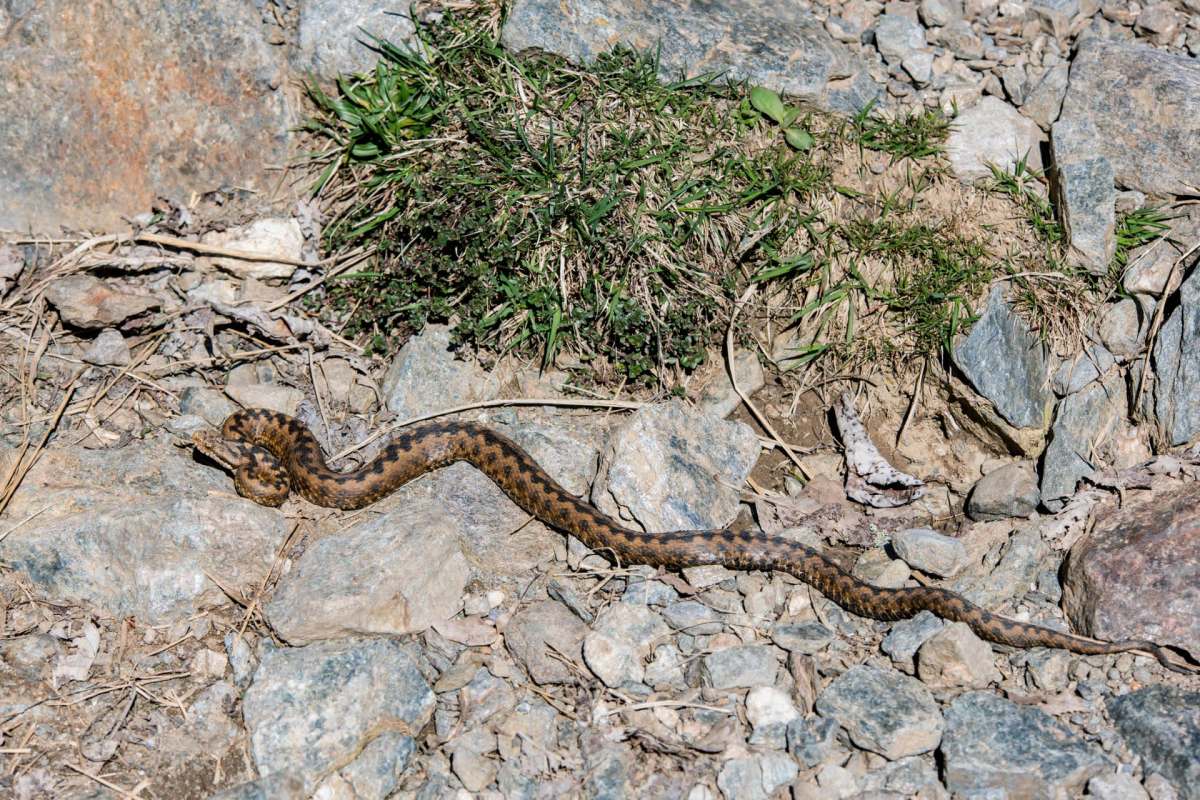
A hiker in the French Pyrenees ended up needing an emergency helicopter evacuation after attempting to photograph an asp viper and being bitten on the hand.
Here's what to know
According to The Connexion, the 46-year-old was hiking with a friend in Vallée d'Ossau in Pyrénées-Atlantiques when she spotted the snake. As she got closer to the animal in an attempt to photograph it, the asp viper bit her hand.
The hiker quickly began experiencing swelling in her hand, intense pain, nausea, and fever. She was then flown by helicopter to a hospital in Pau for treatment and antivenom.
The asp viper, or Vipera aspis, is France's most widespread viper. The venomous snakes can be found in the Pyrenees, Alps, and Massif Central, with vipers being more common in the country's southern and central regions, per The Connexion.
On sunny days, vipers may stretch out on rocks and other exposed surfaces to warm themselves, making chance encounters with hikers more likely. They are commonly found in dry, rocky, or wooded areas, as well as in long grass, hedges, and along woodland edges.
Human-wildlife encounters
Close encounters with wildlife are often prompted less by aggression from the animal than by people entering its defensive space.
TCD Picks » Quince Spotlight
💡These best-sellers from Quince deliver affordable, sustainable luxury for all




Jean Andrieux, a park ranger for the Vercors Natural Park, told The Connexion that these incidents are often misunderstood.
"Most bites are what we call 'dry bites,' meaning the viper does not inject venom," Andrieux said. "It is a defensive reaction — it is scared, it bites, but does not release venom."
But some bites do involve venom, commonly leading to the symptoms that the hiker experienced, including pain, swelling, and redness around the bite. More serious cases may involve nausea, breathing difficulties, or a severe allergic reaction, per The Connexion.
How to stay safe around wildlife
The best way to stay safe around wildlife is to give animals as much distance as possible. When wildlife feels threatened, their actions can be unpredictable, potentially leading to a dangerous situation for humans and the animals themselves. This is especially true when it comes to potentially deadly animals like snakes.
If you see a snake on a path, give it plenty of space and go around calmly instead of trying to touch it, move it, or take a close-up photo.
Other steps The Connexion listed for reducing the risk of a bite include wearing closed shoes and long trousers, sticking to marked paths, and watching where you place your hands and feet while in nature.
If someone is bitten, they should keep still, remain where they are, and call emergency services immediately.
Under French law, all snake species are protected, meaning they cannot be harmed, killed, or relocated. Killing one can bring a €150,000 fine and three years in prison.
"A snake does not attack people," Andrieux said. "It only bites in self-defence, for example if it is touched or accidentally stepped on."
Where can I learn more?
For people enjoying the outdoors, a snake encounter can quickly transform a fun occasion into a life-or-death situation.
• In Jerusalem, two boys were rushed to hospital after viper bites in a forest.
• At a Hurghada resort in Egypt, a tourist was fatally bitten after a cobra slithered up his pants.
• Worldwide, researchers warn mass spread of venomous snakes could raise human bite risk.
• Scientists warn billions could face rising snakebite threats as climate shifts snake ranges.
• In India, rising temperatures have fuelled snakebite incidents and deepened a deadly health crisis.

Get TCD's free newsletters for easy tips, smart advice, and a chance to earn $5,000 toward home upgrades. To see more stories like this one, change your Google preferences here.







