


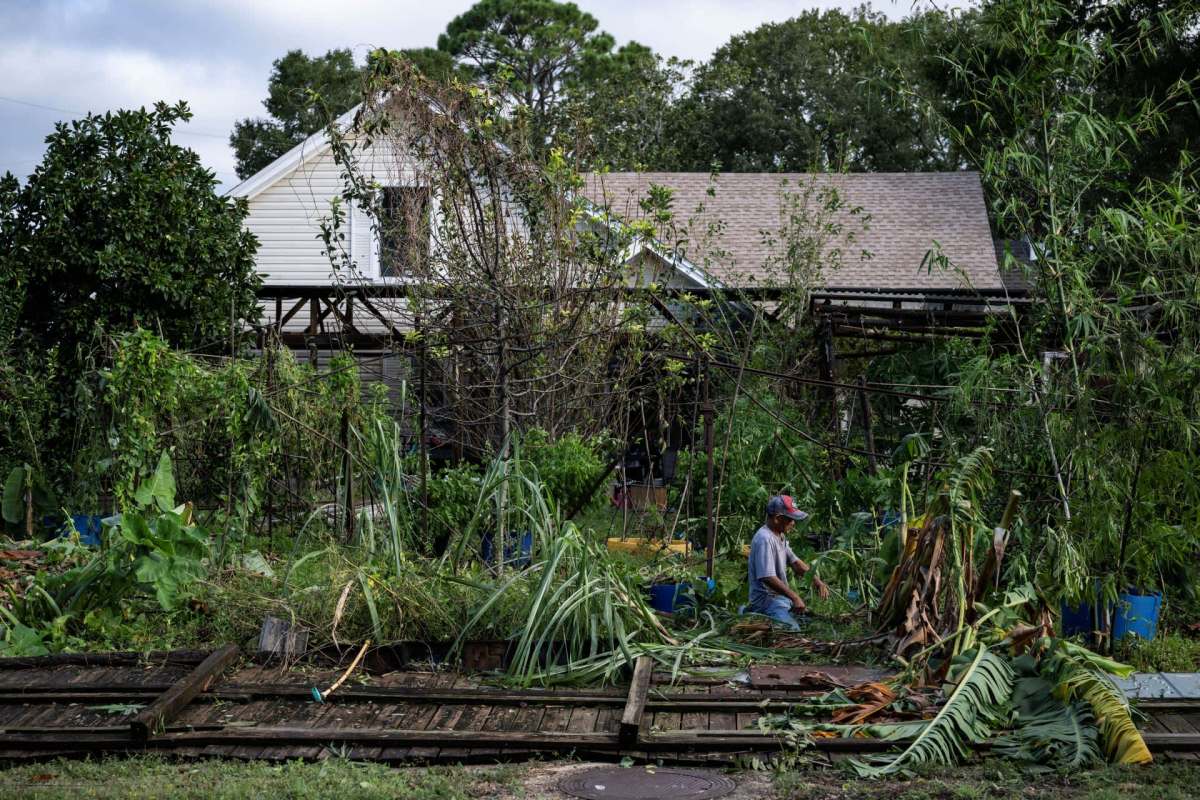
After Hurricane Isaias, residents in Bay County living outside incorporated city and town boundaries say storm debris cleanup has largely become their responsibility — in those unincorporated areas, the county is not offering curbside pickup.
West of Panama City Beach, that leaves households with two practical choices: haul the debris themselves or pay someone else to do it, WJHG reported.
Here's what to know
Bay County residents in unincorporated areas are not getting curbside debris collection after Hurricane Isaias, according to the station.
Outside municipal limits, people in some heavily affected neighborhoods must either take storm debris to the county landfill themselves or look for help through Rebuild Bay.
Representing the area west of Panama City Beach, Commissioner Doug Moore said the county must weigh the high cost of creating a pickup program against the possibility that the federal government won't reimburse those costs.
"We've got to look at being fiscally prudent with the funds that we have. It is a serious six-figure cost for us to be able to stand up and do this. We're not sure we're going to be able to get reimbursement," Moore explained.
TCD Picks » Quince Spotlight
💡These best-sellers from Quince deliver affordable, sustainable luxury for all




Residents who can haul debris themselves face a different recovery process from those who cannot.
Putting that responsibility on individual households can slow recovery and drive up costs.
When storm cleanup depends on a resident's age, access to a vehicle, or ability to pay for help, recovery is uneven across the community.
More background
For some residents, the policy is hard to reconcile with the taxes they already pay.
Cynthia and Ronald Mitchell, who live on the west side of Panama City Beach, made that objection: "It's very wrong that Bay County does not come up out here to pick up our debris. We pay our taxes high out here just like everybody else, and that's a service we should get."
Older households may feel the strain most.
The Mitchells said many neighbors are elderly, and cleanup costs can rise quickly when residents have to move debris to the landfill themselves or hire help.
The Mitchells said they expected the same service residents received after Hurricane Michael, when debris was picked up in unincorporated Bay County. They said the current response feels like a step backward.
Without the same level of cleanup support, neighborhoods outside city limits can take longer to look and function like the rest of the county again.
What's being done?
The county is providing free landfill disposal for storm debris, eliminating the dumping fee.
But for residents who lack the physical ability or can't afford to pay someone to move the debris, that option still leaves the main problem unsolved.
Moore said residents who cannot handle cleanup on their own are supposed to turn to Rebuild Bay.
"If you're infirm, housebound, elderly. Reach out to Rebuild Bay, and that's exactly what this organization was created for. There is an avenue for those people to be able to be addressed through Rebuild Bay," he remarked.
Moore also told WJHG that each storm is different and added that residents who need help should apply through Rebuild Bay instead of expecting debris pickup in unincorporated neighborhoods.
The county's current response is centered on self-hauling paired with case-by-case support, rather than universal pickup. Some residents may get help through that system, while others still largely have to handle storm cleanup themselves.
For the Mitchells, that reality is the central issue.
"I'm 84 years old; it's not an easy job. No …. and many of the people on the street are very elderly. It's a burden … it's definitely a burden for people out here in unincorporated Bay County," they said.
Where can I learn more?
These stories describe situations where residents had to deal with trash and cleanup problems when public services fell short. They cover beach cleanups, sanitation disputes, illegal dumping, and a fight over local garbage fees.
• On a polluted beach, volunteers started cleaning up trash, and the effort quickly spread.
• In New York City, trash piled up on streets as residents sparred with sanitation officials.
• In Kinloch, Missouri, decades of illegal dumping left a long-delayed cleanup still underway.
• A citywide policy change turned a forced monthly garbage fee into a flashpoint for residents.

Get TCD's free newsletters for easy tips, smart advice, and a chance to earn $5,000 toward home upgrades. To see more stories like this one, change your Google preferences here.






