


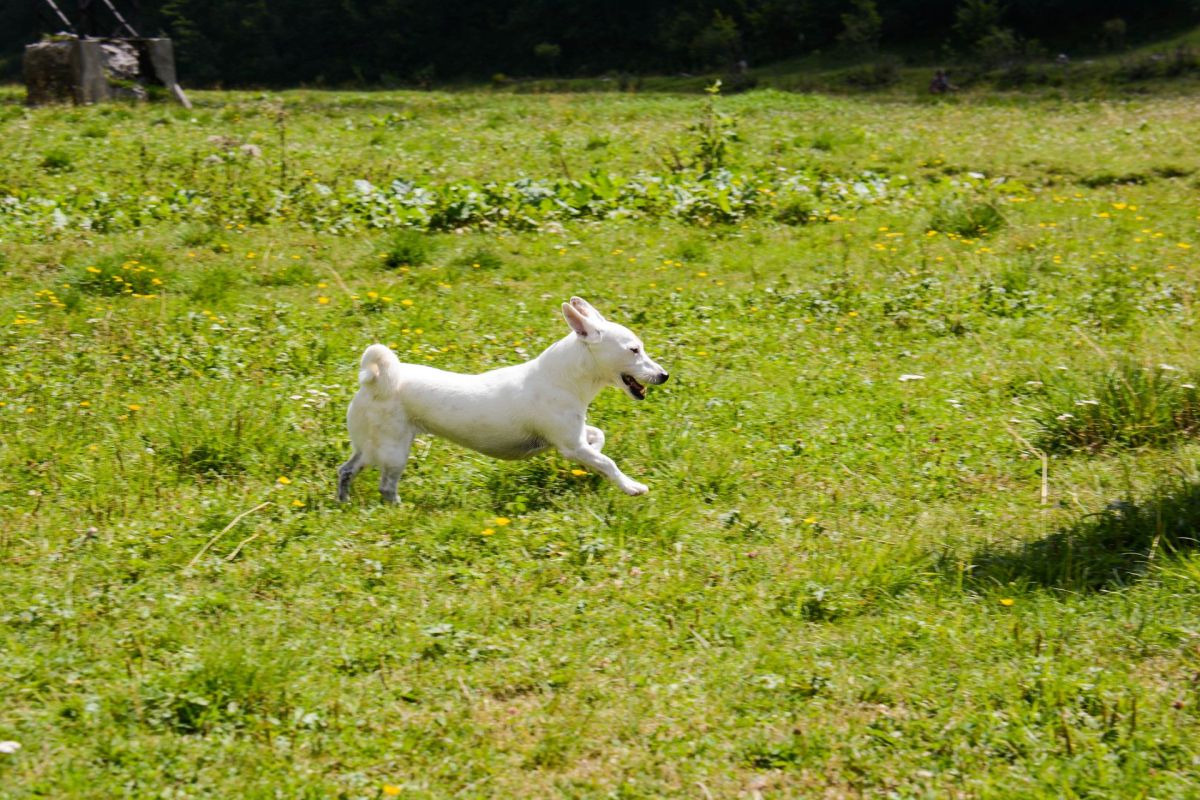
Rescuers in Yellowstone National Park found Luna, a 10-year-old Jack Russell Terrier from California, alive after she spent 34 days on her own in the park.
Rescuers located her inside a small doghouse set within a humane trap, and after more than a month of uncertainty, the Oct. 14 rescue ended the search with a reunion.
Here's what to know
Katie Boucher, president of the Montana-based Norris Ark and Recovery Center, announced the breakthrough in a text to Outside.
"We got her!" Boucher excitedly wrote. "We are on the way to the vet with her."
Luna had been missing since Sept. 10, when she ran out of the Yellowstone cabin where her family was staying, according to the magazine.
Following weeks of reported sightings around lodges and cabins, rescuers located her on the morning of Oct. 14 near the Canyon Village water treatment center.
TCD Picks » Quince Spotlight
💡These best-sellers from Quince deliver affordable, sustainable luxury for all




The rescue hinged on a Missy Trap, a large enclosure used to recover frightened animals, where Boucher's team had placed a doghouse for Luna.
Before an Oct. 11-12 storm arrived, Boucher removed the remote-trigger equipment and left the enclosure open so the dog could use it as shelter.
"She was sleeping in the doghouse waiting for us," Boucher told Outside.
One of Luna's owners came back to Yellowstone for the rescue and was the first to reach the trap. Luna was later taken to a veterinarian in Bozeman, where Boucher said she lost about 10 pounds during her 34 days alone.
"They had their own private reunification and it's been absolutely brilliant," Boucher said. "She is in really bright spirits."
"She's very, very happy to see her mama," she added.
More background
The timing made the search harder. Boucher noted that Luna's family stayed in the area until Sept. 22, but as Yellowstone's fall season tightened, they had trouble finding a legal place to remain because rooms were filling and seasonal lodging was shutting down.
Park rules also prohibit overnight stays in vehicles and camping outside designated areas, limiting how long the family could continue looking for their beloved companion. Boucher believes Luna may have relied on behaviors from her life before adoption.
Before becoming a house dog, Luna spent roughly her first year surviving as a stray in California until the SPCA picked her up, and Boucher suggested those instincts resurfaced in Yellowstone.
"She does not need people and she knows it," Boucher observed.
That kind of endurance fits the breed, said Alison Cook Cilliers, a longtime California breeder who runs Kimberlite Jack Russell Terriers.
She told Outside that Jack Russells were bred to chase animals underground without direct human guidance, which may help explain Luna's persistence and her ability to withstand cold nights, limited food, and predators.
"They work independently of us," Cilliers told Outside. "They are very tenacious, and they really don't want to give up."
What's being done?
Boucher said the National Park Service gave Norris Ark special permission and a permit covering the Missy Trap and its remote trigger.
Construction crews working in Yellowstone also let the rescue team into restricted areas that are typically off-limits to visitors and, at times, even other workers.
The enclosure served two purposes: protecting Luna and helping recover her. A volunteer saw her moving around the trap and resting nearby on Oct. 13, and when Boucher returned on the morning of Oct. 14, Luna had moved into the grass-filled doghouse inside.
Cilliers explained that this mattered because early efforts to call to or chase a frightened dog can push the animal deeper into survival mode.
Time was growing short for the operation. Norris Ark's permits were set to expire on Oct. 31, and colder conditions were moving in after light snow fell in parts of Yellowstone.
Boucher described the park as an "urban wilderness environment," where roads, tourists, wildlife, weather, contractors, and federal rules defined the rescue.
"This never gets old," a relieved Boucher told the magazine. "Being able to successfully reunify a pet with their family that loves them, and this is why I do this work."
Where can I learn more?
This isn't the first issue with loose dogs in Yellowstone, but pups can also help remove threats from wild spaces.
• At Yellowstone, a tourist's dog ran loose beside a dangerous hot spring.
• In Grand Teton National Park, dogs are detecting invasive plants before they spread.

Get TCD's free newsletters for easy tips, smart advice, and a chance to earn $5,000 toward home upgrades. To see more stories like this one, change your Google preferences here.







