


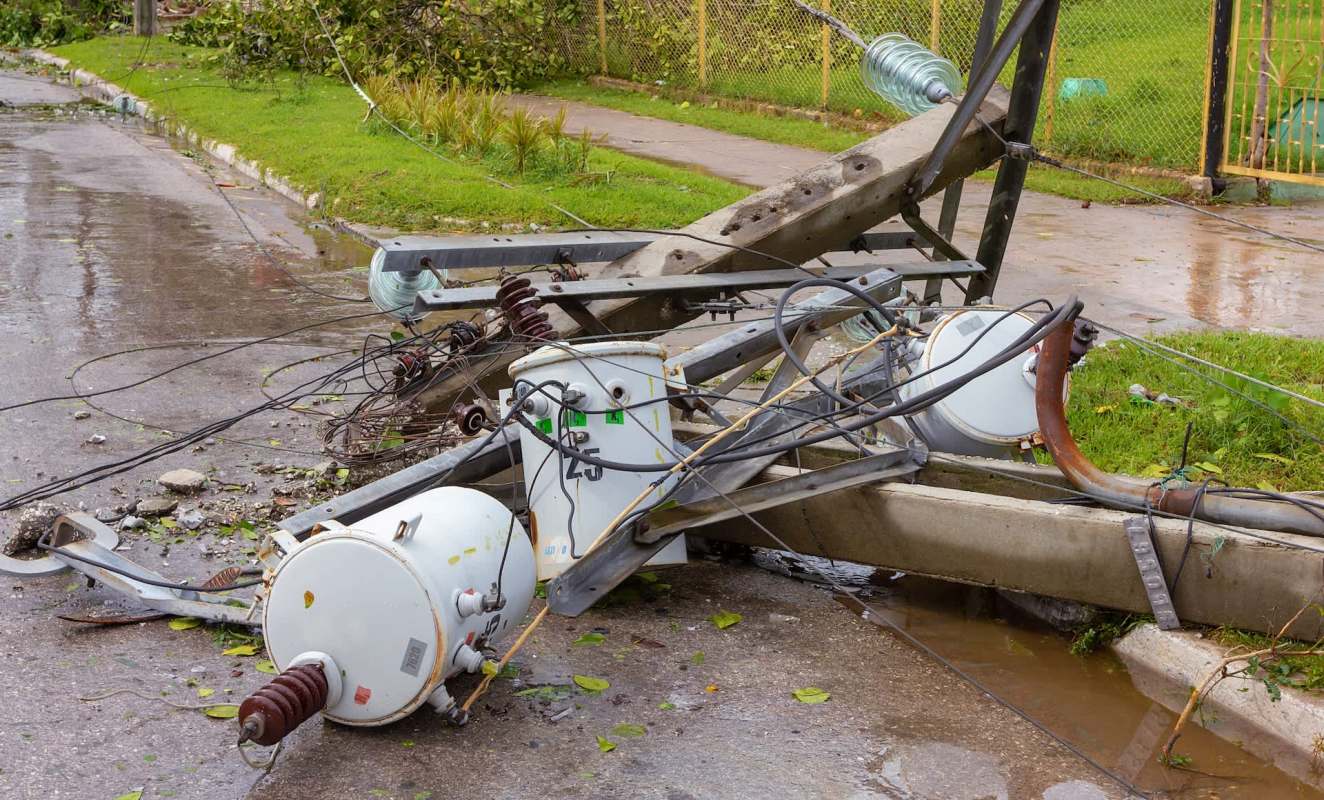
Hurricane Isaias arrived after an unusually quiet Atlantic season, then quickly showed how misleading that calm can be.
On Oct. 12, about 146,000 Florida homes and businesses were still without power after Isaias made landfall near Destin, Florida, on Oct. 9, with outages concentrated in Escambia and Santa Rosa counties.
Here's what to know
Capital B detailed the ongoing recovery efforts with multiple counties under boil-water notices. Across parts of Florida and Alabama, Isaias flooded neighborhoods, knocked down trees, tore apart roofs, and was linked to at least five deaths.
Before making landfall near Destin as a Category 2 hurricane, Isaias rapidly strengthened from a tropical storm within hours on Oct. 7 and then reached major Category 3 status.
The storm's aftermath has been especially hard on Black families. North Florida community organizer Jamil Davis said the harm extends beyond damaged homes and downed power lines, and Black families are more likely to live in flood-prone areas while often receiving less recovery assistance from federal agencies and private insurers.
"Even with a storm that feels relatively small, there is so much Black families have to worry about," he told Capital B. "There is insurance, not to mention the immediate things related to work and keeping a roof over your head."
TCD Picks » Quince Spotlight
💡These best-sellers from Quince deliver affordable, sustainable luxury for all




More background
No Atlantic hurricanes formed in September, making this the latest the season's first hurricane has arrived since record-keeping began, according to the outlet. After that unusually quiet start, Isaias crossed record-warm Gulf waters and its wind speeds increased by 40 mph over 24 hours.
Climate change does not automatically mean more storms, researchers say. But warmer oceans and a wetter atmosphere can make the storms that do form stronger, wetter, and more prone to rapid intensification, and Climate Central found that human-caused warming made those unusually hot western Gulf waters hundreds of times more likely.
Moody's Analytics estimated that Isaias caused $1 billion to $2 billion in lost economic output, separate from the cost of repairing homes and infrastructure.
What can be done?
In Pensacola, residents of an apartment complex had to relocate after a large section of the roof was torn away, Capital B reported.
Davis told the publication the state should do more to prevent the next prolonged outage. He urged Florida utility regulators to reveal how much they spend hardening storm-vulnerable power infrastructure compared with how much goes to serve data centers.
As it stands, he says organizers and donations are helping those in need while they wait for government help.
"If you're spending more on data centers than you are on that, then our priorities as a state are out of whack," he argued to Capital B. "And so if nobody else has us, we got us."
Where can I learn more?
The same issues Isaias raised — hurricane recovery, preparedness, and who gets hit hardest — emerge during storm season.
• After Hurricane Idalia, Floridians looked for ways to help victims through groups like the Red Cross and Feeding America.
• In storm-hit communities, danger after catastrophic storms also came from extreme heat for workers.
• For many survivors, health consequences of natural disasters included PTSD, anxiety, and lasting stress.
• After Hurricane Helene, Florida homeowners faced an insurance crisis for millions as losses mounted.

Get TCD's free newsletters for easy tips, smart advice, and a chance to earn $5,000 toward home upgrades. To see more stories like this one, change your Google preferences here.






