


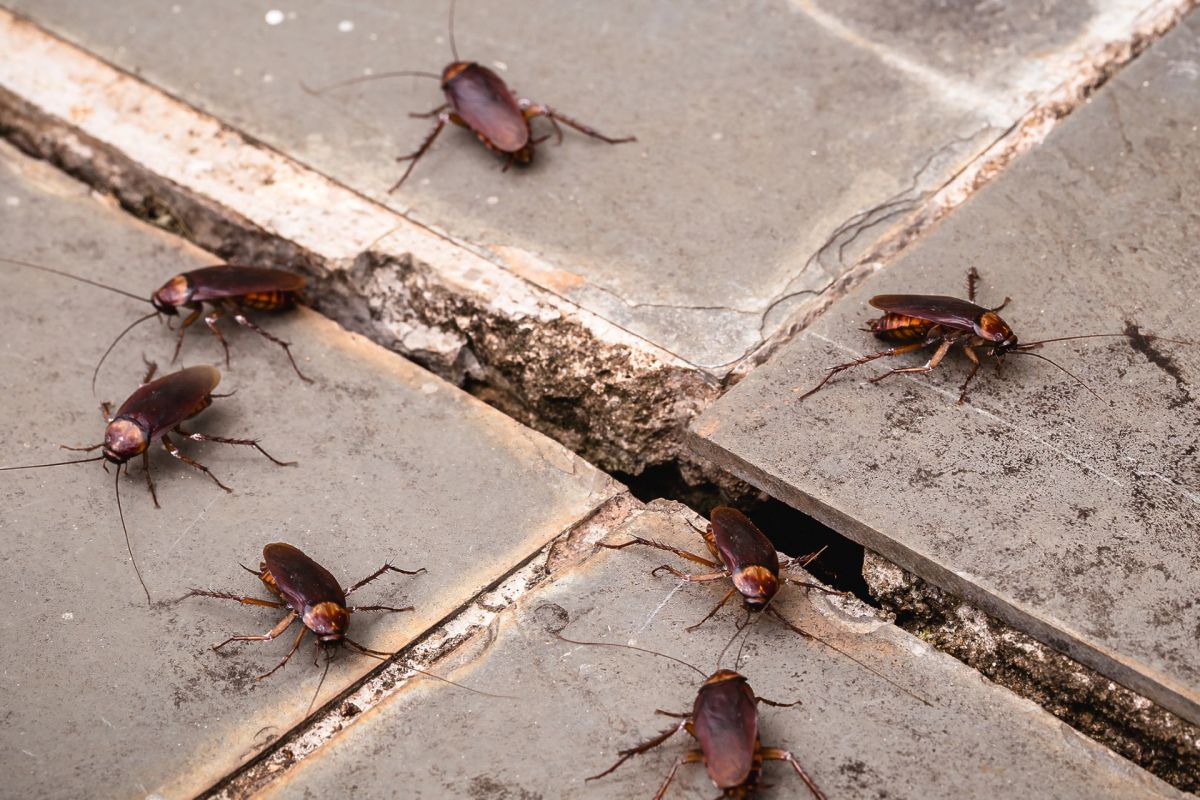
Researchers in Australia are turning the giant burrowing cockroach into a disaster response tool, equipping the insect with a camera and a miniature injector so it can enter areas too hazardous for human rescuers.
Here's what to know
According to The Guardian, University of Queensland biorobotics researchers joined forces with biomedical engineers at the University of New South Wales to build "paraborgs."
These cyborg insects are based on the giant burrowing cockroach, Macropanesthia rhinoceros, a species from far north Queensland, and are intended to help find survivors and bring emergency assistance, per the researchers.
Each insect carries lightweight electronics, a camera, and a remotely activated auto-injection system made specifically for the species. With that equipment, the outlet said the cockroaches are being developed not just as mobile sensors but as tiny responders for collapsed buildings, caves, and other dangerous spaces.
UQ biorobotics engineer Thang Vo-Doan described the work as an extension of long-running research.
"Cyborg insects have been designed for search and explore missions for the past couple of decades," Vo-Doan explained to The Guardian. "We wanted to take the next step. Once they find someone, can they actually help?"
TCD Picks » Quince Spotlight
💡These best-sellers from Quince deliver affordable, sustainable luxury for all




More background
The researchers are testing whether the insects can do more than simply locate victims, The Guardian reported. In proof-of-concept trials, the paraborgs completed close-range injections in 95% of attempts when they started within 6 inches (15 centimeters) of the target.
When the full sequence of navigating to the target and delivering the injection was tested, the success rate was 72%. Reaching a trapped person is only part of the problem, they noted. The system also has to stay steady enough to provide aid accurately.
PhD candidate Hai Nhan Le has said precision remains one of the major engineering problems.
"The cyborg insect has to navigate to the target, position itself accurately and remain stable enough to perform the injection," Le explained to the outlet.
If the concept continues to improve, it could make emergency response more practical and less risky for both survivors and rescuers. Instead of waiting for heavy debris to be cleared, trapped people could potentially receive medical help sooner, while rescue crews avoid entering unstable spaces too early.
What's being done?
At the core of the project is an attempt to pair the insects' natural movement with added rescue hardware.
"Augmenting their natural biomechanics could allow these cyborg insects to deliver timely emergency assistance when direct access to people trapped in narrow, debris-filled spaces isn't possible," Vo-Doan told The Guardian.
The choice of the giant burrowing cockroach is central to that effort. Its six-legged movement helps it scurry through cramped, uneven environments that would be difficult for many conventional machines to navigate.
Like the team's earlier cyborg insect models, these cockroaches are anesthetized while electrodes and microchips are fitted, the outlet noted. Once the harnesses are removed, their lifespan is comparable to that of other cockroaches.
Scientists are testing specific hardware, refining navigation, and measuring success rates that could eventually translate into faster real-life aid.
"A lot of people might not like the sight of a giant cockroach scurrying towards them, but if you're trapped in rubble or stuck in a cave and need help, it could make a real difference between life and death," Vo-Doan told The Guardian.
Where can I learn more?
The cockroach rescue project is part of a broader push to use tiny machines and insects for jobs that are hard to do any other way.
• Engineers are testing robotic bees for indoor pollination to keep crops productive under cover.
• Researchers are building 'Tinkerbell' robot bees small enough to pollinate crops by flight.
• On farms, teams are deploying robots against mosquitoes to curb disease-carrying swarms.
• In Brazil, scientists are scaling a mosquito biofactory to slow dengue transmission.

Get TCD's free newsletters for easy tips, smart advice, and a chance to earn $5,000 toward home upgrades. To see more stories like this one, change your Google preferences here.






