


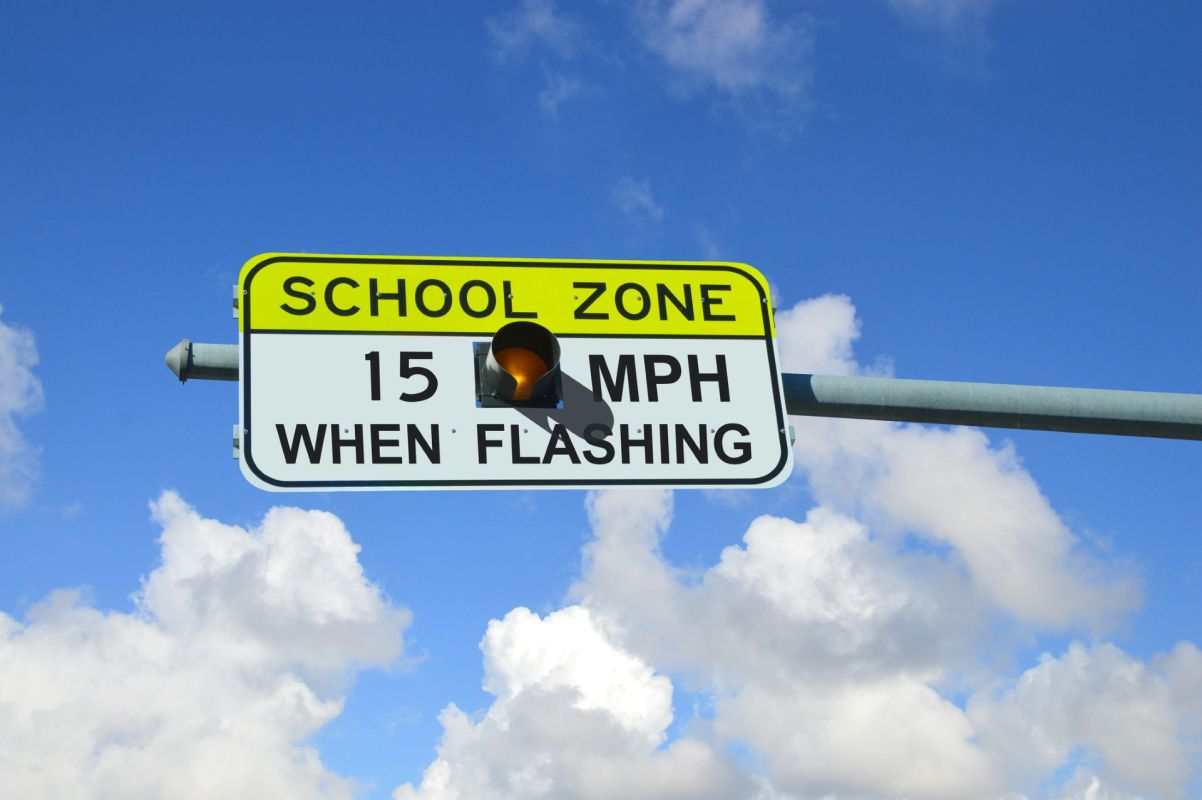
After footage revealed Tesla's robotaxis not adhering to school-zone speed limits, federal safety officials are taking a new look at the automated driving technology.
Here's what to know
According to Drive Tesla, about 1,000 Tesla vehicles — including the Model Y and Cybercab — fall within a defect petition inquiry that the National Highway Traffic Safety Administration (NHTSA) opened on October 9, 2026, after a September 23 petition claiming Tesla's Automated Driving System does not follow the reduced limits used in school zones.
The petition included three videos, and NHTSA says it has identified four related incidents in total after one complaint was filed with the agency and three reports were shared on social media.
Regulators have not determined that Tesla's software has a safety defect, and none of the reported incidents involved a crash, injury, or fatality.
Even so, school zones are among the most sensitive driving environments because speed limits are meant to protect children during pickup and drop-off.
More background
The review arrives as Tesla continues to expand its robotaxi service beyond its original Austin footprint, with new launches in Dallas and Houston, including Cybercab rides in Dallas.
TCD Picks » Quince Spotlight
💡These best-sellers from Quince deliver affordable, sustainable luxury for all




Austin's fleet has been growing, too, with Tesla saying the city had 300 Cybercabs in operation.
Questions about how automated driving software behaves around school zones could affect public confidence in the service, and any future regulator-mandated fixes or operating limits could change how and where robotaxis are deployed.
Waymo has also faced federal scrutiny over autonomous vehicle behavior near school buses and in reduced-speed areas, suggesting regulators are monitoring school-zone performance across the self-driving industry.
What's being done?
NHTSA is gathering and evaluating evidence.
A defect petition inquiry is a preliminary review that allows the agency to assess videos, complaint information, and other material before deciding whether to open a full formal investigation.
Tesla is also facing a separate federal review involving the Cybercab, as NHTSA assesses the technical basis for Tesla's self-certification of a vehicle built without a traditional steering wheel or pedals.
The result could lead to software changes, added restrictions, or more transparency—but only if the agency determines further action is needed.
Where can I learn more?
Questions about Tesla's automated driving systems are rising, and a few stories show why.
• Footage in Texas showed Tesla's system failing near a school bus, deepening safety concerns.
• In Texas, a Tesla robotaxi was behaving erratically on public roads, alarming onlookers.
• U.S. senators urged NHTSA to probe Tesla after railroad crossing incidents raised fresh safety alarms.
• In Austin, Tesla acknowledged robotaxi crash reporting gaps as questions mounted over oversight.
• Tesla's Full Self-Driving system has been linked to rising crash-risk concerns among drivers.

Get TCD's free newsletters for easy tips, smart advice, and a chance to earn $5,000 toward home upgrades. To see more stories like this one, change your Google preferences here.






