


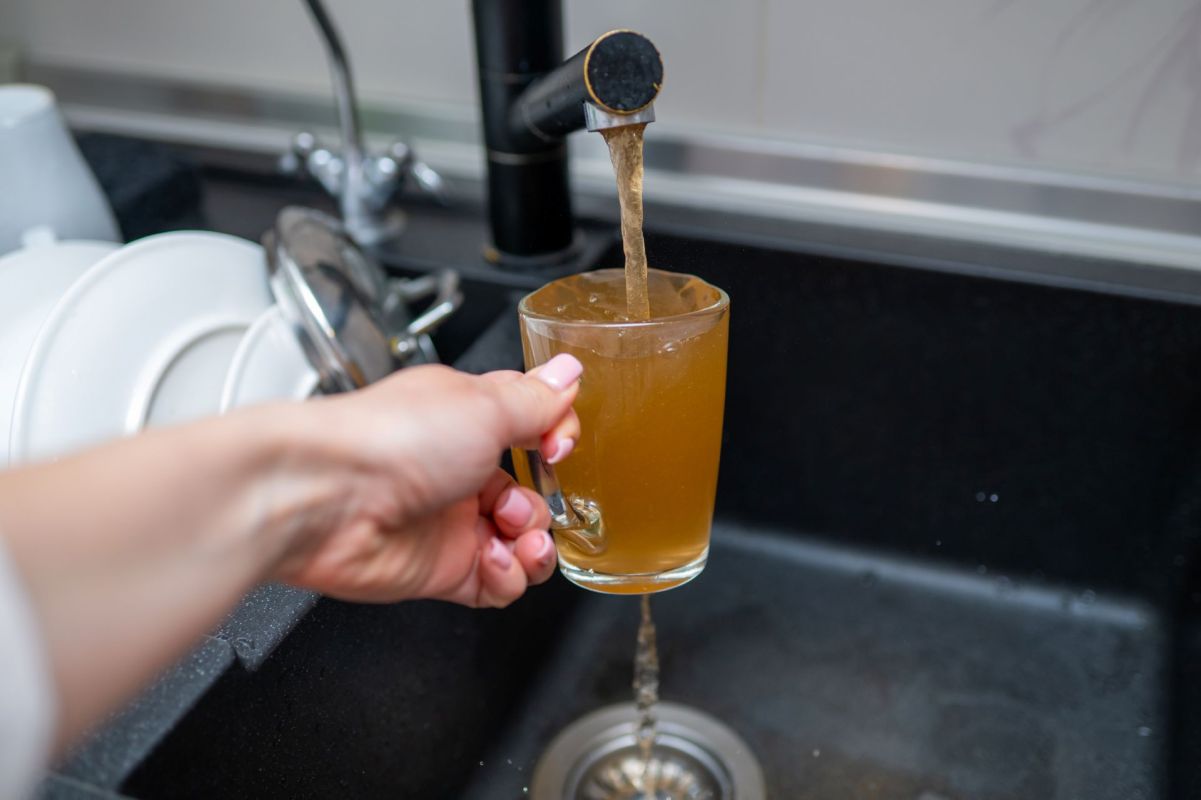
In parts of the Houston region, residents say water from household fixtures has been coming out brown and rusty.
Here's what to know
According to KPRC 2, Houston's 311 system received 138 brown-water complaints in 2025 and another 92 in 2026.
KPRC 2-arranged accredited laboratory testing found very high iron levels in discolored water. The Environmental Protection Agency and the Texas Commission on Environmental Quality treat iron mainly as an aesthetic contaminant, meaning it can affect water's color, taste, and smell.
Residents say that label has not eased their concerns.
"It's very unsettling to be bathing, giving the water to our dogs. We don't know what's in it. And water is not supposed to be brown," said Linda Lavallee, a Montgomery County resident.
Houston Chief Water Officer Drew Molly acknowledged the problem's seriousness after KPRC 2 asked whether brown water coming out of homeowners' taps concerned him.
TCD Picks » Quince Spotlight
💡These best-sellers from Quince deliver affordable, sustainable luxury for all




"Absolutely. Brown water would be ... it's unacceptable to have brown water coming out of somebody's tap," Molly responded.
As older iron pipes oxidize and rust, iron can accumulate.
More background
For residents, part of the frustration is that it can be hard to pinpoint who is responsible.
Some households outside Houston city limits still get city water through municipal utility districts, with the supply moving through Houston mains, a district's network, and then service lines before it reaches homes.
Lavallee told KPRC 2 that Montgomery County Municipal Utility District 98 said it flushed its lines multiple times, but she said the discoloration continued for three weeks.
Montgomery County Municipal Utility District 98 had already replaced its old iron pipes with PVC, suggesting the district's own rusting lines might not have been the main source of the issue.
About half of Houston's system is PVC, while roughly one-fourth is cast or ductile iron pipes that can be as old as 50 years.
KPRC 2 reported in 2022 that residents in Saddle Creek Farms near Crosby said murky, sludgy water had stained homes and laundry. Tests there found 164 milligrams of iron per liter — 548 times the Texas Commission on Environmental Quality's 0.3 milligrams-per-liter guideline for drinking water.
What's being done?
Following KPRC 2's 2022 reporting on Saddle Creek Farms, the Texas Commission on Environmental Quality inspected the area, found high iron in water from two of four fire hydrants, and issued a violation notice to the City of Houston.
The city responded with temporary steps, including flushing lines and adding a substance meant to keep iron from reaching homes.
But residents interviewed by KPRC 2 said those fixes did not last.
"You may have brown water. You may not today, and if you don't today, then you're definitely gonna have it at the end of the week. You know, it's that frequent now," Saddle Creek Farms resident Shereece Anderson said.
Molly later told KPRC 2 that about three miles of cast-iron pipe in Saddle Creek Farms are scheduled for replacement in 2028.
He also said the department replaces about 2% to 3% of Houston's water pipes each year.
People dealing with brown water should first contact their water provider and then file a complaint with TCEQ if the problem continues.
"If you test that water, that water will meet all the standards that the EPA and TCEQ puts out there," Molly said. "But the reality is, who's going to drink brown water? I mean, if it meets all the standards and the water is brown, nobody's going to drink that water."
Where can I learn more?
Similar complaints elsewhere have raised broader concerns about aging water systems and contamination.
• In Austin's Colony, Texas, lead, iron, and other metals showed up in household taps.
• In Corpus Christi, a city water crisis raised alarms about future supply risks.
• In East Moline, Illinois, elevated lead after water tests triggered warnings for homes and businesses.
• In Los Angeles' Watts neighborhood, toxic material in tap water surfaced after years of complaints.

Get TCD's free newsletters for easy tips, smart advice, and a chance to earn $5,000 toward home upgrades. To see more stories like this one, change your Google preferences here.






