


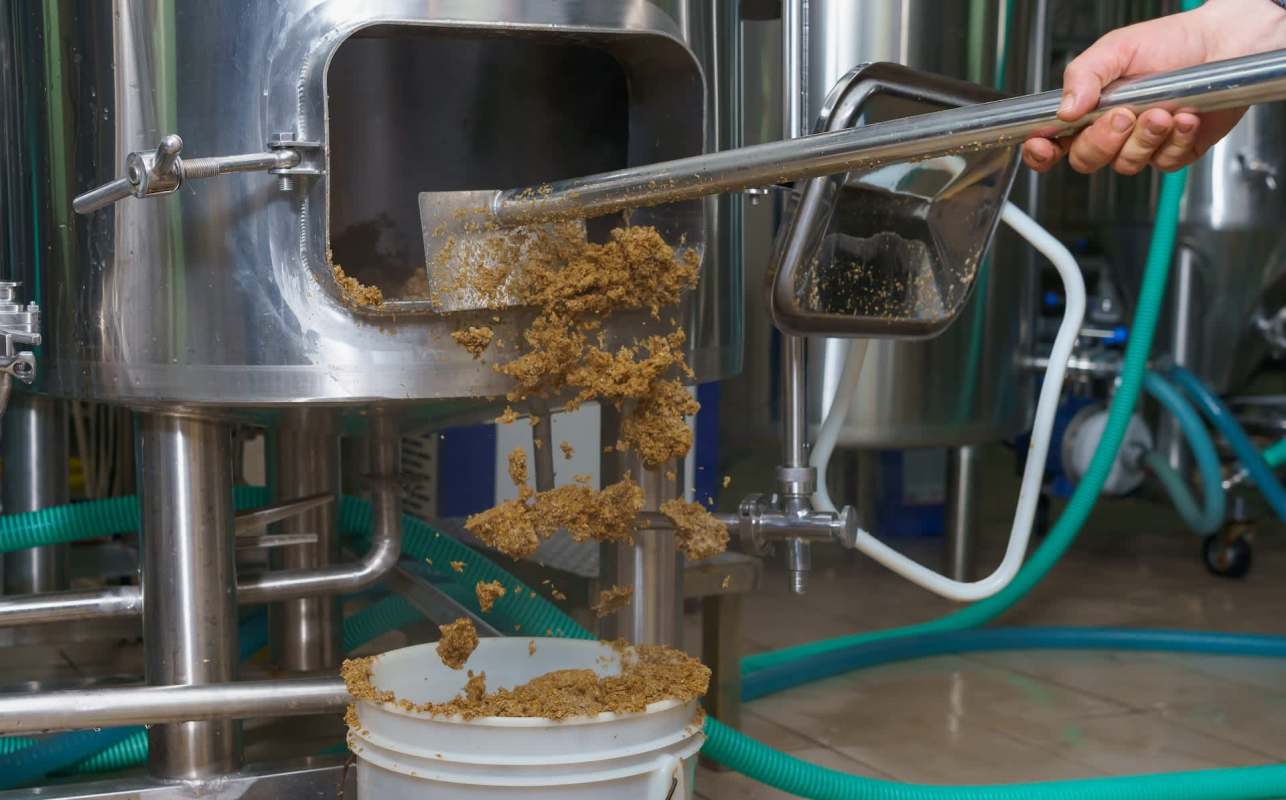
At his Sydney pub and brewery, Karl Riseborough discovered that the rubbish stream included far more than leftover grain from making beer — plate leftovers and kitchen prep trimmings were going out too. However, changing how the waste was managed cut the number of rubbish collections and saved about $5,000 a year, according to ABC News.
Here's what to know
Before he began working with food waste expert Belinda Chellingworth, Riseborough threw away around 110 pounds (50 kilograms) of spent grain from each brew, plus kitchen food waste. Now, the grain is collected for other uses.
"I have regular users who come and collect it once I've brewed and use it for the benefit of their gardens or their animals," Riseborough told ABC News. His business has gone from two 63-gallon (240-liter) bins emptied weekly to one bin emptied every fortnight.
According to Chellingworth, Riseborough isn't the only business owner who didn't initially realize the full price of the food they waste.
"For many businesses, and particularly large businesses, the cost of food waste across their operations isn't fully realised because they incur it multiple times, but it's not obvious," she said.
More background
A food-waste feasibility study found that Australia throws out 30% of food each year, 70% of which is still edible. The economic cost is above $36 billion.
TCD Picks » Quince Spotlight
💡These best-sellers from Quince deliver affordable, sustainable luxury for all




In the hospitality sector alone, about 1.3 million tons (1.2 million metric tons) of food goes to waste annually, costing roughly $6.4 billion — or about $66,000 per business each year, according to the Sustainable Restaurant Association, as reported by ABC News.
Because only a minority of businesses regularly check what food they discard, Chellingworth said costs tied to over-ordering, unsold meals, and waste disposal are often viewed separately rather than as one accumulating expense.
That has put pressure on landfill capacity.
Chellingworth told ABC News that some Perth sites could reach capacity in two years. Meanwhile, New South Wales could fill up in four years and Victoria within the next decade.
Johannes le Coutre, a UNSW professor of food and health, added that about 3.5 million households face food shortages even as edible food is wasted throughout the supply chain. He noted that farming and industrial food production generate major greenhouse gas emissions, so throwing food away intensifies that harm without helping food security.
What's being done?
Australia has a national target to halve food waste by 2030. A spokesperson for the Department of Climate Change, Energy, the Environment and Water told ABC News that the government is putting $37 million toward expanded organics recycling infrastructure, $30 million into the End Food Waste Cooperative Research Centre, and $10 million into the Great Unwaste Campaign.
Chellingworth said stronger donation networks could make a difference as long as the food remains safe to eat, noting that every Australian state and territory legally protects food donors when food is donated in good faith and meets certain standards.
"The food needs to be edible when it's donated, any instructions on how to refrigerate it or prepare it afterwards need to be provided, it must be free … and it needs to go to a registered organisation," Chellingworth explained to ABC News.
"We are a modern country, a modern economy … we need to raise awareness, we need to improve technology, and we need to improve policy," Professor le Coutre concluded.
Where can I learn more?
These articles look at how food and retail businesses are cutting waste and finding better uses for what would otherwise be thrown away. They cover composting in restaurants, supermarket food-rescue partnerships, biofuel made from waste, and policies aimed at cutting trash.
• At Taco Time Northwest, switching to compostable disposables showed how restaurant waste habits can change quickly.
• Sainsbury's began powering delivery trucks with biofuel made from its own food waste.
• Albertsons and Uber expanded a grocery rescue partnership to keep edible food in circulation.
• One city put a single-use plastic ban into effect to curb restaurant waste.
• At Dollar General, discarding usable groceries stirred backlash over wasteful store practices.

Get TCD's free newsletters for easy tips, smart advice, and a chance to earn $5,000 toward home upgrades. To see more stories like this one, change your Google preferences here.






