


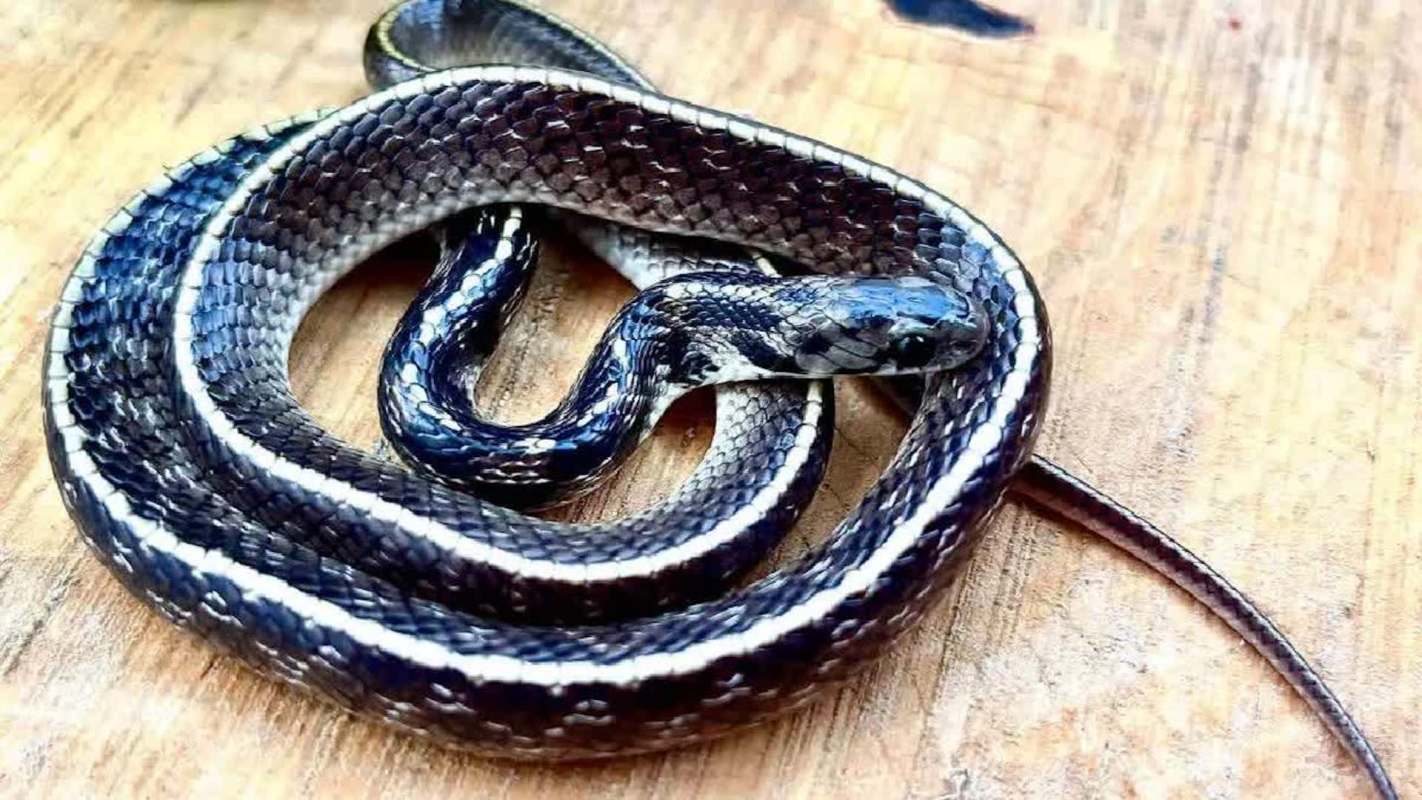
What began as an unsettling discovery inside a Harnathpura home has become a notable wildlife record: a roughly 2-foot (61 cm) Indian egg-eating snake was found there, and ETV Bharat reported it as Rajasthan's first confirmed live record of the species.
Here's what to know
At Ramesh Kachhawa's home in Harnathpura village, the sighting frightened the family, who then contacted Manish Tiwari, president of the Chittorgarh Wildlife and Environment Conservation Society.
When the snake appeared again, an expert team led by Piyush Kamble and Ramkumar Sahu traveled from Chittorgarh to Rashmi and identified it as an Indian egg-eating snake, or Boiga westermanni.
Although the snake had caused panic in the house, the inspection showed it was non-venomous. The team confirmed the species by studying physical features including its body pattern, head structure, and scales.
According to ETV Bharat, the snake mainly eats bird eggs, and its secretive behavior and favored habitats can make wild sightings uncommon.
That distinction matters because an earlier Rajasthan record from Bhairoda Khurd in Sawai Madhopur involved a dead specimen about 1 foot 8 inches long, while this snake was found alive at roughly 2 feet (61 cm) long.
TCD Picks » Quince Spotlight
💡These best-sellers from Quince deliver affordable, sustainable luxury for all




More background
Piyush Kamble of CWECS said the family at Kachhawa's house was alarmed by the snake's presence until experts determined the reptile was nonvenomous.
The appearance of Boiga westermanni in a residence points to the kind of habitat overlap that can occur where villages and wildlife share space. In cases like the one in Rashmi, proximity, not aggression, is often the issue, as the BBC Future article on human-animal encounters explains.
After the initial report, Kamble said the committee sent a member, Harlal, to the house, but they couldn't find the snake at the time.
A live, documented specimen gives researchers a stronger record than the earlier dead snake from Sawai Madhopur, helping clarify where this rare species actually persists in the state.
What's being done?
Before releasing the snake, ETV Bharat reported that the team photographed it in detail, confirmed its identification, and logged GPS information for the animal and where it was found. Those steps created a usable scientific record from a one-off rescue at a private home.
It eased the household's fear and protected a non-venomous species that had never before been officially documented alive in Rajasthan.
"Correct identification, photographs and location records of rare wildlife can help researchers understand the biodiversity of the region in the future," he said.
Where can I learn more?
For more on snakes turning up around homes and neighborhoods, these stories cover rescues in India and shifting snakebite risks.
• In Haridwar, a family found 27 baby snakes inside a household water tank.
• During Delhi's monsoon season, snakes invade local communities as flooding drives them into homes.
• In Telangana, rescuers removed an Indian cobra from grandparents' house before relocation.
• Across India, snakebite incidents are rising as warming weather shifts reptile behavior.

Get TCD's free newsletters for easy tips, smart advice, and a chance to earn $5,000 toward home upgrades. To see more stories like this one, change your Google preferences here.







