


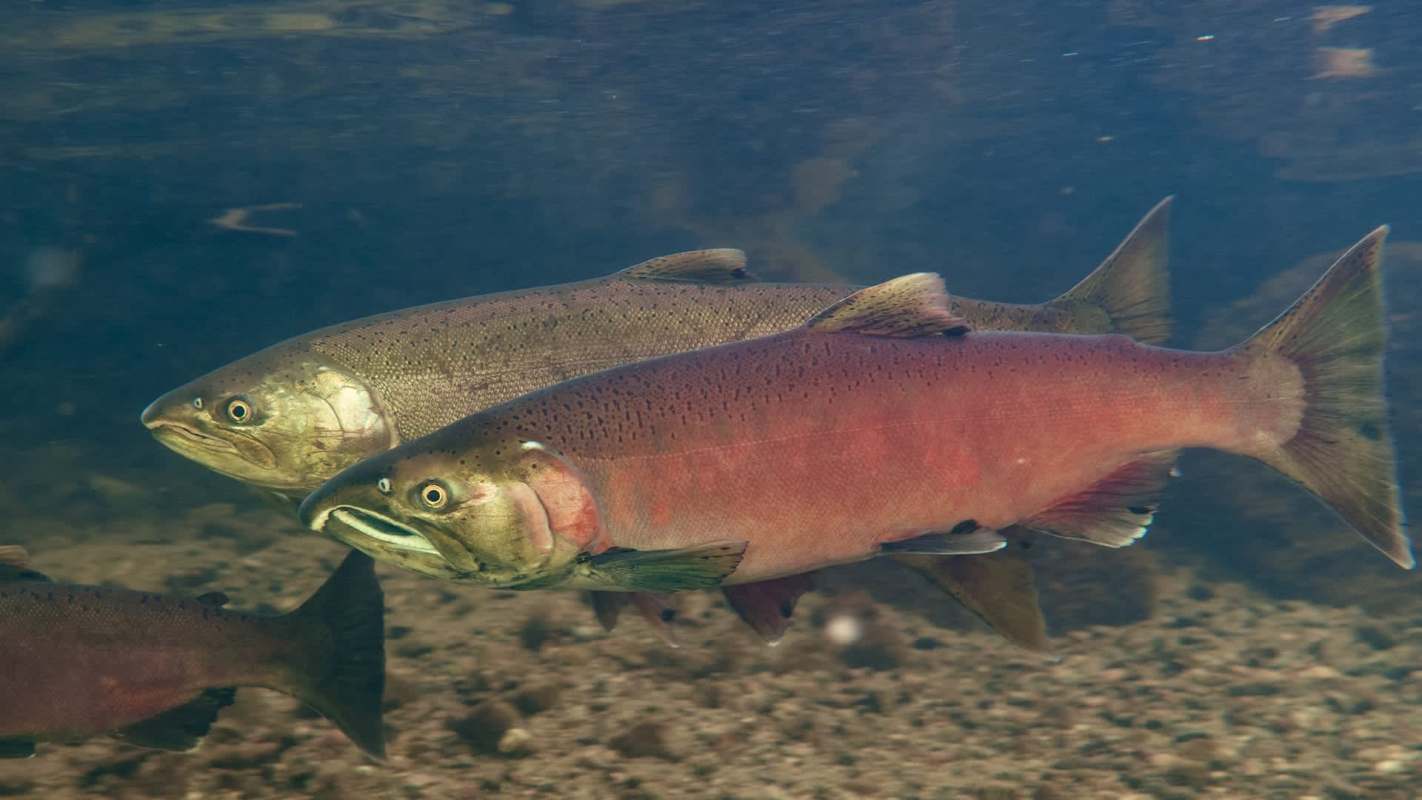
In northern California's Scott River valley, conservationists built artificial beaver dams on creeks where natural wetlands had disappeared, and coho salmon that were threatened ended up surviving at much higher rates.
More unexpectedly, some of the valley's remaining beavers came back and improved the human-made dams on their own.
Here's what to know
According to the BBC's Discover Wildlife, the nonprofit Scott River Watershed Council built two artificial beaver dams on Sugar Creek in 2015 after the Scott River valley had already lost much of the habitat natural beaver dams once maintained.
A study published in Frontiers in Ecology and Evolution found that the project created about 97,000 square feet (9,000 square meters) of new habitat, enough for more than 8,500 young salmon. The work expanded in 2018 to another tributary, French Creek.
Fish biologist Michael Pollock of NOAA's Northwest Fisheries Science Center called the results "mind blowing."
The restored areas also stayed cooler than stretches without new dams, avoiding heat levels known to stress juvenile fish and slow their growth.
TCD Picks » Quince Spotlight
💡These best-sellers from Quince deliver affordable, sustainable luxury for all




Because juvenile coho depend on cold, slow-moving water during their early life stages, the shift on French Creek was especially significant: survival rose from 8% before construction to 60% afterward.
More background
The Scott River valley once had so many beavers that people called it Beaver Valley. Their dams spread water across a large riverine wetland and created protected habitat for juvenile coho salmon and other wildlife.
That landscape began to break down in the 1830s when European fur trappers arrived. Thousands of beavers were killed, and much of the habitat associated with their dams and wetlands disappeared as well.
Those beaver wetlands supplied the cold, slow-moving conditions coho salmon prefer. Once the structures were gone, the valley also lost a natural support system that had shaped the watershed for generations.
Rather than wait for beavers to fully return, local restoration workers recreated some of those lost functions by hand on Sugar Creek and French Creek.
The approach gave the valley a practical way to recover habitat people had erased nearly two centuries earlier.
What's being done?
The restoration method was deliberately simple and based on how beavers build.
According to Discover Wildlife, crews pounded wooden posts into the streambed, threaded willow and conifer branches between them, and sealed gaps with gravel, straw, and mud.
The Scott River Watershed Council started on Sugar Creek in 2015 and added several more dams on French Creek in 2018. The structures remained in place long enough to turn parts of the creeks back into working wetland habitat.
Some of the remaining local beavers also joined the effort, repairing, reshaping, and sometimes enlarging the artificial dams.
In some cases, the structures even drew beavers back. Together, the work created habitat for more than 8,500 young salmon.
The Scott River project shows that simple, targeted creek restoration can deliver measurable benefits for fish and the broader ecosystem.
"When beavers do adopt a structure, their work is far superior to what we can accomplish," said Charnna Gilmore of the Scott River Watershed Council.
Where can I learn more?
Elsewhere, similar restoration work is showing how quickly waterways can respond when habitat returns.
• In California's Bay Area, a surprisingly strong return signaled new hope for endangered coho.
• Along Oregon's McKenzie River, river restoration revived side channels important to salmon.
• In Maine, crews revived the Penobscot River by removing dams that blocked migrating fish.
• Elsewhere, managers found removing restrictive dams quickly improved river habitat for native trout.

Get TCD's free newsletters for easy tips, smart advice, and a chance to earn $5,000 toward home upgrades. To see more stories like this one, change your Google preferences here.






