


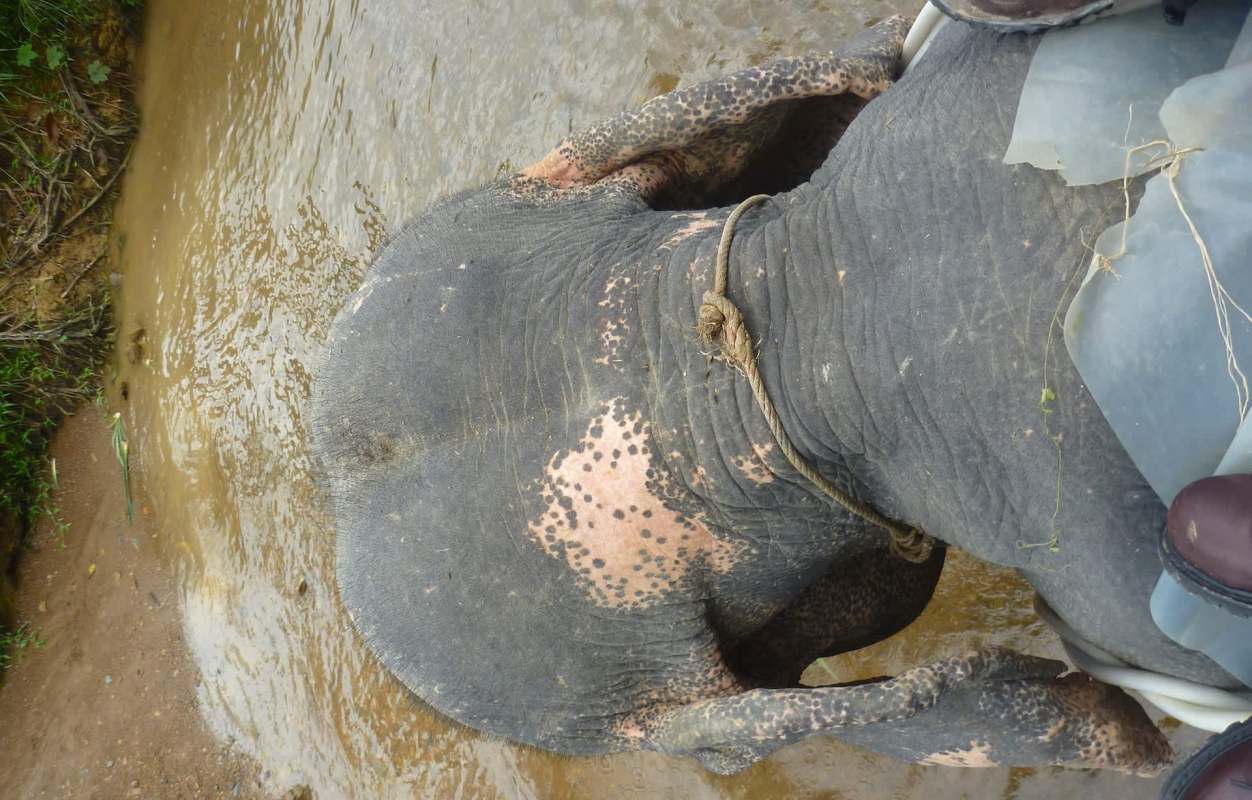
A rescued elephant calf in Assam, India, arrived at his new rehabilitation center with ropes still attached after people tried to keep him from wandering into nearby wells and trenches. Within days, Gotonga had also gained the company of another young elephant.
That companion is Monikuntal, a calf rescued in 2024 whose own recovery is now helping the newest arrival adjust to an unfamiliar environment.
Here's what to know
After he was found apart from his mother, Gotonga was brought to the Centre for Wildlife Rehabilitation and Conservation in Assam as its newest rescued calf. According to IFAW, veterinary staff placed him under round-the-clock observation and began specialized treatment right away.
Gotonga was alert, active, and taking his milk formula well. At 267 pounds (121 kilograms), he was larger than many calves his age, though he looked roughly a month old.
Staff at the center treated Gotonga's social needs as part of his care plan. Since elephant calves rely heavily on companionship, they put him in contact with another orphan rather than having him recover alone.
More background
Monikuntal now serves as that companion, an orphan brought to the center in 2024 for intensive care. Since then, caregivers have provided him with specialized food, veterinary care, and enrichment to help him develop as naturally as possible.
TCD Picks » Quince Spotlight
💡These best-sellers from Quince deliver affordable, sustainable luxury for all




Since his 2024 rescue, Monikuntal has grown from 214 pounds (97 kilograms) to about 503 pounds (228 kilograms), and he has become a playful, self-assured young elephant.
Rehabilitation centers like this one rely on skilled teams that can sustain long-term care, not just emergency rescues, and Monikuntal's recovery shows what that investment can achieve for wildlife and the communities working to protect it.
The Wildlife Trust of India, the Assam Forest Department, and IFAW jointly operate the center. That partnership allows each rescued elephant to receive care suited to its situation, from medical help and nutrition to behavioral support or simply time to recover.
What's being done?
Their introduction began indirectly. Caregivers kept the calves in neighboring nursery spaces so they could become familiar with each other through sight, sound, and smell before spending longer periods together.
They spend much of the day together, giving Gotonga social reassurance that can matter as much in early rehabilitation as formula and monitoring.
Each morning, keepers lead the calves into the forest to explore, play with enrichment toys, splash in streams, and rest in the shade.
Staff are also tailoring care to each elephant's age and needs. Gotonga is fed milk every three hours to support growth, while the older Monikuntal has been gradually moved to fewer feedings.
Gotonga's next steps include continued round-the-clock care, regular three-hour milk feeds, and daily forest outings with Monikuntal, the calf rescued in 2024 who is now helping another orphan adjust to life at CWRC.
Where can I learn more?
More rescued elephants have shown how companionship, reintegration, and patient care shape recovery.
• At Kenya's Ithumba Reintegration Unit, a sensitive rescued elephant grew into a herd leader.
• In Kenya, an orphaned calf melts into her keeper after sprinting to the riverbank.
• In Kenya, an orphaned elephant leads the herd to swim and resists leaving.
• In northern Kenya, rescuers watched as the entire family rumbled during a calf's reunion.
• In Kenya's Samburu ecosystem, another elephant family adopted her after Ringlet lost her own.

Get TCD's free newsletters for easy tips, smart advice, and a chance to earn $5,000 toward home upgrades. To see more stories like this one, change your Google preferences here.







