


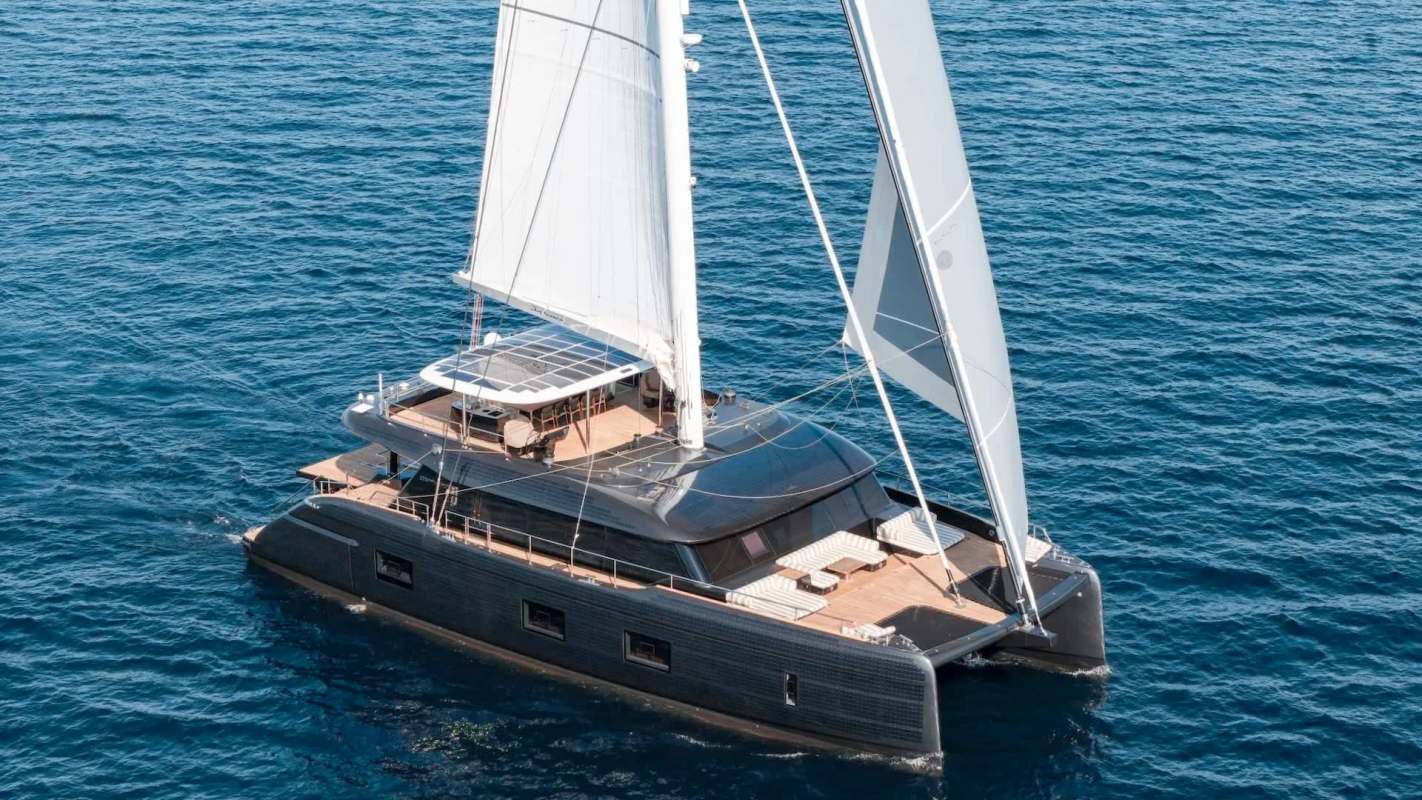
Institut Le Rosey, a Swiss boarding school where yearly tuition and boarding can rise to about $200,000, is giving students access to a fittingly extravagant teaching tool.
A 94-foot, $17 million solar-powered electric superyacht is expected to support hands-on classes at sea.
Here's what to know
According to Supercar Blondie, Sunreef Yachts built the solar-powered electric yacht, known as II or 100 Eco Ipharra, so its motors can be recharged with solar energy.
About 420 students attend Institut Le Rosey each year, and entry is steep. At the school, tuition and boarding total roughly 130,000 to 160,000 Swiss francs, or about $160,000 to $200,000 per year.
The outlet reported the school intends to use the yacht as a floating classroom for marine conservation, renewable energy technology, electronic navigation, and traditional sailing mechanics.
The solar and electric setup gives students direct exposure to cleaner marine systems, rather than only conventional diesel hardware.
TCD Picks » Quince Spotlight
💡These best-sellers from Quince deliver affordable, sustainable luxury for all




More background
Large vessels are among the hardest machines to electrify, as Supercar Blondie detailed. Weight is a much tougher issue for yachts than for cars or trains because these vessels must carry enough energy to operate safely far from shore. That trade-off is a major reason most superyachts still rely on diesel.
Marine diesel provides about 5,400 watt-hours per pound (12,000 Wh/kg), the outlet said, while top-tier lithium-ion marine battery packs offer roughly 68 to 113 Wh/lb (150 to 250 Wh/kg).
Even after accounting for electric motors' superior efficiency, usable energy from fuel remains roughly 15 to 20 times lighter. That makes solar-electric propulsion far easier to scale on smaller boats than on large yachts, where battery mass becomes a limiting factor, Supercar Blondie noted.
What's being done?
The yacht is part of the push toward cleaner marine technology. By combining solar generation with electric propulsion, Sunreef's design reduces reliance on the massive diesel engines that dominate most yachts, which can mean less fuel burned, less noise, and less dirty exhaust around passengers and crew.
Continued gains in battery density for vessels in Ipharra's class could eventually make larger electric boats more workable.
Meanwhile, Institut Le Rosey expects to use Ipharra as an on-water teaching platform. Students will learn aboard a 94-foot platform focused on ocean conservation, sailing mechanics, and renewable energy.
While it might seem over-the-top, a high-end superyacht helps justify the $200,000-a-year tuition. In a best-case scenario, the clean technology will make a lasting impression on some of the next generation.
Where can I learn more?
Clean marine technology is showing up well beyond this Swiss school's floating classroom.
• Silent Yachts unveiled an all-three-deck redesign of its solar-electric catamaran for longer-range luxury cruising.
• Italian builder Sanlorenzo launched the world's first superyacht powered by a patented hydrogen fuel-cell system.
• The Hu'chu 55 showed a significant leap forward in scrap-built solar-electric ocean research vessels.
• Dutch students brought a first-of-its-kind boat to Monaco to prove hydrogen racing works.
• A futuristic yacht achieved turning seawater into hydrogen with an onboard carbon-neutral fuel system.

Get TCD's free newsletters for easy tips, smart advice, and a chance to earn $5,000 toward home upgrades. To see more stories like this one, change your Google preferences here.






