


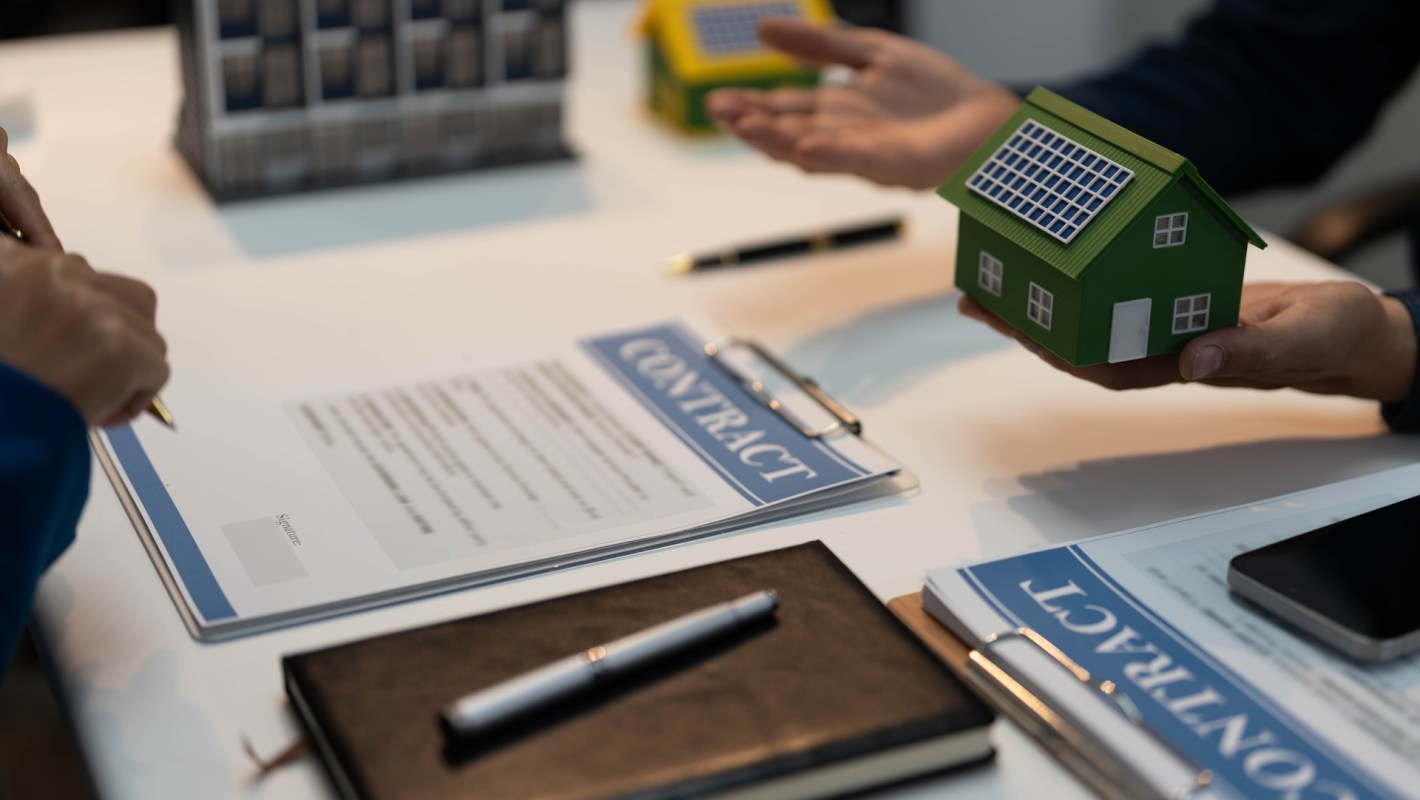
A homeowner who works from home wanted to buy a solar panel system to help offset energy costs, but the solar salespeople don't seem to be playing nice. The homeowner went to an online forum asking: "Are vendors just trying to upsell me?"
While looking to buy a straightforward 12-panel solar system, a Bay Area PG&E customer said nearly every installer instead steered them toward a five-year battery PPA that would cost about twice as much.
Reddit users said that the PPA concern is reasonable, but added that California's NEM 3 rules can make going without storage far less attractive.
Here's what to know
The Oct. 6 post on Reddit described a low-use Bay Area home on PG&E service. The household uses roughly 625 kilowatt-hours a month and relies on gas-powered heating, hot water, a stove, and a dryer, with little electricity demand after dark.
The homeowner said the household is mostly retired and works from home, and they want a 12-panel system with microinverters rather than a battery-focused financing offer.
A common response in the thread was that NEM 3 changes the equation because excess daytime solar is compensated at much lower rates than evening electricity purchases. As one commenter put it, "Otherwise you give PG&E essentially free energy all day long then buy it back at full retail markup once the sun goes down."
For homeowners who want to compare options before signing anything, EnergySage can help them explore home battery storage, including competitive installation estimates. EnergySage has teamed up with electrification brand Qmerit to help homeowners get the best price on home battery storage solutions.
More background
The poster also questioned whether the sales pitch made financial sense for their home. The homeowner questioned whether the added complexity was worth it for a house with modest use and a commuter EV. "I am just not convinced that I need one, since it's twice the price, and dealing with financing," they wrote.
Save $10,000 on solar panels without even sharing your phone number Want to go solar but not sure who to trust? EnergySage has your back with free and transparent quotes from fully vetted providers in your area. To get started, just answer a few questions about your home — no phone number required. Within a day or two, EnergySage will email you the best options for your needs, and their expert advisers can help you compare quotes and pick a winner. Solar panels can save you more than $50k over their 25-year lifespan, and EnergySage can help you save as much as $10k on installation. Which begs the question — isn't that worth an email or two? |

The homeowner also raised concerns about battery lifespan, theft, fire risk, and whether stored power would later charge a commuter EV.
Many replies focused on the deal structure as the main issue, saying a battery is likely worth the effort. One commenter offered blunt advice about PPAs: "DO NOT SIGN A PPA. BUY THE SYSTEM OUTRIGHT OR FINANCE IT. DO NOT DO ANY KIND OF THIRD PARTY OWNERSHIP." Another commenter said PPA agreements are "often" shady and urged the poster to closely examine the buyout terms.
Given the home's limited evening load and usage of about 625 kWh per month, another suggestion was to consider a smaller battery or install a system that could easily add storage later.
What can be done?
For homeowners under export rules like NEM 3, battery storage can provide backup power during outages, save money on energy, and let households use more of their own solar production instead of depending on the grid after sunset.
Several commenters said the key is to model the home's actual consumption carefully, especially if EV charging can be moved around. Replies noted that shifting more use into daylight hours could help, and that a west-facing array serving late-afternoon demand might reduce how necessary a battery is.
For shoppers who do want backup power, there are lower-commitment options worth comparing. Pila offers strong battery backup options, and its plug-and-play batteries cost a fraction of a whole-home backup system. In the Reddit thread, other commenters also suggested paying cash for solar when possible and making sure the system can accommodate a battery later.
One commenter offered a simple solution: "Using battery makes a lot of sense. You have an EV though. I suggest just getting it set up so that connecting a battery will be easy in the future."
Where can I learn more?
For homeowners weighing solar-only systems against batteries, these stories offer a closer look at how the math changes from one market to the next.
• In California, PG&E's NEM 3.0 pays so little that batteries can transform solar savings.
• Across the U.S., net metering rules often decide whether home batteries pencil out.
• In Ohio, net metering may leave big utility charges untouched even after solar.
• In Texas, home solar power purchase agreements promised panels with no upfront cost.

Get TCD's free newsletters for easy tips, smart advice, and a chance to earn $5,000 toward home upgrades. To see more stories like this one, change your Google preferences here.






