


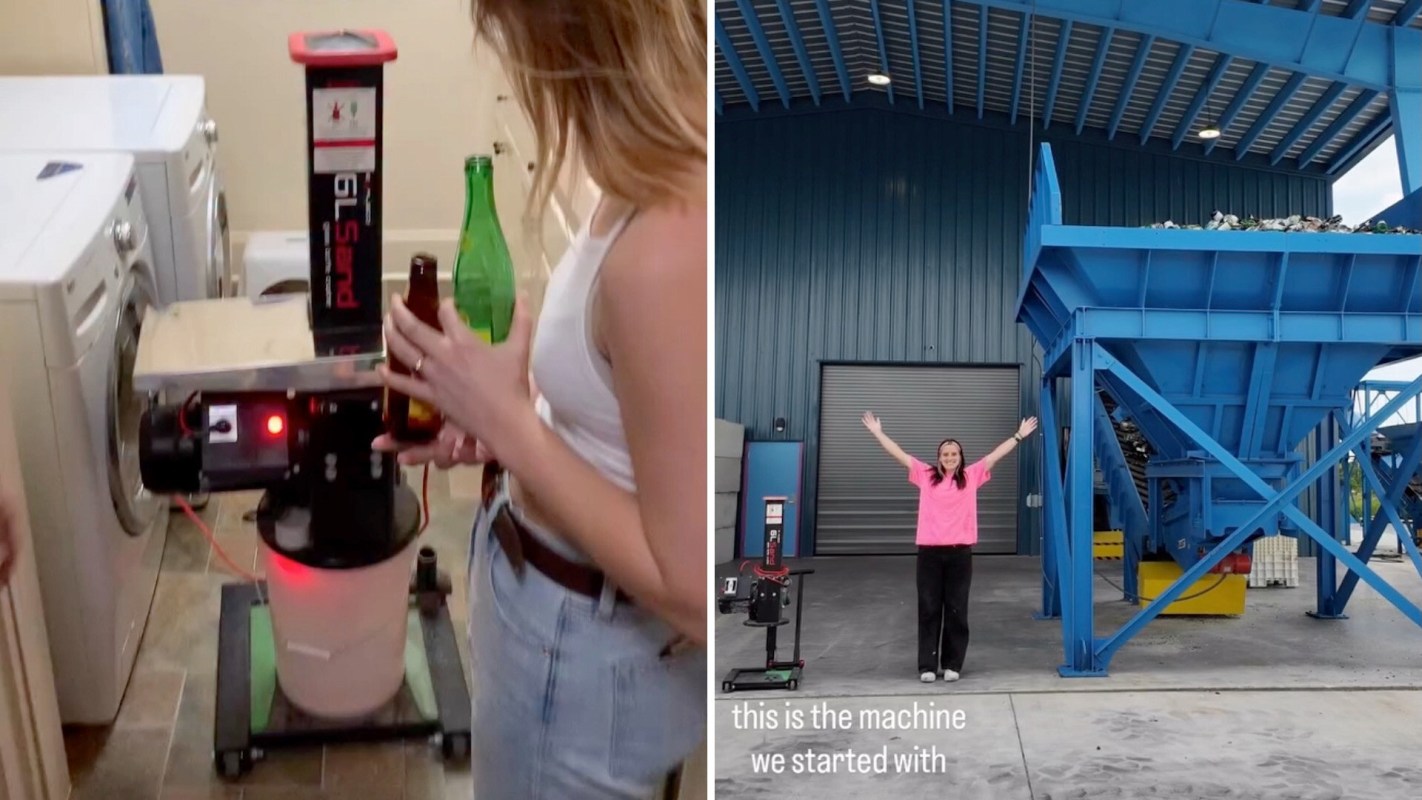
An Instagram content creator showed how far a recycling idea can grow, from a tiny machine that turned one glass bottle at a time into sand to a full facility built to process thousands.
Here's what to know
The reel from franziska t (@glassgrrrl) turns that before-and-after into a simple but powerful reminder that major waste solutions do not always start at a major scale.
In the post, Franziska said, "we've definitely upgraded a lot along the way but you gotta start somewhere !! We had this tiny lil machine that turned one bottle at a time into sand and we just kept upgrading little by little until we built our dream facility that can recycle THOUSANDS of glass bottles at a time."
The reel walks through the buildout step by step and shows how repeated upgrades led to far greater capacity.
"Incredible journey and important work," one commenter wrote.
"You are my inspiration," another added.
TCD Picks » Quince Spotlight
💡These best-sellers from Quince deliver affordable, sustainable luxury for all




More background
The gap between the starting point and the current setup is stark, underscoring what steady upgrades and persistence can add up to.
Turning used bottles into sand can make glass easier to manage than storing piles of intact containers, especially for a team growing from a small setup into a larger facility.
Handling more glass at once can mean less material heading to the landfill, fewer bulky bottles taking up space, and potentially safer day-to-day operations by reducing the amount of breakable glass that must be moved by hand.
Across the reel, Franziska highlights both the machinery and the progress, ending with a facility that can do far more than the team's original setup.
Instead of waiting until a large plant was possible, Franziska's team started with a one-bottle machine and expanded from there.
A smaller machine can help prove the concept, while later upgrades can increase throughput, reduce the hassle of handling so many individual bottles, and make the operation more economical over time.
Where can I learn more?
For more on how recycling systems are evolving, these stories cover everything from home sorting habits to high-capacity processing facilities.
• In Tianjin, China, a fully automated facility is reshaping how massive recycling volumes get processed.
• Across U.S. homes, common recycling mistakes still send useful materials the wrong way.
• How2Recycle has rolled out dynamic QR code labels that give shoppers localized recycling instructions.

Get TCD's free newsletters for easy tips, smart advice, and a chance to earn $5,000 toward home upgrades. To see more stories like this one, change your Google preferences here.






