


Despite producing more electricity than the household uses, one solar homeowner said the utility still charges $10.32 each month for grid access — and another $2.30 every time that bill gets paid.
Here's what to know
The complaint appeared on r/MildlyInfuriating, where the homeowner said their rooftop solar panel system more than covers the home's monthly consumption. Even so, the utility still sends a bill, and readers seemed especially irritated by the extra cost: $10.32 owed, plus a $2.30 payment fee.
In the Reddit thread, the poster wrote, "We have solar and we generate more than we use each month. The $10.32 is a mandatory 'connection fee' with the power company. When I go to pay the bill there's a flat $2.30 convenience fee every time."
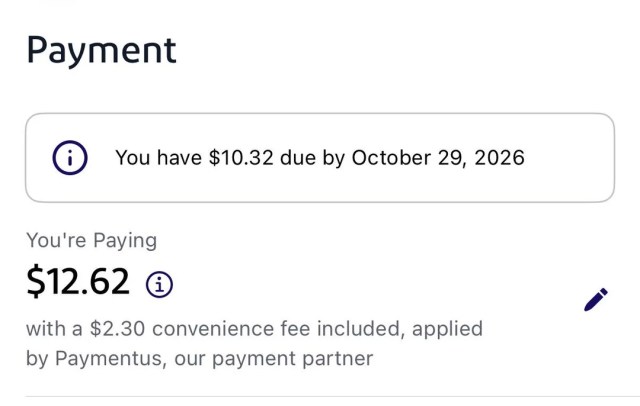
One person in the comments asked whether the surcharge changed with the bill amount: "Is that a 22% fee, or a flat $2.30 fee regardless of amount due?" It turned out to be a flat charge, which in this case works out to roughly 22% of the monthly balance.
For households with solar, that kind of system can feel particularly irritating. Even after everything they can do to lower the bill, customers can still be stuck with fixed utility charges and payment fees that do not depend on how much power they actually used.
More background
One commenter argued that the recurring charge is for keeping the service available, not just paying for consumed electricity. "You don't only pay for the energy, but for the instant availability of such energy." They added that when "it's millions of houses, then it adds up," and said the roughly $13 in recurring charges help cover shared grid capacity.
TCD Picks » Quince Spotlight
💡These best-sellers from Quince deliver affordable, sustainable luxury for all




Another user compared it to paying for access whether or not you use it: "You're paying for the 'connection'...it's right there in the word. You have power on demand. Just like if you pay for Netflix but never watch anything." Even with that explanation, much of the conversation stayed focused on the separate $2.30 fee layered on top.
What can be done?
An early suggestion for avoiding the fee was to skip card processing by using a bank account, but the poster said the only available option was to send a check.
That led to another suggestion: many banks' online bill-pay systems can essentially "send them a check" on the customer's behalf. It may not be the most up-to-date fix, but it could remove the extra fee without requiring the original poster to write and mail a check every month.
Some also suggested reducing how often the surcharge gets applied. One commenter recommended, "Just prepay like $120 or whatever amount you are comfortable with," noting that utilities can keep the extra amount as a credit and apply it to future bills.
Because the $2.30 fee is flat, combining multiple months into a single payment would reduce how much of a $10.32 bill gets eaten up by the surcharge.
Where can I learn more?
Solar owners sometimes see confusing charges on their bills. These stories follow homeowners who kept seeing charges, high balances, or surprising credits after their panels changed how power flowed to and from the grid.
• A solar customer blasted a utility for ridiculous charges from the grid after going solar.
• In South Carolina, the app showed exports before a $150 bill claimed grid power use.
• A new homeowner was shown rooftop panels, then the first bill hit $420 anyway.
• In Australia, a 20kW setup made blackouts invisible, and one month hit a $545 credit.

Get TCD's free newsletters for easy tips, smart advice, and a chance to earn $5,000 toward home upgrades. To see more stories like this one, change your Google preferences here.






