


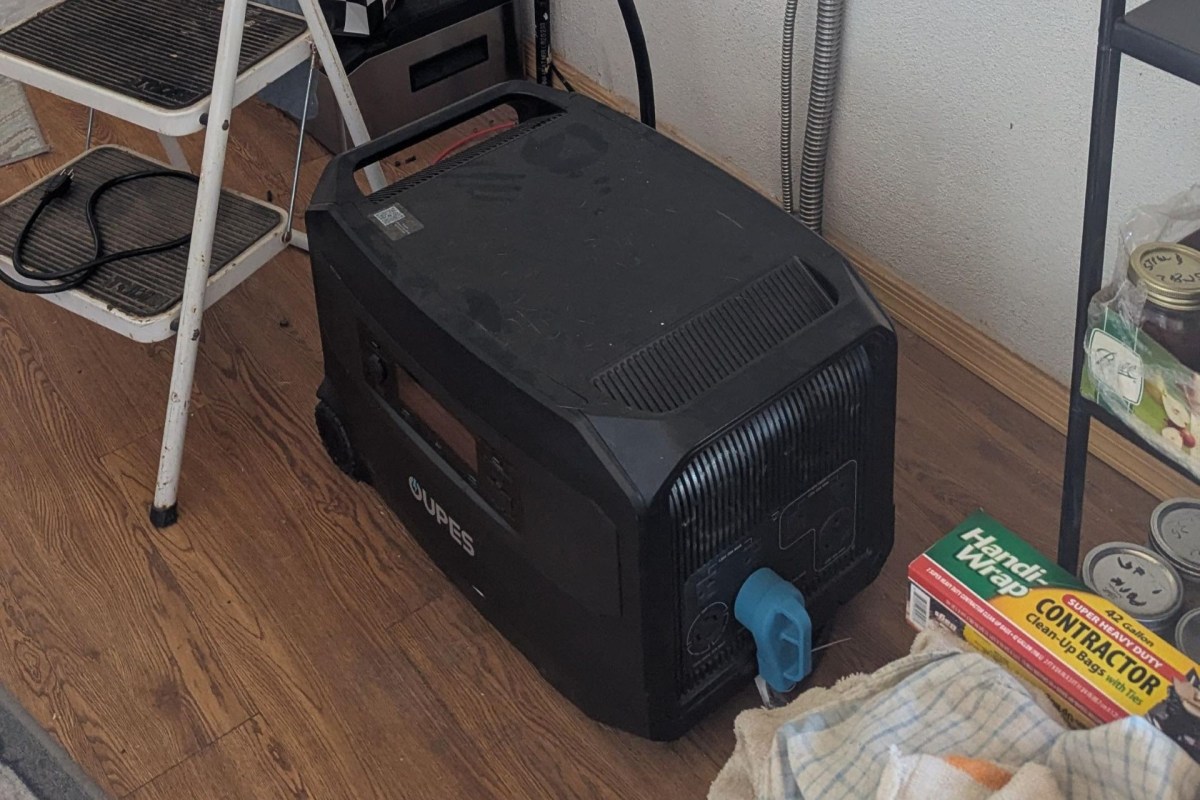
A homeowner's test of using an Oupes Guardian 6000 as a daily power source has delivered an encouraging result. On sunny days, the system can keep one side of the house running around the clock.
The trial has also exposed some weaknesses. Dust has been collecting at the air intakes, and the wireless connection has been unreliable, though the homeowner said the system itself has continued supplying power.
Here's what to know
According to a Reddit post in r/SolarDIY, the setup centers on a permitted transfer switch installed in July and 2,400 watts of solar wired in a series/parallel configuration. The Guardian 6000 has been running "full time since July" and is handling about two-thirds of the house rather than the entire home.
Instead of covering every circuit, the system serves six 20-amp, 120-volt circuits along with two 240-volt lines for mini-split heating and cooling. The homeowner wrote, "on a sunny day the Guardian is charged by noon," and added, "I can run my side of the house off solar 24/7 as long as the sun stays out."
After dark, heating and cooling remain a key constraint. If you need air conditioning or heat at night, the battery lasts only part of the evening before the AC units and kitchen switch back to grid power. Going solar is one of the best ways to save money on home energy, and homeowners who want to compare a setup like this with professionally installed systems can use EnergySage to get free solar installation estimates and compare quotes.
More background
Budget has shaped the project from the start. The homeowner said the system is being built "a little at a time as funds allow," and they expanded the solar array two panels at a time instead of buying it all at once.
Two issues became more noticeable over time. Because the fans run whenever solar input is active, the air intakes "get a bit dusty," which raised concerns about dirt accumulating inside the unit over time. Bluetooth and wireless connections were also inconsistent, and one outage was fixed only after a brief shutdown and full disconnect.
The display problem did not stop the electricity supply, the homeowner said, and power kept flowing. In the comments, the original poster also praised the transfer switch, writing, "It's been solid and reliable. Seems really well made," while another commenter, discussing a different home backup setup, said, "EG4 has a great ecosystem and very nearly went with it."
Save $10,000 on solar panels without even sharing your phone number Want to go solar but not sure who to trust? EnergySage has your back with free and transparent quotes from fully vetted providers that can help you save as much as $10k on installation. To get started, just answer a few questions about your home — no phone number required. Within a day or two, EnergySage will email you the best local options for your needs, and their expert advisers can help you compare quotes and pick a winner. |

What can be done?
Rather than try to run the whole house at once, the homeowner focused on the most-used areas, added selected circuits to the system, and used "night mode" to shift heavier loads back to the grid.
For people considering a similar route, EnergySage can help simplify the cost comparison. With EnergySage's help, the average person can save up to $10,000 on solar purchases and installations. EnergySage's solar map shows the average cost of a home solar panel system by state, along with details on solar panel incentives in each state; together, these tools help homeowners get the best price for rooftop solar panels and access available incentives.
Adding battery storage to a solar setup is also one of the best ways to protect your home during outages, save money on energy, and go off-grid. Homeowners who want to compare battery options and get competitive installation estimates can explore EnergySage for information about home battery storage.
After running it full time since July, the homeowner summed up the experience, writing, "If you need occasional whole-house backup to run a few critical circuits, it's freaking awesome. Whether it's something you can count on as a daily driver remains to be seen."
More From EnergySage
💡Go deep on the latest news and trends shaping the residential solar landscape


Where can I learn more?
For a sense of how other solar-and-battery setups perform in real homes, these stories offer a few useful comparisons. They show homeowners using rooftop solar and batteries to get through blackouts, cut bills, and expand their backup power.
• In Australia, a homeowner said 20kW solar made blackouts invisible and produced a $545 monthly credit.
• During 90-degree summer heat, one homeowner found rooftop solar powers whole-house AC with energy left for two EVs.
• In Tennessee, an off-grid family said they secured their energy independence for decades and barely need a generator.
• Across the home battery market, next-gen alternatives can save families from blackouts without relying on Tesla.

Get TCD's free newsletters for easy tips, smart advice, and a chance to earn $5,000 toward home upgrades. To see more stories like this one, change your Google preferences here.






