


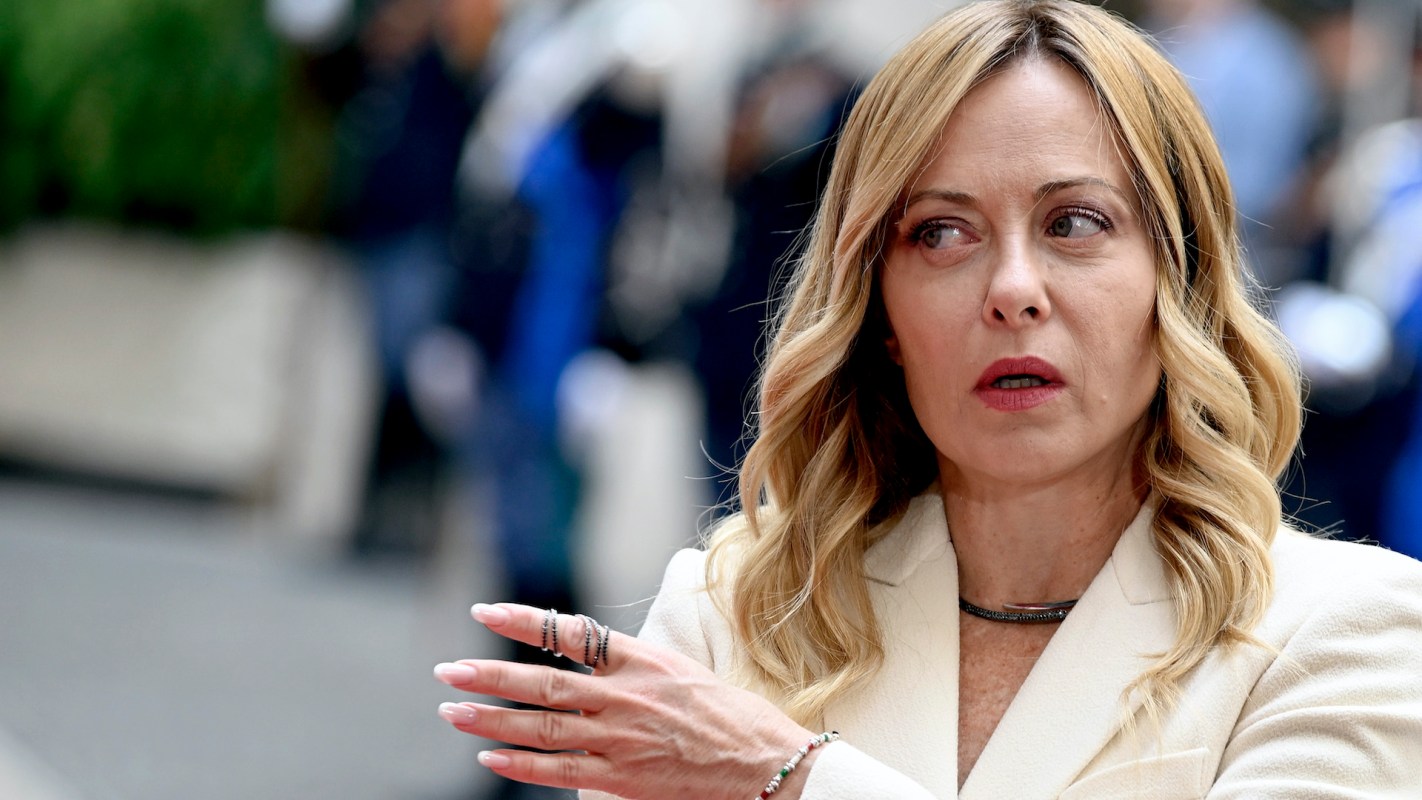
Italian Prime Minister Giorgia Meloni is moving to protect one of her most recognizable political assets: her voice.
She filed to trademark a four-second recording of herself saying "Io sono Giorgia" twice, a step that comes as AI deepfakes continue to spread online and after fake sexualized images and videos targeting her circulated on the internet.
Here's what to know
Meloni's office told the BBC that it filed the application with the European Union Intellectual Property Office.
Those words, repeated in the recording, are also the title of her 2021 autobiography and have long been tied to her political campaigns.
AI-generated voice replicas are trained on recordings of real people. Basic versions can be made from just a few seconds of audio, while more persuasive imitations usually depend on hours of sound.
Others in the public eye have sought similar protections. On 15 January 2026, actor Matthew McConaughey trademarked his image and voice, and on 27 April 2026, singer Taylor Swift filed three U.S. trademark applications covering an Eras Tour stage photo and two audio clips of herself introducing herself while promoting her last album.
TCD Picks » Quince Spotlight
💡These best-sellers from Quince deliver affordable, sustainable luxury for all




Her application comes in the run-up to Italy's 2027 general elections.
More background
Meloni has already taken legal action over synthetic media.
In 2024, the BBC reported, she sought €100,000 (just over $112,000 USD) in damages over deepfake porn videos uploaded online that used her likeness.
In May 2026, Meloni warned about the dangers of deepfakes after AI-generated images of her wearing lingerie spread online.
On 28 August 2026, the BBC reported that more than 80 performers, including actors Matt Lucas, Hugh Bonneville, and Nicola Coughlan, called on U.K. politician Andy Burnham to introduce legislation giving every person in the U.K. a legal right to their own voice.
What's being done?
Meloni's immediate response has been to use existing intellectual property rules.
By recording and submitting the four-second clip to the EUIPO, she is attempting to establish a formal legal claim over a distinctive vocal identifier.
Meloni addressed the issue directly in a social media post. "The point, however, goes beyond me. Deepfakes are a dangerous tool, because they can deceive, manipulate, and strike anyone. I can defend myself. Many others cannot."
Where can I learn more?
Meloni's trademark filing is part of a broader fight over how AI is used, from voice rights to regulation and public backlash.
• In South Korea, lawmakers passed revolutionary AI safety laws to tighten oversight of companies.
• In Congress, a controversial push to block state AI rules drew fresh alarms.
• In Hollywood, backlash grew after an AI actress sparked outrage with disturbing comments.
• As AI expands, critics warned the backlash may get brutal over jobs and resources.

Get TCD's free newsletters for easy tips, smart advice, and a chance to earn $5,000 toward home upgrades. To see more stories like this one, change your Google preferences here.






