


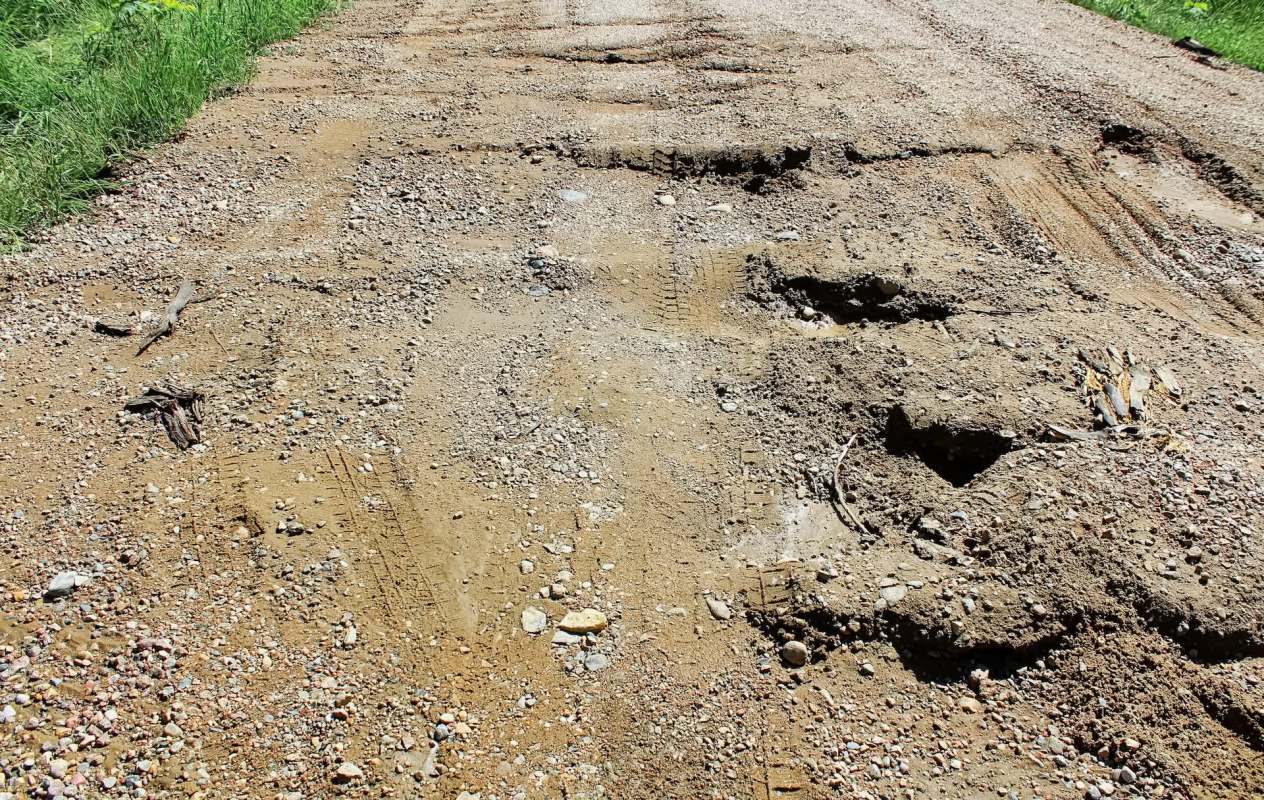
After decades of promised pavement, South Carolina residents say the nearly 1-mile dirt stretch of Liberty Hill Road in Lexington County, South Carolina, is unsafe, and they are paying the cost.
Here's what to know
Residents told WIS that Liberty Hill Road and nearby Crout Place were expected to get a new road decades ago, but both remain dirt with a "washboard-like surface" that continues to damage vehicles and raise safety concerns. Lexington County Public Works told WIS that Liberty Hill currently ranks No. 10 on the county's priority list for paving dirt roads.
The county told WIS it updates the list about every five years using factors such as the number of homes, traffic volume, bus routes, and upkeep costs, and that current funding allows it to pave roughly three miles of dirt road each year.
After living on Liberty Hill Road for nearly 30 years, Charlene Pankow told WIS, "It has been a nightmare. I have times that I can't even get up and down the road. I've had to call in to have them scrape the road just so I can get down it." She showed repair bills, including one for $1,641.
Lisa Johnson, who said she often travels with her 6-year-old grandchild, told WIS, "There have been too many instances where I thought I was going to get hit head-on."
More background
Trevor Mathias told WIS that he has seen new subdivisions built nearby and other roads paved. Frustrated, he said, "Well I saw y'all investigating other roads, and I saw people saying they wanted a pothole filled in. I'll take a pothole."
TCD Picks » Quince Spotlight
💡These best-sellers from Quince deliver affordable, sustainable luxury for all




According to residents, drivers frequently use Liberty Hill and Crout Place to move between Calks Ferry Road and Old Charleston Highway, and the route can become an obstacle course when vehicles approach from opposite directions.
WIS reported that Pankow's late husband, a disabled Vietnam veteran, created a retention pond in their front yard to keep drainage from eroding the roadbed. She said, "My van is made so that when the ramp comes out, the van lowers so the ramp's not so steep so that I can get in safely. Tore up the motor to the hydraulics, and I had to replace it."
What's being done?
Residents shared photos with WIS of crews smoothing the road, but several neighbors said the work does not hold up. In their view, heavy rain or truck traffic quickly turns it back into another temporary fix.
WIS reported county estimates of roughly $7,000 a year for maintenance versus about $2 million to pave the nearly 1-mile road. Johnson pushed back on that approach, saying, "They say it's cheaper to maintain than pave, but they're not maintaining it in a way that makes it safe for people to travel."
The county said the timeline could move faster if it finds additional funding. Neighbors have documented damage, shared repair costs, and urged officials to treat the road as a safety and accessibility issue rather than a recurring inconvenience.
Pankow said, "I would hope and pray that it gets paved in my lifetime. I am so tired of that road."
Where can I learn more?
The frustrations on Liberty Hill Road echo road repair problems in other communities. These stories look at worsening potholes, the role of weather and traffic in road damage, new paving materials, and disputes over asphalt and highway projects.
• Across the US, engineers warn a 'pothole plague' is driving up vehicle damage.
• Across many communities, traffic patterns and weather are accelerating cracks and potholes.
• In Hawaii and California, crews are repaving roads with non-recyclable plastic instead of landfilling it.
• In Colorado, residents opposing the I-70 project say they want the roads fixed first.
• At Arizona State University, researchers found hot asphalt may be harming nearby residents.

Get TCD's free newsletters for easy tips, smart advice, and a chance to earn $5,000 toward home upgrades. To see more stories like this one, change your Google preferences here.






