


A drive down Interstate 5 in an electric Ford F-150 Lightning is becoming much easier to manage without range anxiety, but the creators behind the Transport Evolved (@transportevolved) YouTube channel found that easier routing does not necessarily mean lower charging bills.
Here's what to know
During an Oregon-to-California drive in a Ford F-150 Lightning, the group documented a fast-charge stop on YouTube that showed the issue at hand.
The Lightning reached the Seven Feathers stop in southern Oregon at about 10% charge and took on nearly 100 kilowatt-hours before leaving. The creators said the session cost "about two and a half to three times the cost that it cost me to fill up the truck from empty at home."
They noted Oregon pricing from Electrify America had climbed to 61 cents per kilowatt-hour from 43 cents in 2022. Even worse, some California sites were charging as much as 69 cents, with extra costs at certain times of heavier demand.
On this trip, the creator said that "the whole trip was really, really easy and hassle-free." They also said they have spent years covering long-distance EV driving, including coast-to-coast travel across the United States.
"I have a consistent gripe about charging," one commenter reacted. "I want prices displayed visible from the road like gas stations."
TCD Picks » Quince Spotlight
💡These best-sellers from Quince deliver affordable, sustainable luxury for all




More background
The creators said 2022 made sense as a benchmark because it was both the first model year for the F-150 Lightning and a period of unusually high fuel prices. In the video, they pointed to June 2022 average gas prices of $5.55 a gallon in Oregon and $6.43 in California.
Home electricity had moved up as well, they said, with PGE rates rising from about 12 to 14 cents per kilowatt-hour in 2022 to roughly 19 to 22 cents depending on the plan and added charges.
According to them, higher electricity prices are only part of the story. Charging networks also face equipment and upgrade costs, maintenance and parts problems, and ground rent.
Another commenter said, "It cost me $61 to power my Lightning for the entire month," but added that public Level 2 charging at local schools was priced at 49 cents per kilowatt-hour, higher than a nearby Tesla Supercharger.
What can be done?
The creators said drivers should treat fast charging more like price shopping. In the video, they argued that planning a route now matters because the network choices along the way can significantly change the final cost of a trip.
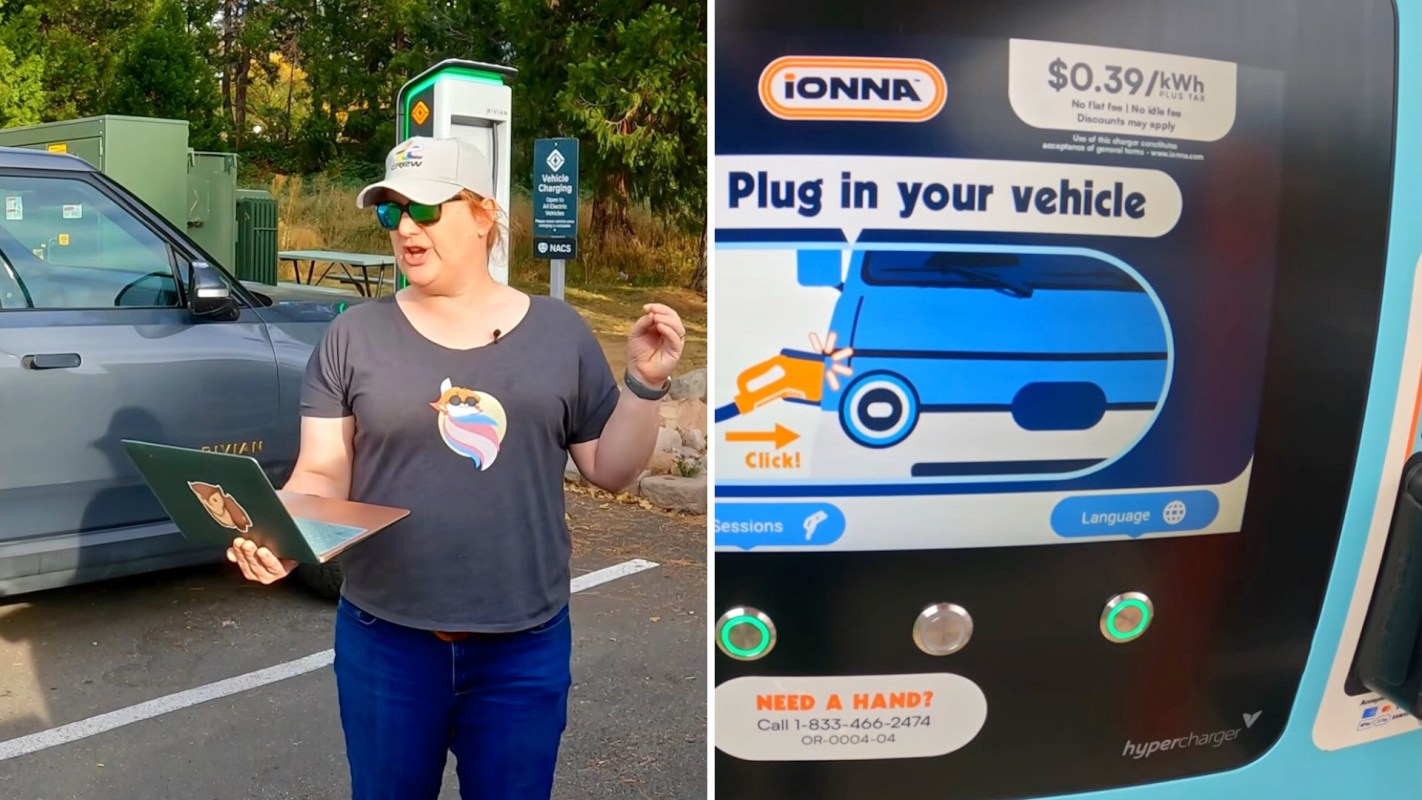
For a 745-mile trip, they estimated about $100 in charging by combining lower-cost options such as IONNA, some Rivian stops, hotel charging, and starting with a full battery. They compared that with an estimated $153 to $176 in gasoline for an F-150 EcoBoost over a similar distance.
They also estimated roughly $158 for the same trip if it relied entirely on Rivian charging, compared with about $192 if the route used only Electrify America.
Calling IONNA "the dark horse," the creator said its typical price was around 39 cents per kilowatt-hour and that promotions had made it especially competitive.
"I use ABRP on any decent route planning, and configure it to prefer chargers that are more competitively priced," a user suggested as another option.
Where can I learn more?
The uneven charging buildout and price confusion still shape long EV trips. Home charging remains the best value for drivers who can lean heavily on it.
• U.S. drivers still juggle 8 charging apps, 2 adapters, and prices that often stay hidden.
• Across the U.S., many drivers still pay about six cents a mile to charge at home.

Get TCD's free newsletters for easy tips, smart advice, and a chance to earn $5,000 toward home upgrades. To see more stories like this one, change your Google preferences here.






