


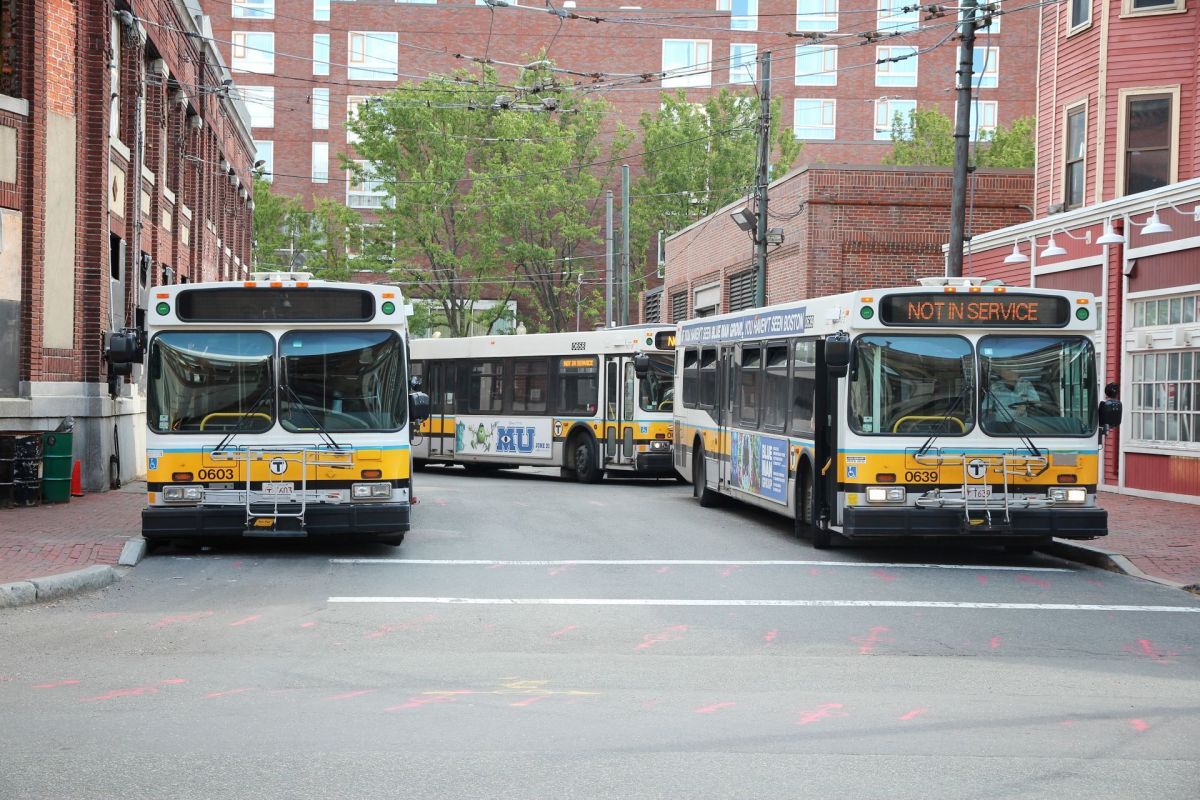
Average speeds on the MBTA's slowest bus routes dipped again, with the 10 slowest lines averaging just 6.42 mph.
At the same time, one chronic rider complaint eased somewhat, as buses on the worst routes were less likely to bunch up and arrive together instead of being spaced along the route.
Here's what to know
TransitMatters' third annual Pokey/Schleppie report found that the system's 10 slowest MBTA bus routes averaged 6.42 mph, down from 6.52 mph a year earlier. Across the 10 routes with the most bunching, that share fell from 15.8% to 13.9%, according to Commonwealth Beacon.
The group framed the 52-page study as its annual "awards for bus inefficiency."
The SL4, which connects Nubian Square, Chinatown, and South Station, posted the system's lowest average speed at 6.09 mph.
The #1 came next at 6.2 mph, after ranking as the slowest route in the report's first two years. The line runs through Roxbury, Back Bay, Fenway-Kenmore, the South End, and Cambridge.
TCD Picks » Quince Spotlight
💡These best-sellers from Quince deliver affordable, sustainable luxury for all




TransitMatters bus and mobility hubs program manager Cole Lewis said riders who rely on the service feel the impact as more than a simple annoyance.
"For people who depend on these buses, that means time lost getting to work, school, and health care. There are plans and commitments in place to make these trips better," Lewis said. "We want this year's report to help move that work forward and make sure riders see the benefits."
More background
TransitMatters said the Pokey and Schleppie names echo a similar transit-advocacy campaign that has run for years in New York City, according to Commonwealth Beacon. In Boston, the group argued, the results reflect a more serious issue than a lighthearted annual ranking.
"Over the past three years we have consistently found that many of the system's slowest and most unreliable buses are the routes predominantly serving Black and Brown communities and low-income neighborhoods – neighborhoods which often depend on transit," the report said. "Poor bus service is not just an issue of inefficiency; it is an issue of opportunity, mobility, and quality of life for these communities."
What's being done?
To address the problems, the report offered several recommendations meant to improve speed and reliability.
The group called for restoring and adding bus lanes so buses spend less time stuck in regular traffic. It also urged headway management, a practice for spacing buses evenly along a route so they don't bunch together.
TransitMatters also called for automatic penalties against drivers who block bus lanes or stops. Those obstructions can delay routes such as the SL4 and #1 as they travel through multiple neighborhoods.
The city's interim streets chief, who serves under Mayor Michelle Wu, praised the findings, according to Commonwealth Beacon.
"The Pokey/Schleppie Report helps keep attention focused on the everyday experience of bus riders and underscores the value of sustained, data-driven work to improve service," Christopher Osgood, Boston's Interim Chief of Streets, stated. "We appreciate TransitMatters's advocacy and partnership and look forward to continuing our work together to deliver faster, more dependable bus service across Boston."
Where can I learn more?
Boston's bus struggles aren't unique. These stories look at service upgrades, fare programs, traffic congestion, and new bus technology in other places.
• Cities that improved public transportation often saw traffic ease and trips speed up.
• Across China, record-breaking transit expansion showed how sustained investment can reshape daily travel.
• In Lagos, endless traffic jams exposed the costs of weak public transportation.

Get TCD's free newsletters for easy tips, smart advice, and a chance to earn $5,000 toward home upgrades. To see more stories like this one, change your Google preferences here.






