


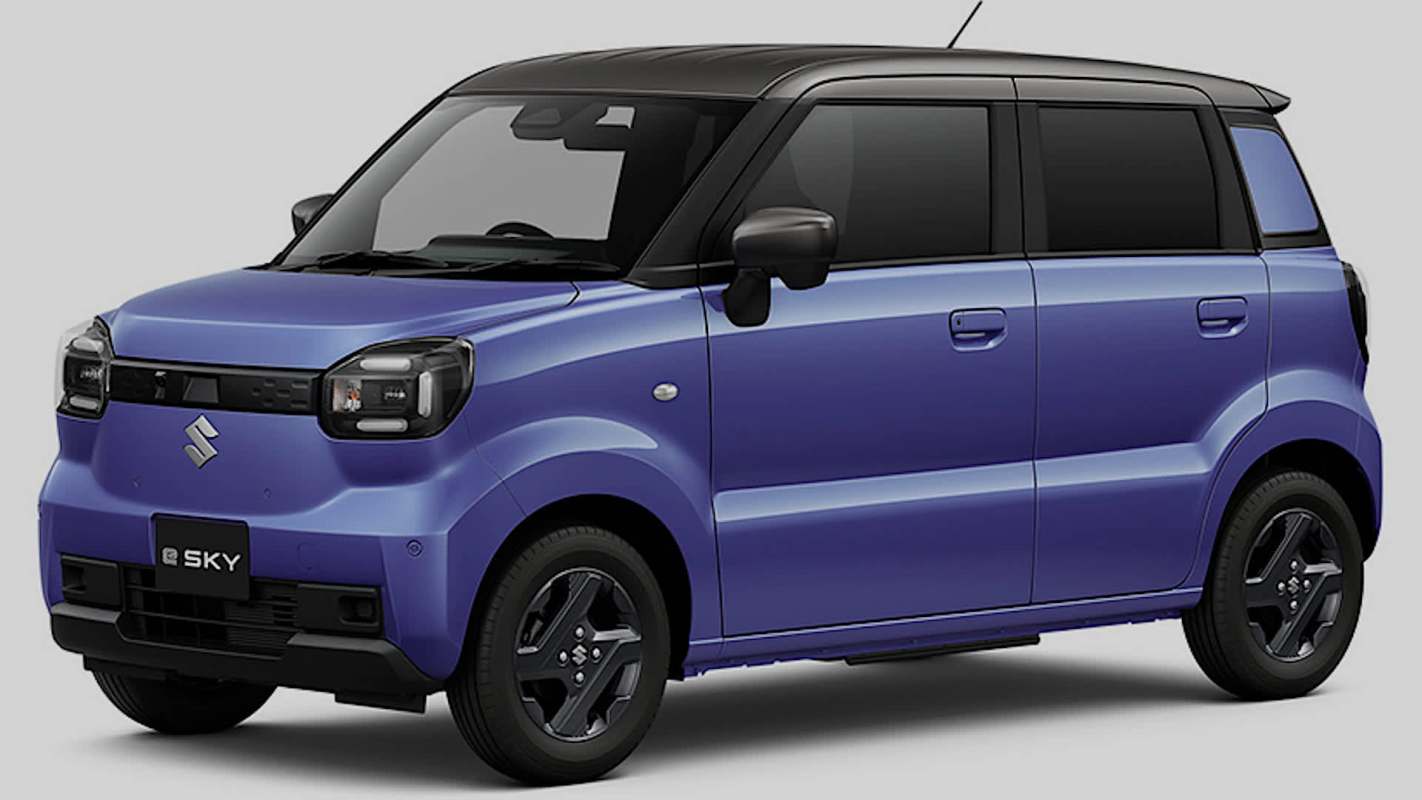
Japan's electric vehicle field is about to get a new entrant. Suzuki is debuting its first battery-powered mini car, the e-Sky, which is expected to be the category's lowest-priced model — thanks in part to lithium iron phosphate packs likely coming from rival BYD's battery division.
Here's what to know
According to Electrek, which cited Nikkei Asia, Suzuki will launch the e-Sky on Nov. 16 in Japan with a price of about 2.12 million yen, or $13,387. At that level, it would cost less than both BYD's 2.145 million yen ($13,546) Racco and Nissan's 2.4 million yen ($15,463) Sakura.
Suzuki lists the e-Sky with a range of up to 310 kilometers (193 miles) and says its 97 watt-hour per kilometer AC energy consumption rating is "class-leading." The e-Sky rides on a kei EV platform developed specifically for it and uses Suzuki's own electric drive system.
More background
Subsidy details for the e-Sky are pending. Should it qualify for the same 568,000 yen ($3,587) offered for the commercial kei-class e-Every, the resulting price would move much closer to the 1.53 million yen ($9,663) Spacia, Suzuki's top-selling gas-powered kei car, according to Electrek.
Chinese automaker BYD is also invested in mini-car development, saying it has the first kei EV to exceed 300 kilometers (186 miles) of range.
The company's Racco 200 uses a 22.4 kilowatt-hour LFP battery and is rated for 210 kilometers (130 miles), while the Racco 300 Plus and Premium has an increased capacity of 35.84 kWh and a range of as much as 320 kilometers (199 miles).
TCD Picks » Quince Spotlight
💡These best-sellers from Quince deliver affordable, sustainable luxury for all




What can be done?
For drivers considering buying an electric vehicle, the e-Sky could open the door at a low price point. Charging strategy affects long-term EV savings, too.
Charging an EV at home often costs half as much as using public chargers, but basic Level 1 charging tends to be slow. Qmerit provides free, instant installation estimates for faster Level 2 home charger installations.
Where can I learn more?
Other developments provide a fuller picture around Suzuki's budget-minded kei EV push and its use of BYD battery tech.
• At BYD, battery cost cuts could make entry-level EVs even cheaper.
• BYD's next-gen Blade battery is poised to lift range while lowering pack prices.
• In Japan, Enechange is offering unlimited monthly charging for less than $20.
• Nissan's N7 sedan pairs stunning driving range with an affordable price.
• Kia's EV3 brings more affordable pricing to a feature-packed electric SUV.

Get TCD's free newsletters for easy tips, smart advice, and a chance to earn $5,000 toward home upgrades. To see more stories like this one, change your Google preferences here.






