


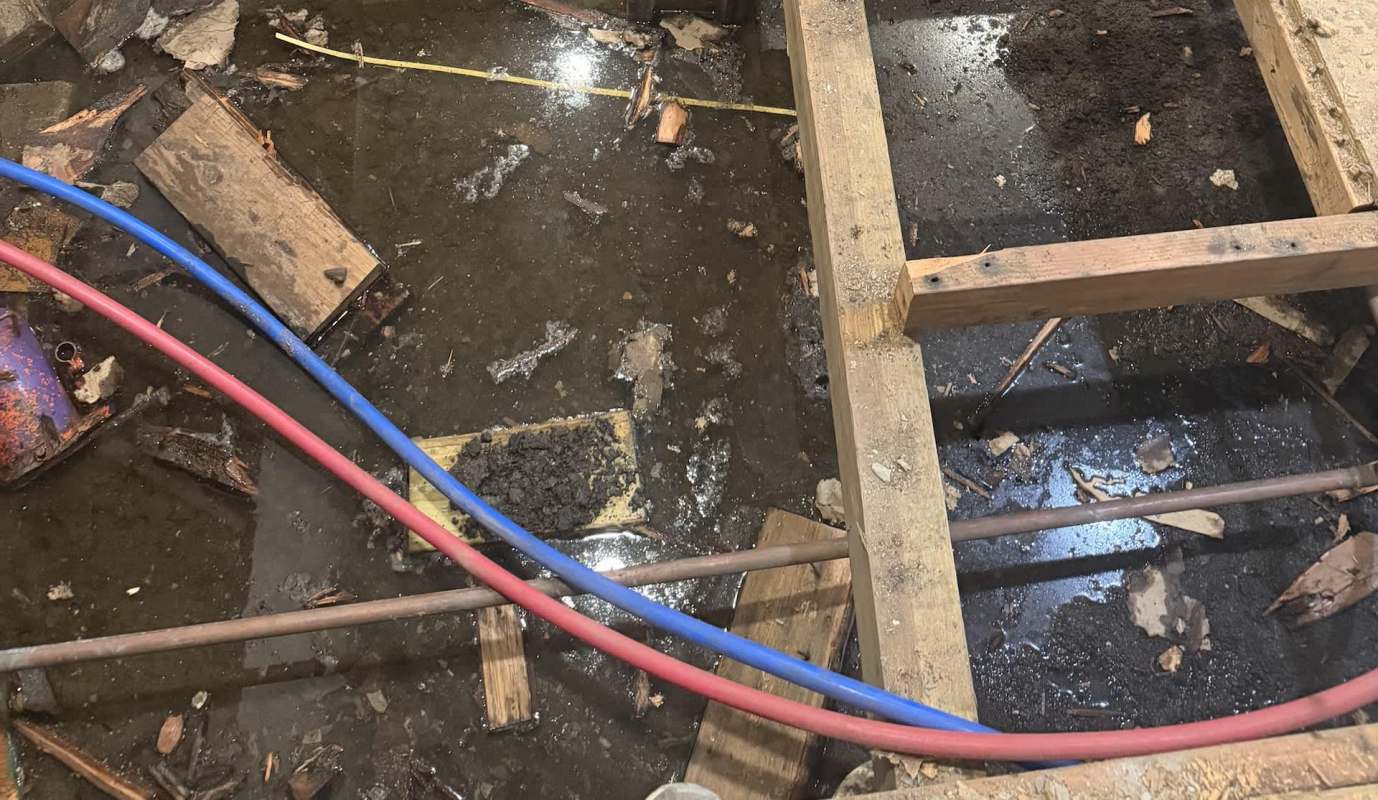
A homeowner in Waco, Texas, thought sump pumps and a French drain installed by the previous owners had fixed a crawl-space water problem in a 1950s house. Instead, those attempted repairs appear to have set off a costly cycle of humidity, mold, torn-up flooring, and more standing water.
After a rainstorm, the homeowners said they found inches of water beneath the house.
Here's what to know
In a Reddit thread, the original poster said that when they bought the home, they were told water had been left underneath it following roughly a week of rain. To complete the sale, the sellers paid for repairs that included sump pumps and a French drain.
The homeowners said the house began feeling damp and the floors seemed uneven. When they checked the crawl space, they found pooled water and said the sump pumps were "not working properly," so they hired contractors to add another French drain system and a dehumidifier.
That still did not resolve the issue. The homeowners said mold showed up in a pantry closet and in the subfloor, and that contractors then handled mold removal, tore out subflooring, and removed several beams while saying nearly every joist should be replaced. They also said they spent thousands on Airbnb stays during the repairs.
A setback came after a storm that dropped "maybe an inch or two" of rain. When they went back to the house, the homeowners said they found inches of water underneath it and were "at a complete loss." One commenter provided three possible solutions, writing, "Option 1: Grade the crawlspace to direct the water to a pit where you extract it. Option 2. Prevent the water from arriving. Option 3. Lift this house up."
TCD Picks » Quince Spotlight
💡These best-sellers from Quince deliver affordable, sustainable luxury for all




One commenter noted that if the pumps "weren't actually pumping out the water," the homeowners "might need much less engineering and drainage work down there than that company is saying you need."
What can be done?
Some commenters pointed to monitoring tools that could help prevent further damage. One commenter recommended dependable pumps along with "a smart monitor for the water level in the pit," while another suggested placing "a meter down there to monitor humidity on a regular basis and a camera" above the sump pump.
The homeowners said they had been monitoring the issue and calling the company back, but "weren't always around when it was raining" because of work travel.
Additional suggestions included checking a topographical map and FEMA flood map and, if necessary, consulting a geotechnical engineer alongside the structural engineer the homeowners had already scheduled.
As the original poster responded: "Thank you! This is really helpful and gives a good direction for moving forward."
Where can I learn more?
Recurring flooding like this often forces homeowners to figure out where the water is coming from and where it should go. The articles cover flood barriers, blocked stormwater systems, yard drainage fixes, trench runoff disputes, and rain-damaged landscaping.
• After 11 floods, one homeowner installed a protective flood wall to hold back water.
• In one neighborhood, critical stormwater infrastructure was sealed with concrete, causing homes to flood.
• An expert horticulturist said one of the best flood defenses starts with flood-smart landscaping.
• A homeowner said a neighbor's trench sent water the wrong way and prompted city calls.
• After heavy rain, a homeowner found floating garden beds and little way to stop them.

Get TCD's free newsletters for easy tips, smart advice, and a chance to earn $5,000 toward home upgrades. To see more stories like this one, change your Google preferences here.






