


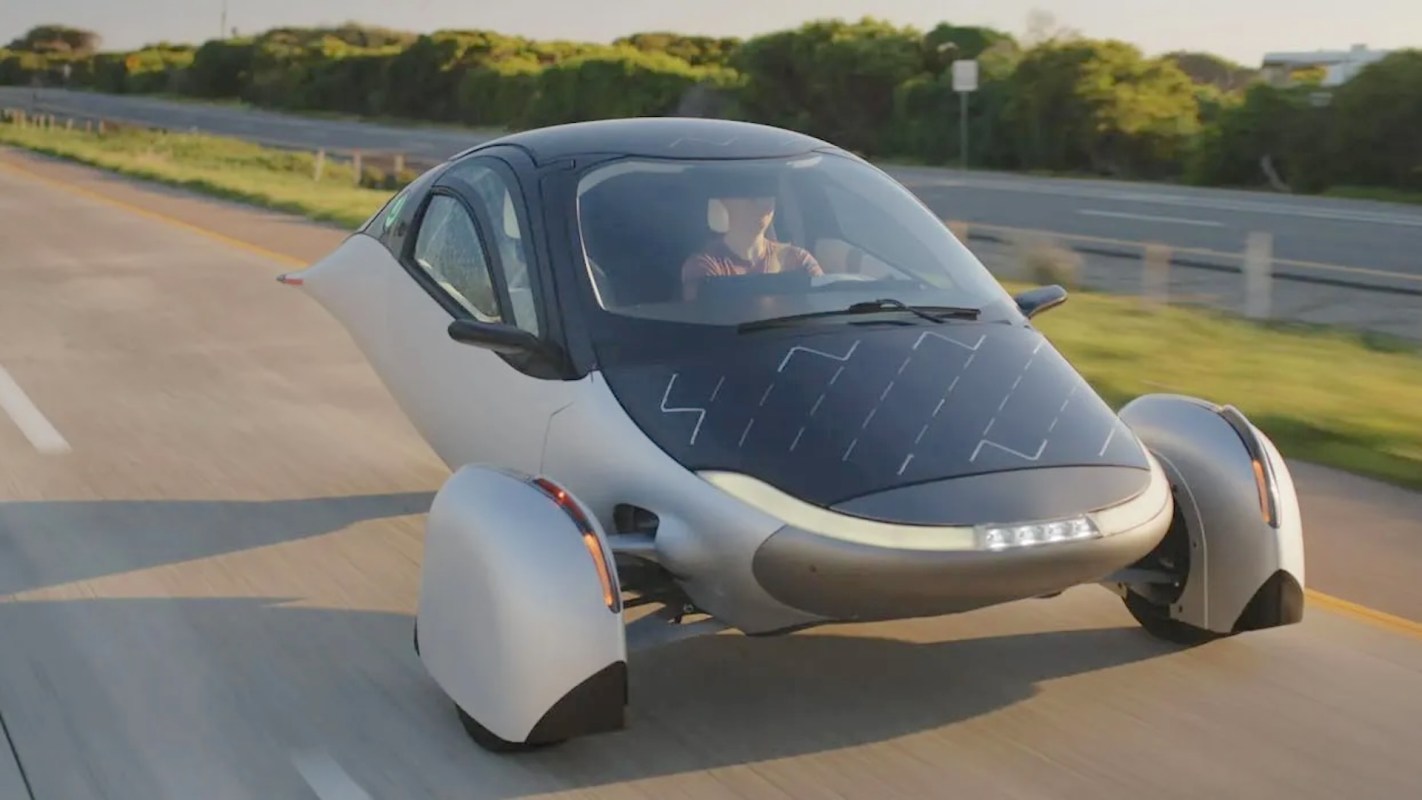
Aptera says it has sharply lowered the amount of money it needs to begin building its long-promised solar electric vehicle, but investors didn't seem convinced.
The startup's shares fell about 15% after the announcement, and customer deliveries are now pushed to early 2027.
Here's what to know
Electrek said Aptera now maps out a roughly $115 million route to production and expansion, well below the $180 million to $205 million range it discussed before. As part of that revision, the company said it needs about $25 million to begin building the solar EV (incidentally, SEV is the company's stock ticker), down from the $40 million to $45 million range it gave in August.
The updated timeline breaks that spending into stages. Aptera says it can build its first 40 vehicles by the end of 2026, then would require about $40 million more to lift output to 500 vehicles per month, which it calls self-sustaining, followed by another $50 million for tooling aimed at annual production of roughly 20,000 vehicles.
According to Aptera, the smaller funding target comes from using actual supplier quotes in its bill of materials, working with overseas suppliers, making design changes for manufacturing, and partnering with Launch Design.
Co-CEO Chris Anthony summed up the updated plan in the company's press release.
TCD Picks » Quince Spotlight
💡These best-sellers from Quince deliver affordable, sustainable luxury for all




"This is a fundamentally leaner path to getting Aptera into customers' hands," Anthony said. "We've reduced our estimated capital requirements to reach production and brought what we believe could be a self-sustaining business within much closer reach."
More background
Aptera has repeatedly revised these milestones, as Electrek detailed. In late 2024, it was trying to raise $60 million for low-volume production, called its delivery schedule a "moving target," and said the first 60 Launch Edition vehicles would arrive in 2025.
Even after a $9 million public offering priced at $2 a share in January 2026, the company was still pointing to 2026 for customer deliveries. It now says early 2027, while noting those deliveries are still "subject to timely financing" in the release.
Electrek said its 10-Q indicates the company had $10.1 million in cash at the end of June 2026, baseline monthly operating spending of about $2 million to $2.2 million, and a going-concern warning.
What's being done?
Instead of presenting one large capital need for both launch and scale-up, Aptera is now describing three funding stages.
Electrek noted the company also brought in $6 million through a July 2026 warrant deal and retains access to a $75 million equity line of credit. But using that line would mean issuing more shares even as the stock has kept falling.
Aptera's progress comes as buyers weigh alternatives to gas cars. Broader competition can mean more opportunities to cut fuel costs and avoid some of the maintenance that comes with internal-combustion vehicles. A solar-powered EV provides an even more appetizing option.
After the share decline and the later delivery target, it is still unclear whether that lower-cost plan will be enough. Commenters on Electrek debated the company's trajectory.
One commenter suggested it could be a "viable business making good profit" despite likely being a "niche vehicle."
"In the beginning I had hopes that this concept would take off," a more pessimistic reader wrote. "I still have hopes that it will somehow survive, but it is looking less and less likely."
The flagship vehicle is ultimately an unusual one, with three wheels instead of four and a major focus on aerodynamics so that it can run entirely on its own solar power. If the company can pull it off well enough to even keep a modest ongoing profit, that's a major achievement, and it could pave the way for the future of solar roofing on vehicles.
Still, with even the company's own target numbers for production per month and year, it's clear Aptera won't be a common sight on roads any time soon, so it will be one step at a time for the independent automaker.

Get TCD's free newsletters for easy tips, smart advice, and a chance to earn $5,000 toward home upgrades. To see more stories like this one, change your Google preferences here.






