


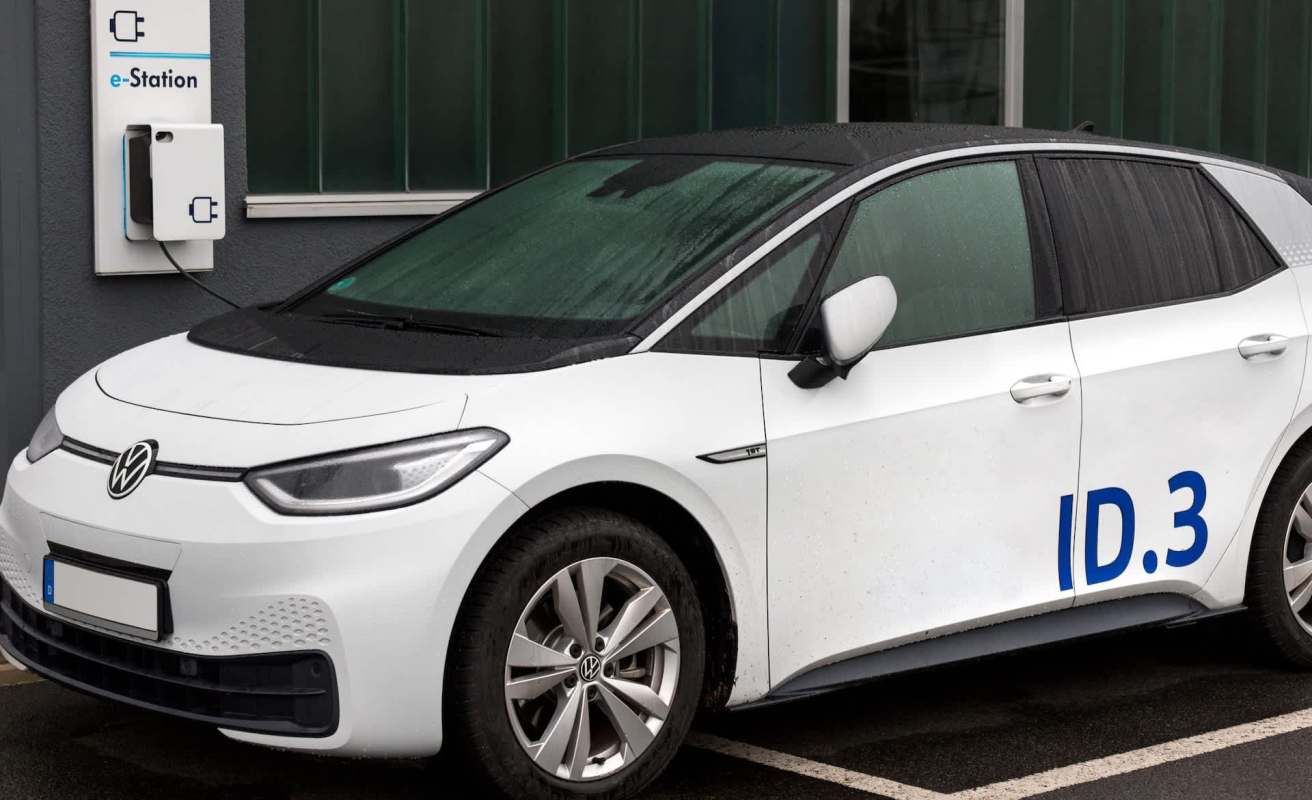
A car buyer considering a two-year-old Volkswagen ID.3 got an unexpected surprise when the used EV's battery report came back showing health above 100%. Confused by how such a thing could be possible, the buyer turned to Reddit for advice.
Here's what to know
The original poster explained their situation on Reddit's r/ElectricVehicles. The vehicle under consideration was a two-year-old VW ID.3 with more than 13,000 miles driven.
However, an AVILOO flash test result declared that battery to be in "Excellent health, no abnormalities" with the state of health listed at 100.3%.
"I don't know much about EV batteries, but shouldn't I expect to see some degradation on a two-year-old EV with 13,000+ miles on the clock?" the OP asked.
One commenter who said they "used to work in batteries testing" explained that battery health of greater than 100% was possible because the figure is calculated rather than directly measured.
"There is no [such] thing as 100%," they said, explaining that state-of-health readings are estimates built from inputs such as voltage, current, temperature, and programmed aging behavior. When these factors are run through an algorithm, a car battery that is in good shape can sometimes end up with a reading above 100%.
TCD Picks » Quince Spotlight
💡These best-sellers from Quince deliver affordable, sustainable luxury for all




Because of this, some commenters recommended that the OP push the seller to perform more thorough testing.
"Let them do a proper SoH check, not just a flash check," one wrote, adding that "a margin of 3% is not uncommon."
Other theories
Some commenters focused on the potential for outside temperature to influence battery test results.
"The ID.3 can show more battery when warm," said one commenter.
Another added that the impact of outside temperature makes accurate measurement "very hard."
Other Redditors suggested that the battery might actually have seen some degradation over its lifetime but that the original health score was even higher than the current 100.3%.
The battery could have been "larger than nominal new when they shipped it," said the commenter who used to work in battery testing. They added that manufacturers can sell more capacity than advertised but "never below what you advertise."
The OP's update
In an update, the OP provided additional battery test information, with the revised figures being fairly close to the original flash check results. For example, the new WLTP range was 278-346 miles versus the previous estimate of 277-345 miles.
The Battery Management System listed state of health as a more sensible 98%.
Where can I learn more?
For a broader sense of what battery aging looks like in the real world, these stories dig into what used EV owners have actually seen over time. They cover long-term range retention, battery performance in used models, and why full replacements are still uncommon.
• A used Volkswagen ID.4 kept its battery largely intact after 10,000 more miles.
• Across the market, EVs still had up to 95% range after five years.
• A new analysis found lifespan fears were overblown for many EV owners.
• Automakers said many packs still had at least 90% of their range left.
• Tesla showed its cars' batteries degrading more slowly than expected over years.

Get TCD's free newsletters for easy tips, smart advice, and a chance to earn $5,000 toward home upgrades. To see more stories like this one, change your Google preferences here.






