


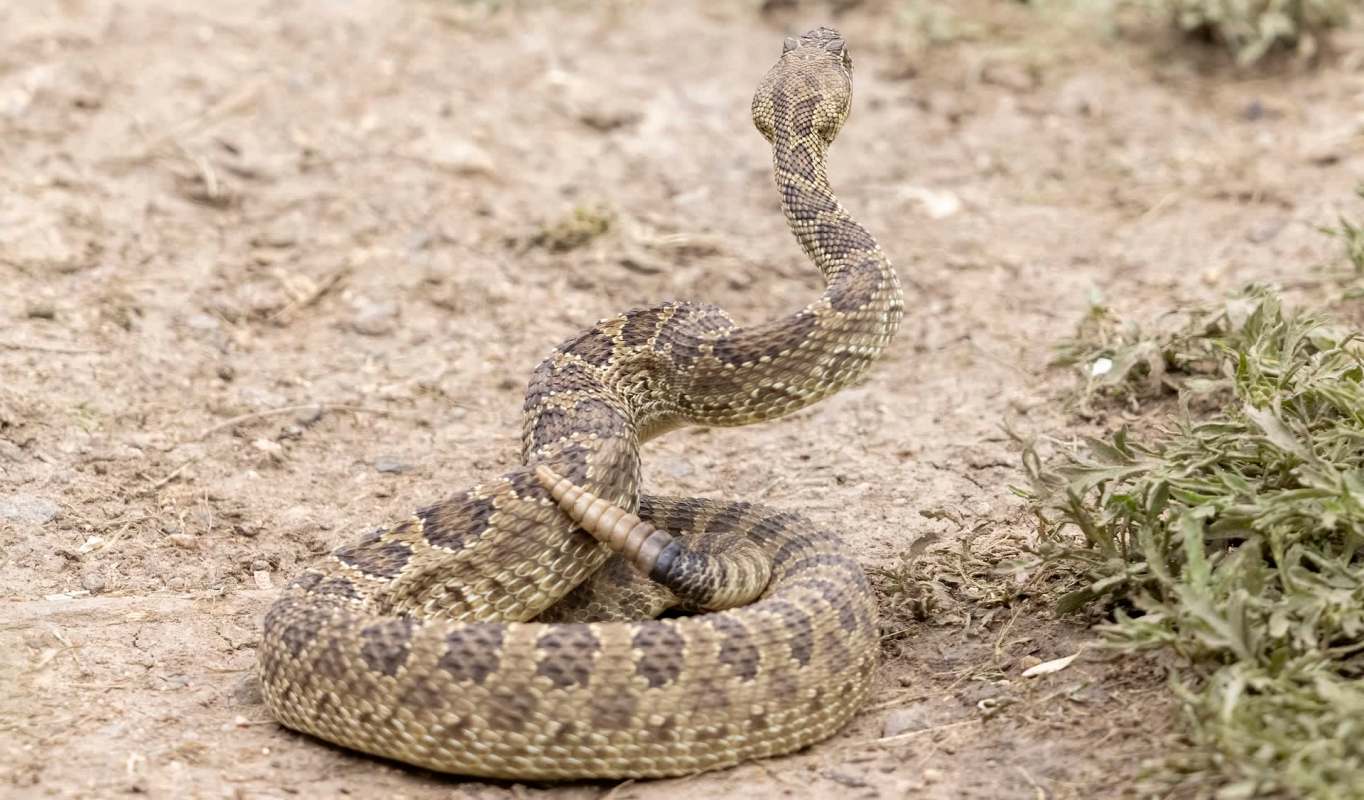
A California kingsnake's bold bands can spell bad news for a rattlesnake. While many animals keep their distance from the venomous reptiles, these nonvenomous snakes are known to attack, constrict, and eat them.
That is especially notable in a state where rattlesnakes are common, particularly around Lake Berryessa, Carrizo Plain National Monument, and the San Joaquin Valley, where people often share trails, campsites, and even backyards with them.
Here's what to know
Some California snakes can prey on rattlers because the venom does not affect them, as Cal Poly professor Emily Taylor, who leads the Physiological Ecology of Reptiles Lab, told The Sacramento Bee. Taylor said certain snakes "will eat anything" and, "They are immune to rattlesnake venom, so they'll eat rattlesnakes."
California has seven species of rattlesnakes, and the western rattlesnake is the one people encounter most often. The U.S. Forest Service says these snakes are most active from April through October, while state wildlife officials say temperature shapes their movements, with hot months often pushing activity to dawn, dusk, and nighttime.
One of the state's best-known rattlesnake predators is the California kingsnake. The Sacramento Splash, which provides water and wildlife education for children, said the species is "famous for eating rattlesnakes," as the Bee reported. "When a hungry kingsnake finds a rattlesnake, it will bite the rattlesnake behind the head and coil itself around the body," according to the nonprofit. "The kingsnake is nearly immune to rattlesnake venom and does not worry about being bitten."
Kingsnakes have alternating black or brown bands and white or light yellow ones. They live across most of the state in habitats ranging from forests and grasslands to marshes and deserts, according to nature education website California Herps, as the Bee noted.
TCD Picks » Quince Spotlight
💡These best-sellers from Quince deliver affordable, sustainable luxury for all




More background
People often do not notice rattlesnakes until they are nearby because the snakes stay tucked into cover. Save the Snakes founder and executive director Michael Starkey told the outlet that they typically shelter under rocks, logs, and woodpiles, saying they can also turn up near boulders, stumps, and fallen trees.
"Some people have animals in their yards that are predators" of rattlesnakes, including cats, guinea fowl, and chickens, Taylor told the Bee.
Roadrunners are among the animals that go after rattlesnakes, and they usually hunt in pairs, with one bird distracting the snake while another pecks at the back of its head before slamming it to the ground, the Oklahoma Department of Wildlife Conservation says, per the Bee. A to Z Animals says bald eagles, golden eagles, red-tailed hawks, owls, turkeys, coyotes, badgers, and bobcats also prey on them.
What can be done?
People spending time outdoors during rattlesnake season should stay alert in the areas the snakes favor. Because they often hide, give those spots plenty of space to reduce the chances of a surprise encounter.
In spring and summer, rattlesnakes often shift their movements into cooler parts of the day, so dawn, dusk, and night are common activity periods when they're trying to avoid overheating, the California Department of Fish and Wildlife noted, according to the Bee.
"If you spot a rattlesnake, stay away," the California Poison Control Network said. The National Park Service and California Poison Control System also warn people not to touch or disturb a snake, even if it appears dead.
"If you think you hear a rattlesnake, stand still until you've located the snake, then move away," the NPS stated, as the Bee reported.
Taylor said: "All of these snakes eat all sorts of food. Most people for that reason love having kingsnakes (and racers) around."
Where can I learn more?
For more on rattlesnakes in California and beyond, these stories cover bite risks, close encounters, and recent sightings, including what can make some bites more dangerous.
• Researchers found adult rattlesnakes deliver deadlier bites than babies.
• In Santa Clarita, a preschooler spotted a rattlesnake tucked inside playground equipment.
• At Texas' Palo Duro Canyon, a hiker found a rattler swallowing a collared lizard.
• In Colorado's Garden of the Gods, prairie rattlesnakes battled for breeding rights.
• At Oregon's Smith Rock, hikers were warned after a 3-foot rattlesnake crossed the trail.

Get TCD's free newsletters for easy tips, smart advice, and a chance to earn $5,000 toward home upgrades. To see more stories like this one, change your Google preferences here.







