


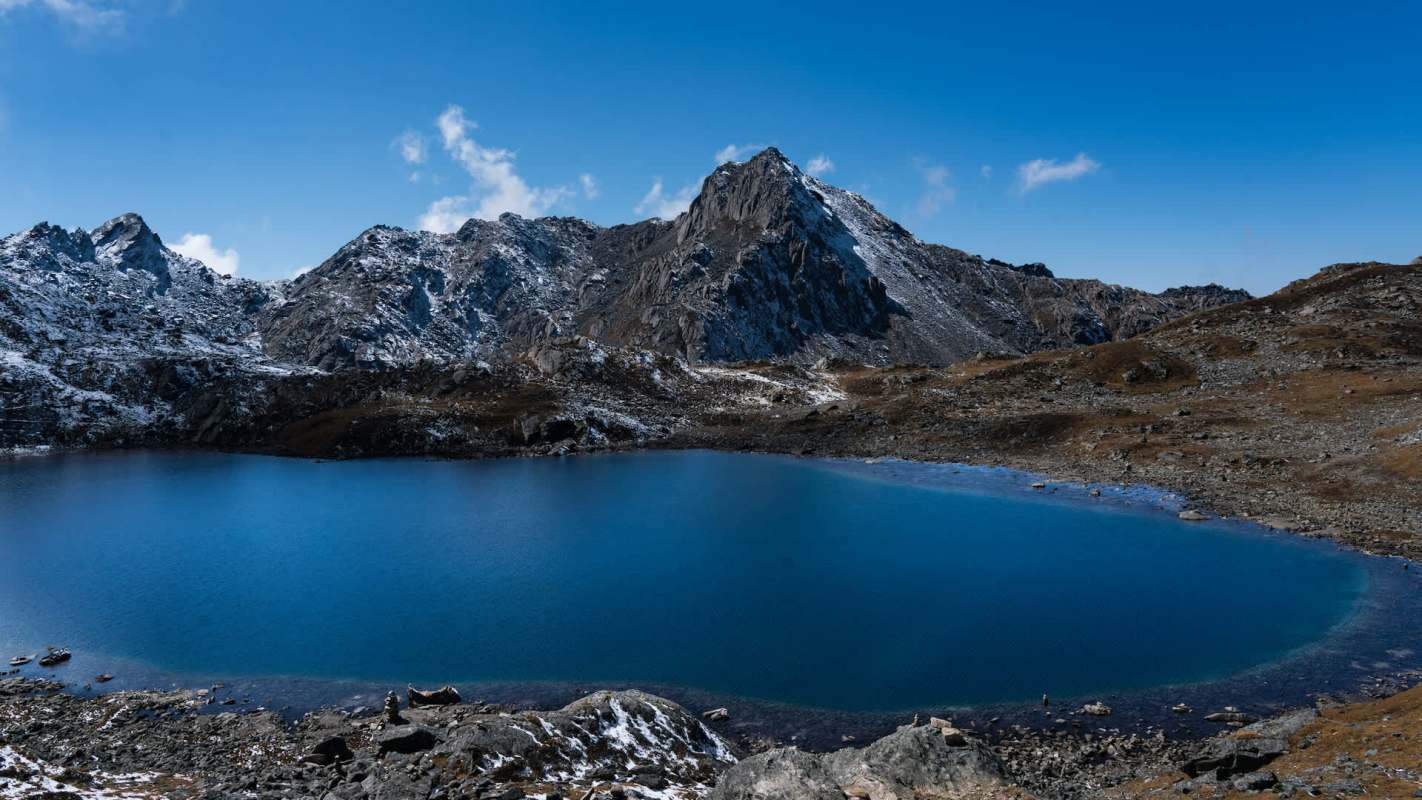
After a disaster that killed more than 1,400 people, Nepal is proposing a major project that would reduce water levels in four glacial lakes.
The plan centers on lakes perched between 13,287 feet (4,050 meters) and 17,989 feet (5,483 meters) above sea level, where rising temperatures and unstable terrain can turn these high-altitude bodies of water into deadly hazards for communities farther downstream.
Here's what to know
As ABC News reported, in the fiscal year ending in mid-July 2027, Nepal plans to start design work and detailed studies on Thulagi, Lower Barun, Lumding Tsho, and Hongu II. The goal is to release water in a controlled way before the lakes' natural dams give way and send floods rushing downhill.
The proposal calls for canals to carry lake water into nearby rivers under regulated conditions, rather than letting pressure build behind the natural barriers.
The effort follows a disaster in Nepal that surfaced concerns about glacial lake outburst floods in the country. Many communities, roads, and river valleys lie far below rapidly changing mountain terrain.
Subash Tuladhar, an expert with Nepal's Centre for Hydrology and Water Resources Research, said the job will be hazardous for workers. Crews are expected to spend extended periods at high altitude while also contending with the risk of sudden flooding during the work.
TCD Picks » Quince Spotlight
💡These best-sellers from Quince deliver affordable, sustainable luxury for all




More background
A 2020 report from the UNDP and the International Centre for Integrated Mountain Development (ICIMOD) listed these four among Nepal's potentially most dangerous glacial lakes.
Speaking at the United Nations in September 2026, Prime Minister Balendra Shah, 36, said Nepal's disaster should be taken as a warning to the world and argued that climate change is battering the country despite its negligible emissions.
Nepal has done similar work before. It lowered Tsho Rolpa by 10 feet (3 meters) in 2000, and it lowered Imja, near Mount Everest, in 2016 in another major effort to reduce risk.
What's being done?
The initiative is budgeted at $50 million and will be funded by the Green Climate Fund, the UNDP, and Nepal's government. Actual draining of the lakes will start only after the technical studies are finished.
Sanjeeb Baral, executive director of Nepal's hydrology and water-resources research center, said the phase involving draining "through gated structures" would come after those studies and might take as long as six years.
The plan also includes sensors, a flood forecasting and warning system, and stronger downstream preparedness so communities get more time and better information if water levels change abruptly.
Subash Tuladhar of Nepal's hydrology and water-resources research center said the country has the experience and technical ability required for the project. "Our aim is to lower the risk of the lakes breaching their natural dams and reduce the risk of downstream floods," Tuladhar said.
Where can I learn more?
These stories offer more context on the glacial and flood risks behind Nepal's plan.
• Across the Himalayas, higher and more numerous lakes are raising the danger of sudden floods.
• In the Himalayas, some glaciers are cooling even as warming reshapes high mountain ice.
• In Pakistan, glaciers are melting fast and threatening water supplies and downstream safety.

Get TCD's free newsletters for easy tips, smart advice, and a chance to earn $5,000 toward home upgrades. To see more stories like this one, change your Google preferences here.






