


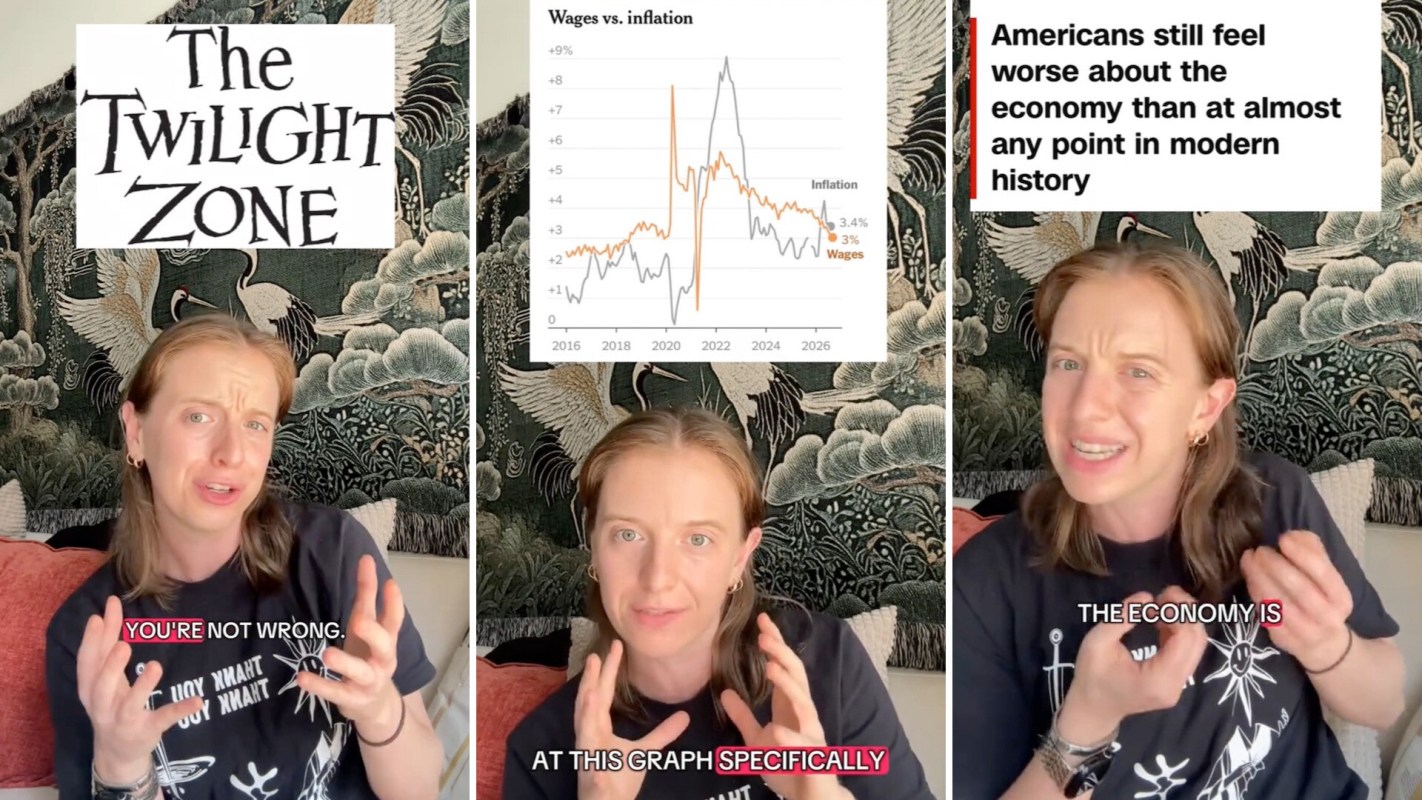
Many Americans say their finances since 2020 feel disconnected from upbeat headlines about GDP, unemployment, and the stock market, and one TikTok video dove into why.
Here's what to know
A TikTok explainer by Sarah Schutz, PhD (@EconWithSarah) cited figures showing that rent was roughly 38% higher than in 2020, healthcare plans were about 30% higher on average, and groceries were around 32% higher. Schutz framed the core problem as the time after 2020 when paychecks did not keep pace with inflation.
A raise does not automatically translate into more buying power, Schutz argued. If housing, food, and medical bills are rising faster than wages, people can still feel worse off.
That mismatch, Schutz suggested, helps explain why encouraging reports on GDP, unemployment, or the stock market can feel irrelevant to many households. People can hear positive news and still feel like "that news doesn't actually match your economic reality."
That sentiment showed up in the comments, too. "Prices increasing. Your wallet shrinking. A burning of the candle at both ends," one commenter wrote.
"All my friends are complaining about their utility bills especially electricity," another shared. "Health insurance costs are another topic everyone complains about. Houses aren't selling as fast in my normally much sought after neighborhood. No one it seems is getting a raise."
TCD Picks » Quince Spotlight
💡These best-sellers from Quince deliver affordable, sustainable luxury for all




Another commenter asked, "Since consumer spending makes up a good portion of GDP when would we start seeing an actual reflection on GDP growth since wages aren't coming up with inflation?"
More background
Among the explanations offered was energy. Schutz tied part of the price pressure to supply shocks linked to the wars in Ukraine and Iran, saying restrictions on fuel and diesel exports have raised both shipping expenses and prices at the pump.
Schutz also named two other sources of pressure: demand for semiconductors and computer chips from tech companies building artificial intelligence systems, and climate-related heat and water shortages that make some agricultural products harder to produce.
The creator also floated a more skeptical interpretation, arguing that some corporations may have used the inflation spike to justify extra price increases that never later came back down.
What can be done?
According to Schutz, relief depends on two things happening at once: reducing the forces pushing prices up and getting wage growth back above inflation.
Which levers matter, Schutz argued, depends on what is driving costs. Some factors are international and hard for the United States to directly control, such as war-related energy disruptions. Others are closer to home, including whether corporations are using inflation as cover for permanent price hikes.
The video also connected that frustration to government inaction. Schutz said the 119th Congress has had unusually low productivity and a 50-year low in bills passed, which they linked to a broader sense that elected officials are not responding to the cost-of-living squeeze.
Where can I learn more?
These stories dig into the same affordability squeeze playing out in grocery, housing, and utility bills.
• Across the U.S., Americans see an affordability crisis as groceries and gas strain budgets.
• On U.S. farms, heat and water stress are helping keep grocery prices high.
• Across the United States, insurance shocks are spreading into mortgages, home prices, and rent.
• In California, post-disaster landlords were pushing rental prices higher even outside affluent neighborhoods.
• Across the U.S., scorching summers are driving utility bills up for vulnerable households.

Get TCD's free newsletters for easy tips, smart advice, and a chance to earn $5,000 toward home upgrades. To see more stories like this one, change your Google preferences here.






