


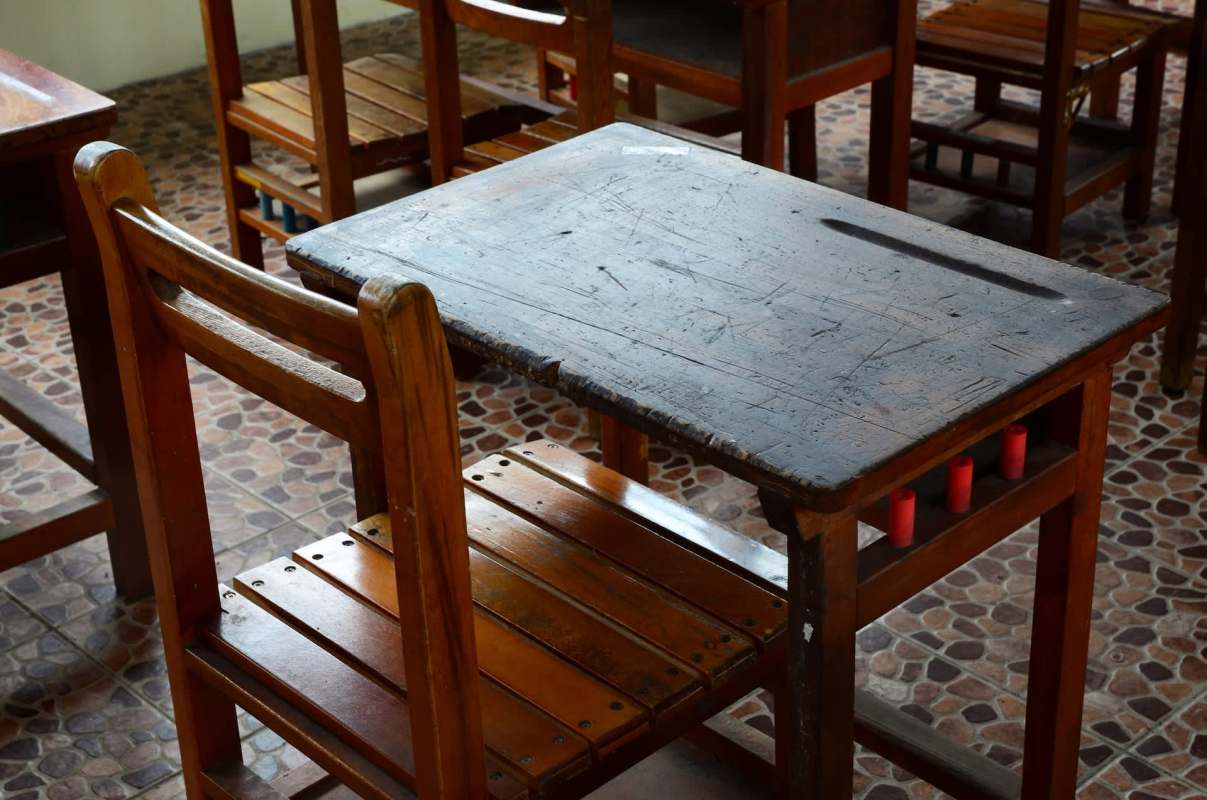
A classroom on the Greek island of Kalamos is nearing the end of an era. The island's primary school has only two students, both in sixth grade, and is expected to close once they leave for middle school on the mainland.
Here's what to know
Kalamos is a mountainous island just off the coast of the mainland, near the Ionian islands such as Ithaca, with a 35-minute ferry service to Mytikas. The island's kindergarten shut, and its last remaining school now appears headed the same way.
On Sept. 23, teacher Chryssa Ntalaka's class consisted of just two children — both sixth graders — so the school is set to be mothballed after they continue their studies on the mainland.
The closure reflects a widespread enrollment collapse across Greece. As Fortune reported, authorities closed 75 schools and suspended or extended suspensions at more than 400 others. Greece has around 200 inhabited islands, and small, remote communities are among the first to lose schools and other public services.
After about 10 of her 20 years teaching in remote schools on Kalamos, Ntalaka said the typical challenge is no longer finding educators.
"Usually, teachers are placed on these islands against their wishes," she said. "Whereas for Kalamos there are teachers and kindergarten teachers, as far as I know, who want to come — but there are no children."
TCD Picks » Quince Spotlight
💡These best-sellers from Quince deliver affordable, sustainable luxury for all




Byron Kotzamanis, a co-founder of Athens' Institute of Demographic Research, said each school closure can intensify the cycle behind the next one.
"Closing schools leads to young people not staying and to them leaving," he said. "Leaving means fewer and fewer people — fewer and fewer births. It means depopulation and dead settlements that will become nursing homes."
More background
Kalamos' year-round population has fallen to just 80, a sharp shift from when the island had 40 children in its schools and daycare, Fortune reported.
For the island's teenagers, attending school now means a ferry ride before sunrise. Seven travel to the mainland, and strong winds can keep them out of class. High school senior Antonis Aivaliotis, who previously studied in Ntalaka's mixed-age classroom, remembered a time when the island felt much fuller.
"It was very nice. We played together every day. We went to (primary) school every morning," he said.
Aris Alexopoulos, the head of the OECD's Crete Center on Population Dynamics, said Greece's population could fall from 10.5 million to as low as 8 million by 2050. Across the European Union, the bloc recorded 3.55 million births in 2024 — about half the 1964 peak — while its fertility rate slipped to 1.34 children per woman.
What's being done?
European and national officials are pursuing several responses, though results have been uneven. In June, the European Union said it would develop a strategy for islands aimed in part at addressing shrinking populations.
Themis Christophidou, the European Commission's director-general for regional and urban policy, said the EU has spent €146 million (around $164.35 million) upgrading schools across four Greek island clusters specifically to counter demographic decline.
"Mobility is one of Europe's strengths, but people should leave by choice, never because of neglect or missing investment," she wrote in an email to the Associated Press, per Fortune. "That starts with quality public services, with education at their heart."
Croatia has invested €4.6 billion (over $5 billion) across its islands, Prime Minister Andrej Plenkovic said in June. That includes 20 kindergartens being built or expanded, along with renovations to primary schools and sports arenas. Croatia's parliament, the Sabor, also approved an Islands Act in January to improve life for islanders.
Elsewhere, Japan's government has offered subsidies to attract workers to remote islands in tourism, fishing, and other sectors. At the same time, family relocation programs brought 74 of 132 students to a fisheries high school in the Oki Islands. On the Italian island of Stromboli, a school resumed classes after a 20-year gap, with one student. Italian elementary schools normally require at least 15 pupils, but remote islands can receive exceptions because closing a school can accelerate depopulation.
Kalamos' future still depends on whether families can be convinced to stay or relocate there. As Ntalaka put it: "We're very welcoming and we're trying. That's what we want to do, even right now — for someone to hear us. The sooner, the better."
Where can I learn more?
These stories look at how schools and island communities come under pressure when families move away or when getting to class becomes harder.
• In Kenya's Meru County, prolonged drought forces students out of school as families struggle.
• On Panama's Gardi Sugdub, children's laughter fell quiet as residents left the disappearing island.
• On the Solomon Islands' Sikaiana atoll, life is no longer what older residents remember.

Get TCD's free newsletters for easy tips, smart advice, and a chance to earn $5,000 toward home upgrades. To see more stories like this one, change your Google preferences here.






