


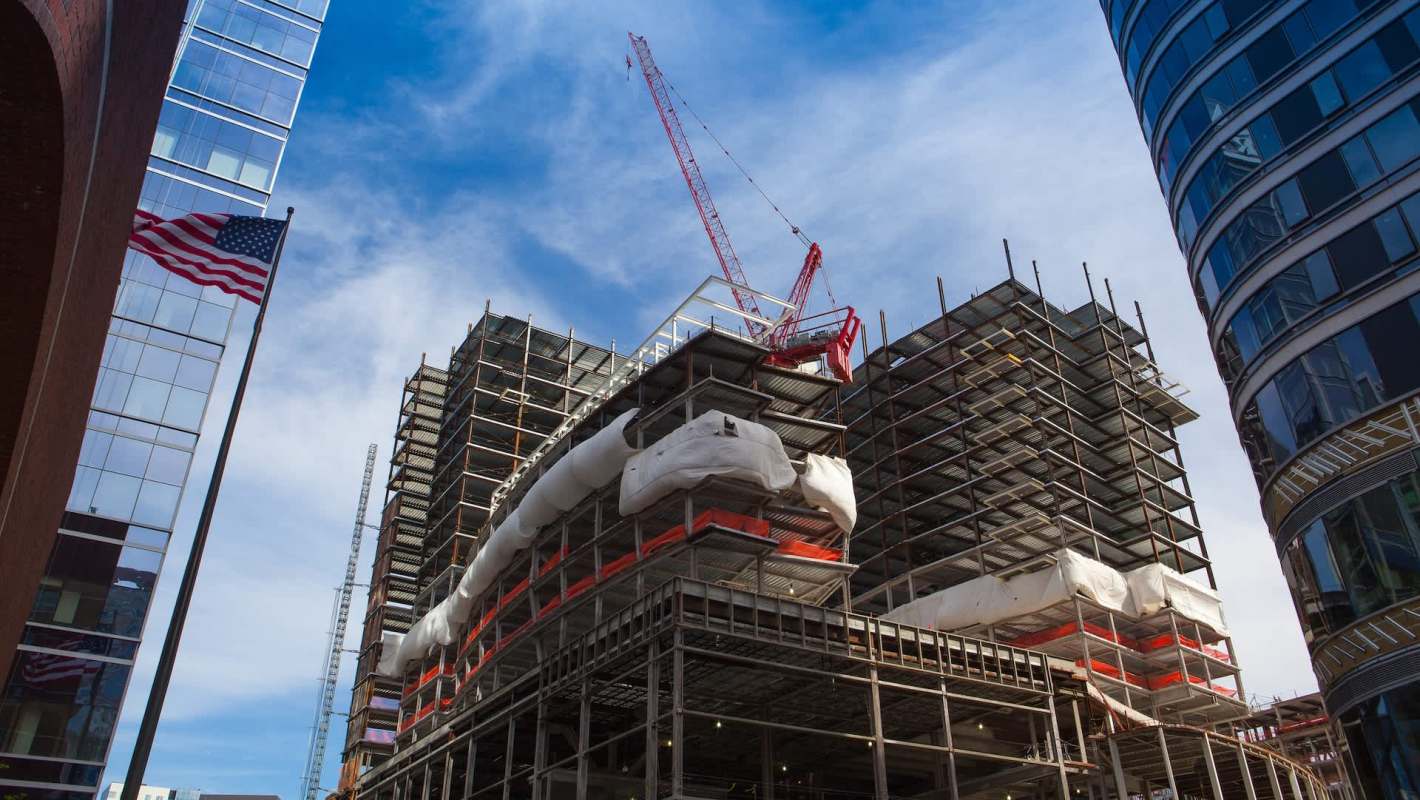
Citing the depth of Boston's housing shortage, Mayor Michelle Wu said the city may need to do more than offer tax breaks to get stalled projects moving. That could include using public money for infrastructure expenses that builders would usually cover.
Here's what to know
At a Greater Boston Chamber of Commerce event, Wu said the city was negotiating changes to mitigation deals with developers, according to the Boston Herald. Under that approach, taxpayers could pay for some project-related "community infrastructure improvements."
"Maybe the public sector could take on a little bit more of those more flexibly," Wu said.
The idea would come in addition to Boston's $100 million tax relief plan for housing developers. As the Herald reported, Wu said the city would begin with $31.5 million in abatements for four stalled market-rate projects.
According to the city, those four developments would produce 1,400 homes, including 185 affordable units. If Boston also assumes related infrastructure costs, public support could cover both the projects and some of the surrounding improvements.
More background
"Developers often agree to make improvements to streets or other public infrastructure, and the mayor is saying that the city would pay for those improvements instead," Gregory Maynard, executive director of the Boston Policy Institute, told the Herald.
TCD Picks » Quince Spotlight
💡These best-sellers from Quince deliver affordable, sustainable luxury for all




Maynard said that such a shift could be especially contentious in neighborhoods that are already uneasy about large projects. He said residents may object to taking on commercial development costs while the city also pursues millions of dollars in tax cuts for developers.
The city has said the projects would bring in more tax revenue once the five- or 10-year abatement periods end. During those years, though, developers would be taxed on less than the properties' assessed value.
What's being done?
City Hall is trying several approaches to restart housing construction. The nearest-term move is the proposed $31.5 million in abatements for the first four stalled projects.
Beyond those developments, the Herald reported, the administration is talking with about a dozen other developers connected to plans for up to 4,000 more units. "Tax abatement has to be paired with robust private investment to spur construction," Wu said, per the Herald.
Wu said one possible source of that investment is "large union pension funds that are ready to invest in Boston projects that will create high-quality jobs."
As Wu put it, "We look forward to working with these labor partners to combine our efforts, because a good job and an affordable home are two sides of the same coin when it comes to making Boston a home for everyone."
Where can I learn more?
Boston isn't the only city experimenting with new ways to build and finance housing.
• In California, lawmakers advanced fast-track infill housing to cut development delays statewide.
• In New Mexico, Gateway Recovery opened a tiny-home village to expand supportive housing options.
• Researchers developed building mortar from plastic that could reshape energy-efficient home construction.
• In Chicago, officials proposed a building decarbonization ordinance that would reshape future construction rules.
• In one California city, leaders moved toward a tax on large buildings to fund climate action goals.

Get TCD's free newsletters for easy tips, smart advice, and a chance to earn $5,000 toward home upgrades. To see more stories like this one, change your Google preferences here.






