


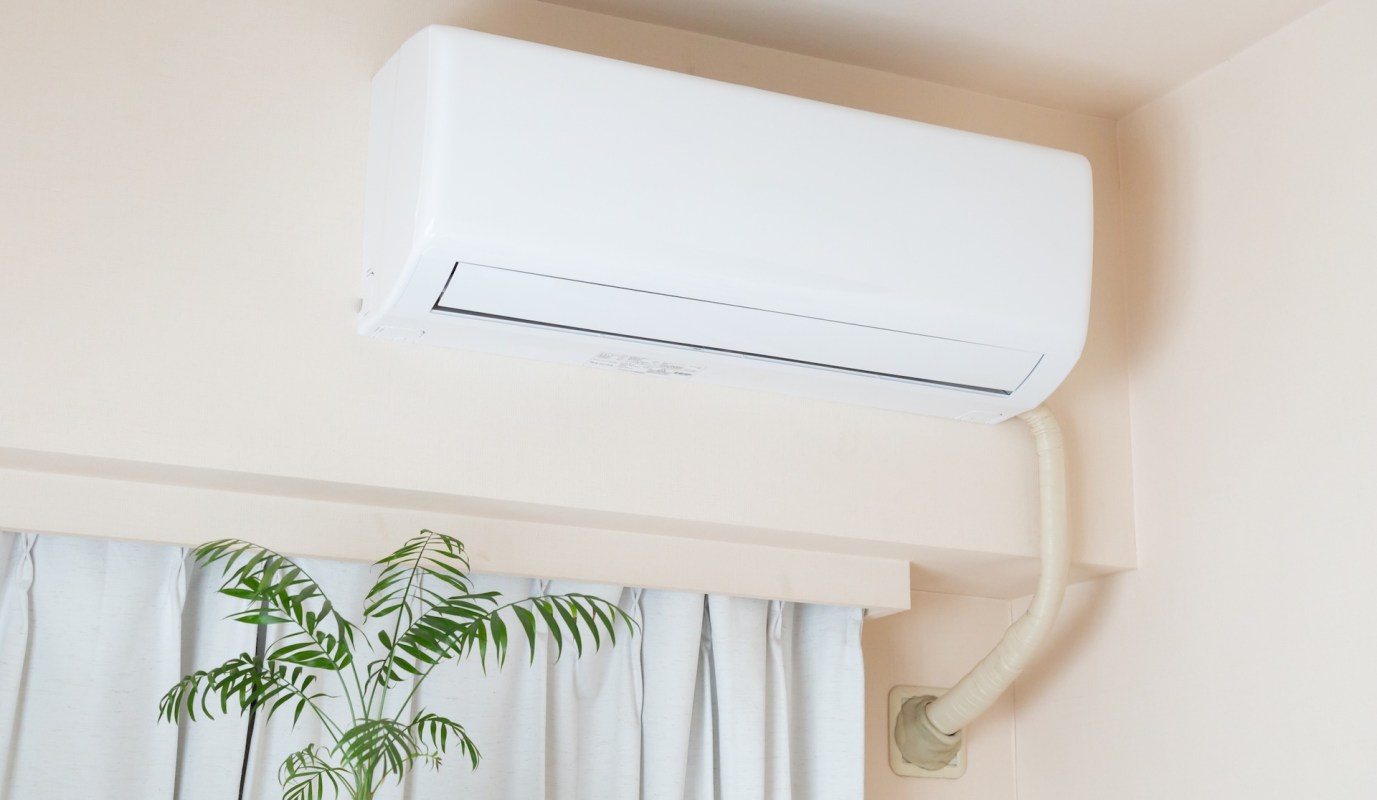
A homeowner hoping to keep a wall-mounted air conditioner running during a blackout turned to Reddit with what sounded like a simple question: Could a portable power station be connected if no plug was visible?
According to the thread, the answer was no — and that realization could save other shoppers from spending even more money on a backup-power setup that is not designed for hard-wired cooling equipment.
Here's what to know
The question was posted to Reddit's r/AskElectricians, where the homeowner asked whether connecting backup battery power to a wall AC with no exposed plug would mean having to "open up my wall."
Several replies said the unit probably couldn't be connected directly to a portable station. One commenter wrote, "It's probably hard wired. ACs pull a LOT of power. You won't be able to run it long with a portable power station anyway." Another added that it "sounds like a mini split and you can't do that directly."
After people asked for more specifics, the original poster said the air conditioner was a "40MHH High Wall Ductless System. 115V," that the power station was "1500W, 2010Wh," and that they had "zero electrician skills or knowledge."
Another commenter said that getting enough battery capacity to run that kind of setup for a useful amount of time could mean "the big ecoflows with extra batteries costing in the mid to high four figures."
TCD Picks » Quince Spotlight
💡These best-sellers from Quince deliver affordable, sustainable luxury for all




More background
At the heart of the discussion was a basic backup-power misunderstanding. An appliance using electricity does not automatically mean it can be safely run from any battery with an outlet. Here, commenters said the missing power cord strongly suggested the ductless AC was wired into the house itself rather than plugged into a standard receptacle.
One commenter said an electrician would need to add an inlet and, at or near the breaker panel, install either a "transfer switch" or another "mechanical interlocking mechanism" so the power station could be connected properly.
Battery capacity was another major issue. A sample calculation in the thread said a 1 kilowatt-hour battery could run a 500-watt AC for about two hours, while a 1-kilowatt AC would use that up in about one hour. That means the OP's 2,010 watt-hour unit would still provide only a limited amount of cooling time.
What can be done?
The exchange also underscored that qualified electricians should handle the electrical work.
Rather than trying to connect the cooling unit directly, commenters pointed to more formal backup setups for hard-wired equipment. One said an electrician should add a generator input at the fuse panel. Another mentioned using a transfer switch or interlock system along with an inlet to create a proper connection for backup power.
Even though the OP already had a 1,500-watt, 2,010-watt-hour power station, commenters said it still wouldn't provide meaningful air-conditioning backup.
After reading the responses, the OP said in an edit, "It looks like I won't be able to do what I planned on doing, which is sporadically powering my air conditioner if the power goes out on a hot day."
Where can I learn more?
If you're looking into backup power for cooling during an outage, these stories explore some of the same questions raised in the Reddit thread.
• Anker showed a portable power station could keep an entire room's appliances running during outages.
• Scientists unveiled a complete rethinking of air conditioning that could dramatically cut energy use.
• Pila Energy is pitching seamless home batteries that plug in and simplify outage backup.

Get TCD's free newsletters for easy tips, smart advice, and a chance to earn $5,000 toward home upgrades. To see more stories like this one, change your Google preferences here.






