


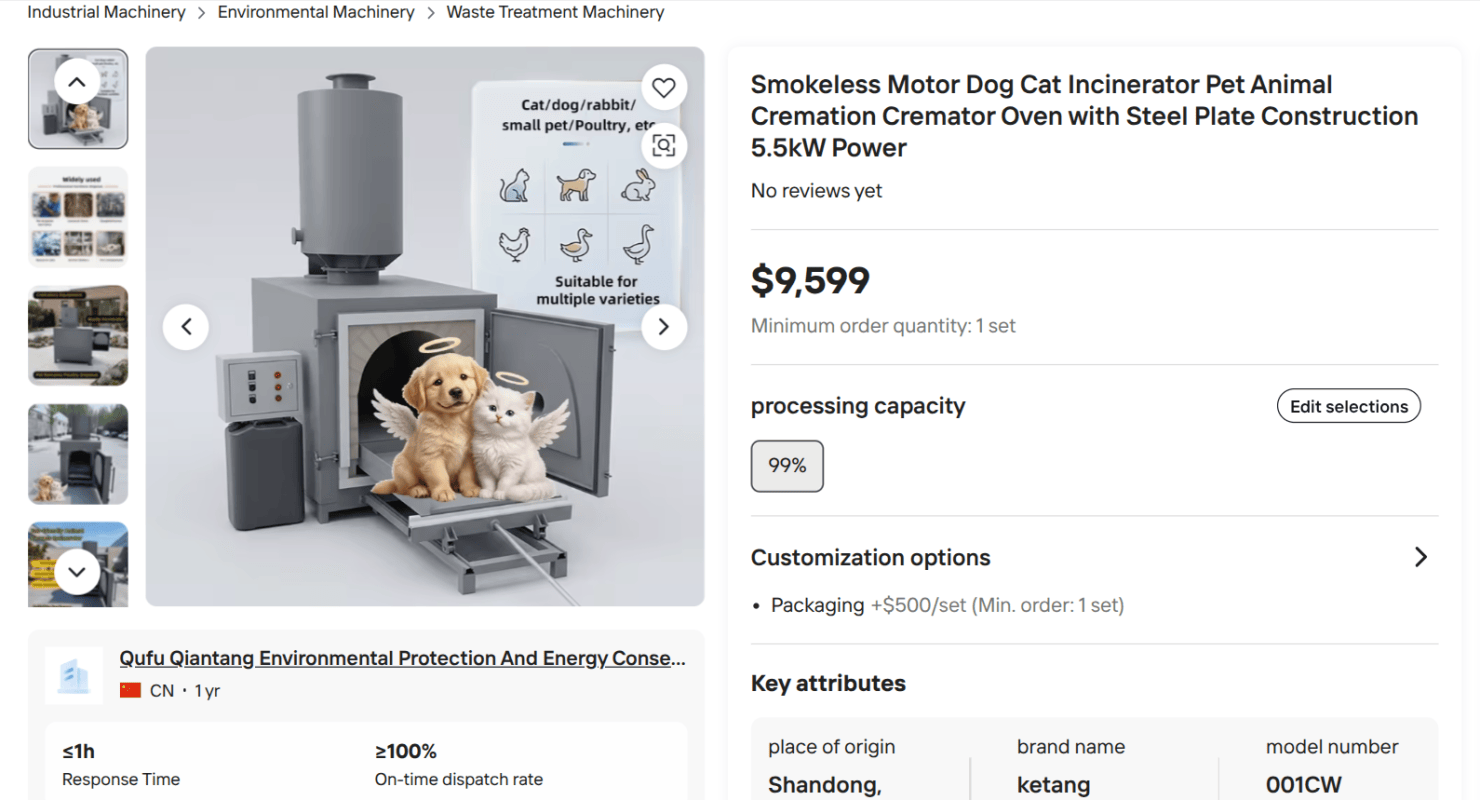
Users scrolling Instagram thought they were looking at a whimsical pet-themed promotion until the orange machine pictured beside a cat and dog turned out to be a pet incinerator, Futurism reported.
The issue isn't that this kind of equipment exists, since it can serve a legitimate purpose in professional settings — the concern is that major platforms and marketplaces seem willing to package it with AI-generated charm and push it directly into everyday users' feeds.
Here's what to know
Meta's ad database shows Alibaba — AliExpress' sister e-commerce site — promoted similar listings on Facebook, Instagram, and Threads, per Futurism.
Instagram and Reddit users pointed out the ad for an AliExpress listing for a so-called pet incinerator placed AI-generated images of healthy pets next to the machine.
The product names left little room for confusion, with listings such as "pet animal cremation machine" and "smokeless dog and cat incinerator cremator oven."
While equipment used to handle deceased animals may be necessary for veterinary clinics or other businesses, pairing it with cheerful AI pet imagery and social media targeting is confusing at best and irresponsible at worst.
TCD Picks » Quince Spotlight
💡These best-sellers from Quince deliver affordable, sustainable luxury for all




A Reddit user described a befuddlement that others shared upon encountering the strange ad.
"It took me a while to realize this is for cremating deceased pets, and my mind went to a more 'bad dogs get put in the pet incinerator' situation," they wrote, according to Futurism.
More background
An AliExpress listing uses the same cartoon-pet images seen in the Instagram promotion and packages it under a keyword-heavy title with a misspelling: "custom smokeless dead pet animals carecass incinerator sliding door home livestock poultry farm factory burning treatment site."
Other images were even more unsettling, showing AI-generated pets styled like angels inside similar incinerators or placing cremation equipment in a cozy residential living room, blurring the line between product information and algorithmic bait.
Social feeds can surface ads that are not only low-quality but also misleading in tone.
A buyer may come away with little understanding of a product because the visuals are designed to soften, distract from, or obscure what is being sold.
Meta's own disclaimer on the ad listings described the automated process.
"This ad uses one of our dynamic products, where advertisers provide a combination of images, text, and platform-specific preferences so our system can automatically create the right combination for the audience," it read.
Where can I learn more?
Confusing or manipulative advertising shows up all over social media and online shopping.
• Brands increasingly feel pressure to prove ads were not made with AI as suspicion spreads online.
• On TikTok, pet-centered promotions kept misleading consumers with false claims about everyday products.
• A branding expert showed just how easy it is for companies to greenwash ordinary products.

Get TCD's free newsletters for easy tips, smart advice, and a chance to earn $5,000 toward home upgrades. To see more stories like this one, change your Google preferences here.






