


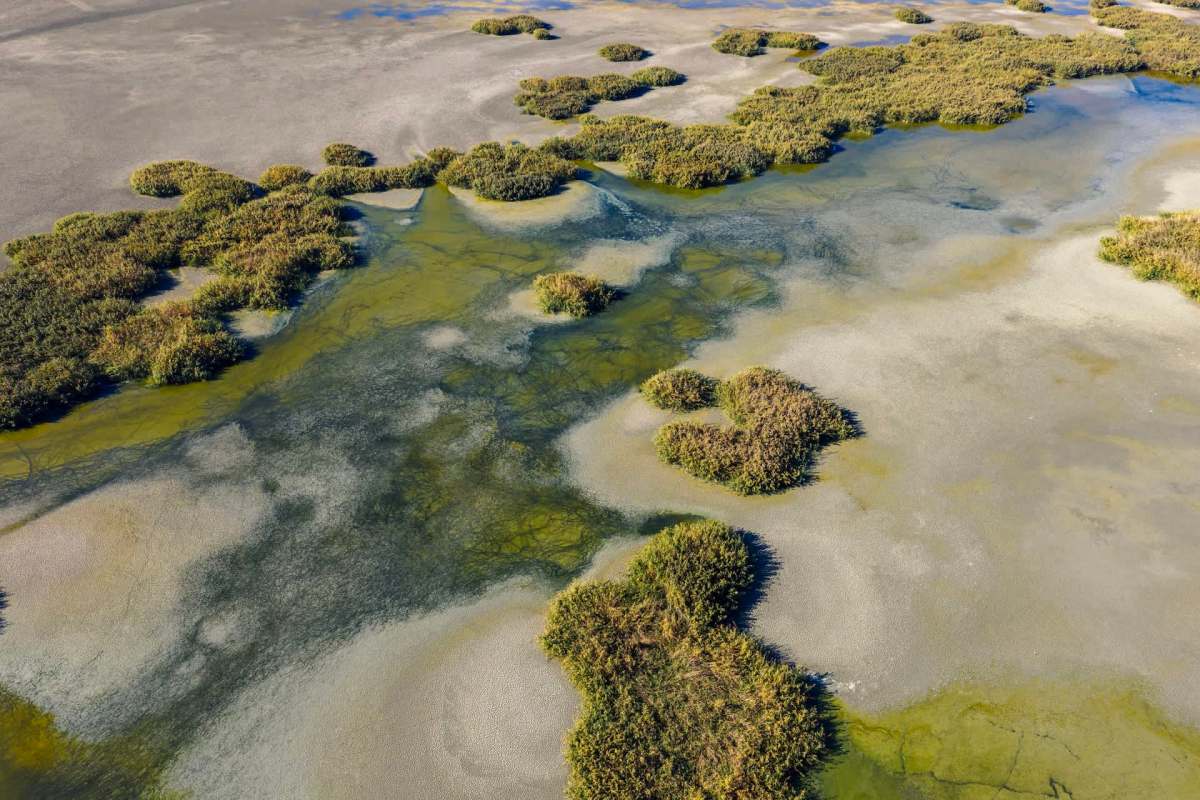
Koroneia Lake, a protected lake in northern Greece that once supported flamingos, tourism, farming, and fishing, is now a fraction of its former size.
What is left of Koroneia Lake is mostly murky pools surrounded by broad stretches of cracked, bleached mud. Drought, heat, and heavy water use can wreck an ecosystem like this, along with the communities tied to it.
Here's what to know
Koroneia Lake, once the country's fifth-largest, now spans less than one-tenth of its earlier area, according to The Independent. Satellite images published by the National Observatory of Athens show its surface dropping from 13.3 square miles (34.4 square kilometers) in 2016 to 1 square mile (2.7 square kilometers).
Dimitris Papadimos, head of water resources management and climate change at the National Wetland Centre, explained that the lake's decline intensified after the wet 2015-2016 season was followed by several hotter, drier years.
"The main factor behind the lake's falling level is certainly annual rainfall in its catchment, which has averaged about 400 millimetres (15.75 inches) over at least the last five years. That is about 150 millimetres less than in previous decades," he said.
He also said higher local temperatures are adding about 4 to 6 inches (100 to 150 millimeters) of evaporation each year.
TCD Picks » Quince Spotlight
💡These best-sellers from Quince deliver affordable, sustainable luxury for all




What had been wetland habitat for migratory birds and waterfowl, including flamingos, is now a bleached lake bed broken up by muddy ponds.
Extreme weather like this carries real stakes. Longer droughts and hotter temperatures can strain drinking water supplies, hurt farms that communities depend on for income, and raise the risk of wildfires and heat-related illness in the region.
More background
Human demand has also contributed to Koroneia's decline. As rainfall became less dependable, farmers needing water for cattle and crops continued drawing from the lake, and one farmer was seen using a giant pump to pull water from what remained.
Koroneia is part of a pattern seen across Europe, where heat waves and low rainfall have driven lakes and rivers to unusually low levels.
What's being done?
According to The Independent, Greek authorities have increased monitoring to curb irrigation, Petros Varelidis, secretary general for water resources at the Greek Environment Ministry, said after a 2013 European Union court found that Greece had failed to protect Koroneia from over-irrigation, illegal drilling, and pollution.
As Costas Hatzivoulgaridis, the head of the lakeside community of Agios Vassilios, put it: "We knew the lake in its good days, with fishermen, with plenty of water, a wonderful park, and beautiful scenes with birds. Today, what we see is a disappointment."
Where can I learn more?
Koroneia's collapse fits into a pattern of lakes and water systems under pressure from drought and heat. These stories follow similar crises in Greece, Africa, Mexico, the American West, and England.
• In northern Greece, record-breaking summer temperatures are pushing Koronia Lake toward another grim year.
• Across central Africa, one of the largest lakes is shrinking as drought deepens hunger and conflict.
• In Michoacán, Mexico, officials are trying to bring the lake back after years of severe drought.
• NASA images show water nears record levels at Lake Powell, but recovery remains slow.
• In England, worsening crisis taking hold is straining water supplies after repeated dry spells.

Get TCD's free newsletters for easy tips, smart advice, and a chance to earn $5,000 toward home upgrades. To see more stories like this one, change your Google preferences here.






