


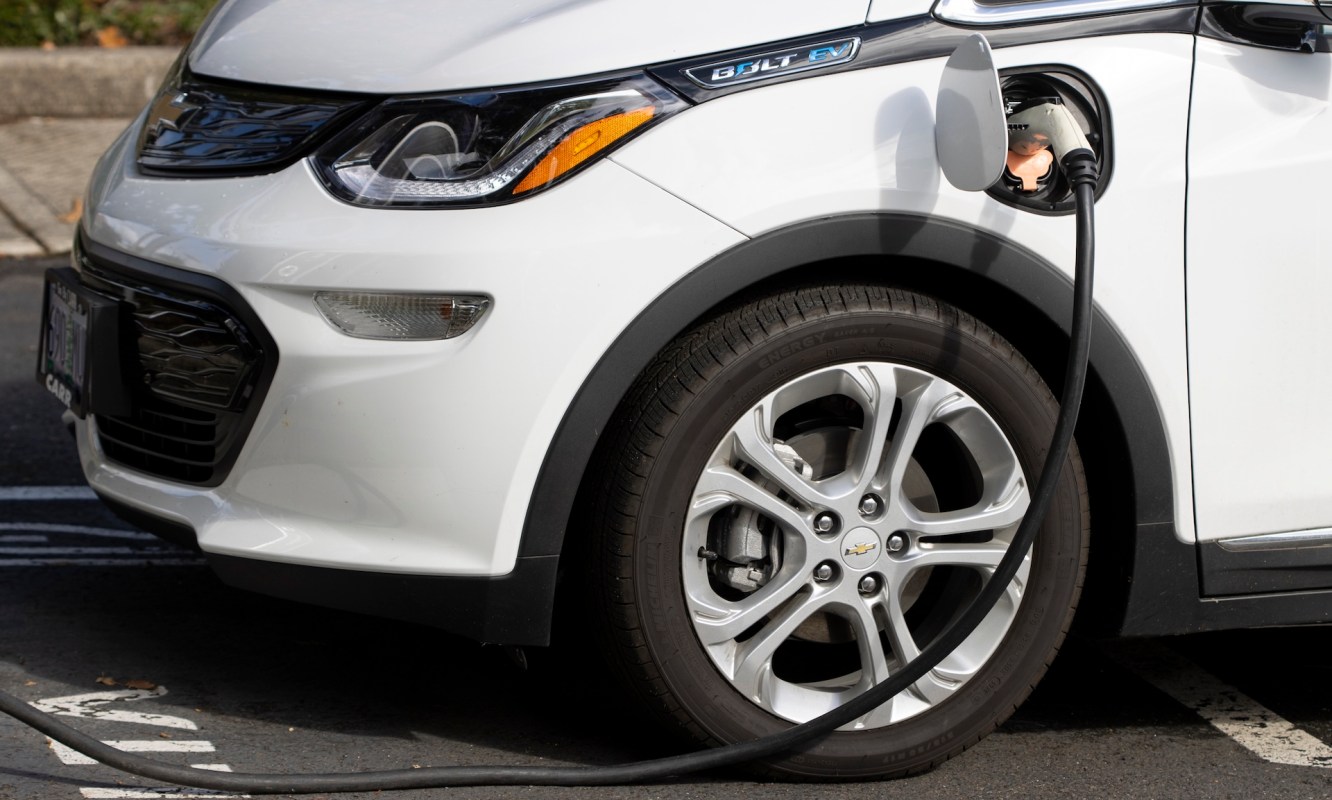
One Chevy Bolt owner turned to the r/evcharging subreddit after charging a 2020 model at home for 13 hours a day, asking how to estimate the cost to the family electricity bill.
The consensus was to use math, rather than an electronic device.
Here's what to know
"Electricity in my area is about $0.19/kWh," the original poster wrote. "How do I calculate an approximate idea of what I owe additionally on the electric bill to my parents?"
Several people said the simplest estimate would come from the car's own data.
One popular suggestion was to work backward from driving instead of charging time. Use a month's mileage, convert it into energy based on the car's miles-per-kilowatt-hour figure, then add a cushion for charging losses before applying the electric rate.
"If you drive 1,000 miles a month and the car shows 3.2 miles/kWh for a month, you divide 1,000 by 3.2 to get 312.5 kWh used from the battery in that month," a user added. "Then add 20% for inefficiency in charging, which is an overestimate but reasonable, to get 375 kWh total used."
TCD Picks » Quince Spotlight
💡These best-sellers from Quince deliver affordable, sustainable luxury for all




Using a rate of $0.19 per kWh, that came out to $71.25.
Because the Bolt tracks efficiency on each trip, one commenter pointed out that the owner could simply reset that reading monthly.
"Each trip odometer has its own efficiency," they wrote. "So you can literally record the trip and the efficiency and reset it about once per month to pay Mom and Dad."
More background
Another rough method focused on charger output instead of mileage. If the setup supplied about 1.5 kilowatts, then charging hours can be turned into kilowatt-hours by multiplying by 1.5.
Using that estimate, one commenter said 8-amp charging worked out to 12.2 kWh per day, or around $70 per month, while 12 amps would be $105 per month.
Outlet meters came up as well, but the idea drew pushback from people who said plug-in devices are not a great fit for the continuous load of EV charging.
"HARD DISAGREE," one user wrote. "You'll get nothing but meltdown and fire putting any of these devices in series with your Level 1 charger."
What can be done?
A good first step is to see whether the Chevy app keeps a record of charging totals. If it does, the calculation is simple. Total the kilowatt-hours and multiply by the household electricity rate.
If the app does not provide that data, estimating from monthly driving may be the easiest fallback. If part of the charging happened somewhere other than home, that share should be subtracted before settling up.
The discussion also raised the question about whether the payment should cover only the electricity used or also part of the bill's fixed charges.
"Get your parents involved with the plan so they actually understand what you're doing," one user said.
Where can I learn more?
Drivers and researchers have shared their own findings on the cost of charging.
• Across the U.S., home EV charging often costs just 5 to 6 cents a mile.
• One Tesla owner found charging at home was best after tallying fill-up costs.
• In Washington, a driver found the EV math hard to ignore against $5.35 gas.

Get TCD's free newsletters for easy tips, smart advice, and a chance to earn $5,000 toward home upgrades. To see more stories like this one, change your Google preferences here.






