


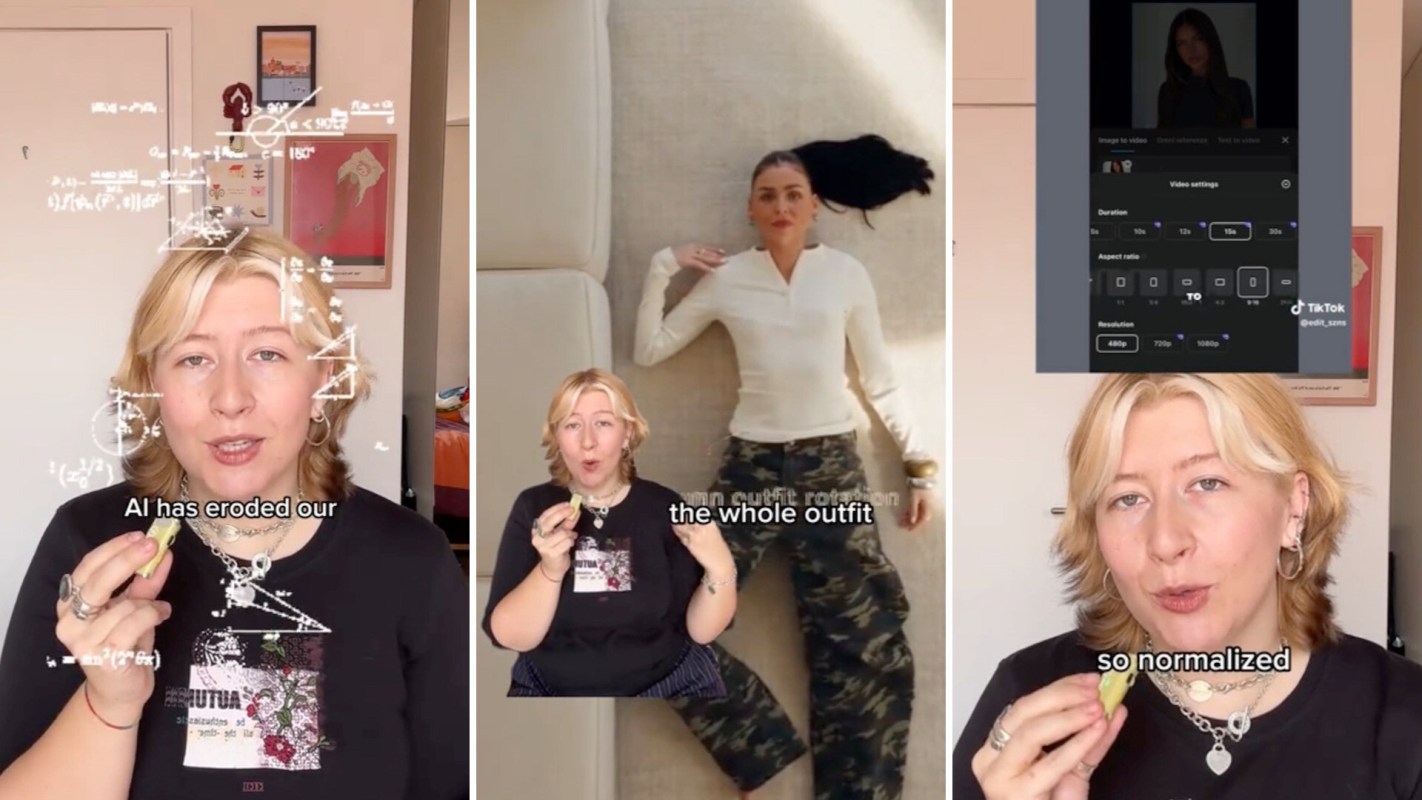
In a TikTok video, slow-fashion content creator Lottie (@LottieLAshley) warned that artificial intelligence-generated fashion clips are blurring the line between styling inspiration and deception.
Here's what to know
"This grim AI fashion trend is EVERYWHERE," Lottie wrote of the trend that she explored in the post.
@lottielashley This grim ai fashion trend is EVERYWHERE 🤢 #fastfashionsucks #2026trend #latesttrend #fashiontrend #fantrend ♬ original sound - Lottie🐞
Fashion videos that use a fan effect where outfits look especially polished and hyperrealistic are trending. But Lottie said these videos use AI to generate the outfits and fan effect.
To the creator, that means influencers are trying to sell shoppers an illusion. People making these videos are presenting garments that "do not look like that in real life."
Lottie also pointed out the troubling reality that the human part of fashion is eroding. She said influencers are turning over the trends to AI to decide on outfits and letting the tools produce the looks.
Lottie added that as a result of influencers simply adding uploads of their face and the outfits into the AI tools, everyone looks quite "skinny and slim." In other words, this is a subtle way in which AI says skinny is "in" and feeds into fatphobia.
TCD Picks » Quince Spotlight
💡These best-sellers from Quince deliver affordable, sustainable luxury for all




Many viewers said they had no idea the videos featuring the fan effect were artificial.
A TikTok user commented, "It was AI!?!?! Wth I'm getting duped every day."
More background
Fast fashion already depends on speed, volume, and impulse buying. If AI-generated outfit videos make cheap clothing look better than it really is, shoppers may be more likely to buy pieces that disappoint when they arrive.
Lottie suggested that now AI is operating in fashion without pushback from humans. As part of that concern, Lottie referenced a Guess AI advertisement from 2025 that sparked outrage.
Now, she suggested audiences may be growing numb to manipulated visuals, as there is little awareness or anger over influencers' increasing reliance on it.
What's being done
Companies and influencers are supposed to disclose when AI is being used as part of their posting. Lottie indicated that they are finding ways to evade clear labeling in a response to the viewer who said they were being "duped."
"They hid the little AI tag in the hashtags," Lottie wrote in a reply to a comment.
Lottie did note that "a few creators are doing none ai ones though which is cute but most are ai." A viewer added that they also found a tutorial on doing the trend without the use of AI.
Calling out when this happens can discourage people and companies from creating AI-generated videos and other content. Still, commenters on the post were seeing the situation as pretty bleak.
"So art, creativity, personality, everything that makes us human is being silenced?" a TikTok user lamented.
Where can I learn more?
Lottie isn't the first observer to sound the warning about how AI and other marketing tactics are changing what shoppers see in fashion.
• Mango faced backlash after replacing human models with AI in fashion campaigns.
• H&M's digital twin practice intensified calls for rules around synthetic fashion imagery.
• Across fashion marketing, what's real and what isn't is getting harder to parse.

Get TCD's free newsletters for easy tips, smart advice, and a chance to earn $5,000 toward home upgrades. To see more stories like this one, change your Google preferences here.






