


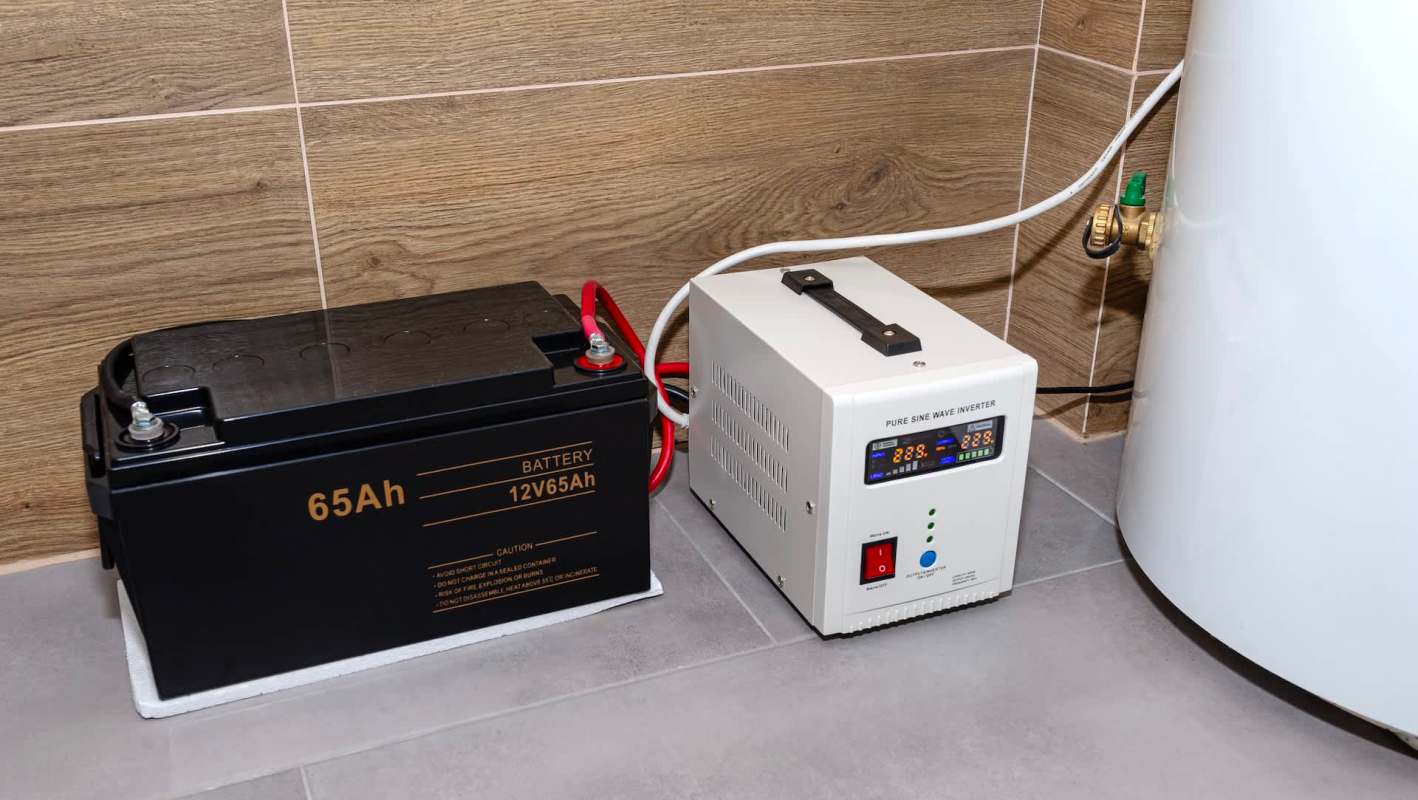
For one Reddit user planning a budget backup-power setup, the challenge was fitting the key pieces together for less than $1,000. Their outline included an RV LiFePO4 battery, a second battery, an inverter, and a small dual-fuel generator, with solar panels to be added later.
The replies quickly made clear that one overlooked component could make or break the whole system during an outage: a battery charger.
Here's what to know
On r/preppers, Reddit users discussed the practical side of building a small emergency setup around essentials, not whole-home power. The original poster described the goal simply, saying, "I just want some sort of power, likely just for the fridge."
The most helpful responses zeroed in on power demand and recharge planning instead of brands. One commenter wrote, "The inverter should be sized around your peak power draw, not just your battery capacity. For a fridge, you'll want to account for the compressor startup surge too." The same commenter added that "A 2800W generator should be plenty for charging a small battery bank, assuming your charger is appropriately sized."
Later in the thread, the OP acknowledged the missing part directly: "the battery charger is something my brain just apparently glazed right over!"
If you're weighing a DIY build against a permanent setup, it's worth exploring EnergySage for information on home battery storage options, including competitive installation estimates. EnergySage has teamed up with the electrification brand Qmerit to guarantee you get the best price on home battery storage solutions. Another option is Pila, whose plug-and-play batteries cost a fraction of what a whole-home backup system would.
More background
Many commenters said a true whole-home backup system would sail past a $1,000 budget once you factored in batteries, cabling, fuses, solar hardware, and charging equipment. But that was a bigger setup than what the poster was asking for.
That smaller target is much more achievable. A backup box for a fridge and a few lights can still prevent food from spoiling and reduce how long a generator needs to run on gasoline or propane.
Save $10,000 on solar panels without even sharing your phone number Want to go solar but not sure who to trust? EnergySage has your back with free and transparent quotes from fully vetted providers in your area. To get started, just answer a few questions about your home — no phone number required. Within a day or two, EnergySage will email you the best options for your needs, and their expert advisers can help you compare quotes and pick a winner. Solar panels can save you more than $50k over their 25-year lifespan, and EnergySage can help you save as much as $10k on installation. Which begs the question — isn't that worth an email or two? |

Recalling a past extended outage, one commenter wrote, "I had a small power bank (Anker C1000, 1024Wh, 2000watt output) that I used to power the fridge and lights and our aquarium…The best part about this is that you don't have to constantly run the generator. You can limit it to just a few hours a day."
People in the thread also pointed out a few technical details that can become costly if ignored. One reply warned anyone adding a second LiFePO4 battery to check compatibility first, because "Matching voltage, chemistry, and ideally capacity/age will save you some headaches." Another commenter said low-temperature charging cutoffs are important if the system will be stored somewhere cold.
Where can I learn more?
• An energy expert said the most inexpensive backup still beats overbuilding for short outages.
• Next-generation portable batteries showed startling outage capabilities while staying close to a four-figure budget.
• Pila built a fridge-saving battery that plugs into a standard outlet.

Get TCD's free newsletters for easy tips, smart advice, and a chance to earn $5,000 toward home upgrades. To see more stories like this one, change your Google preferences here.






