


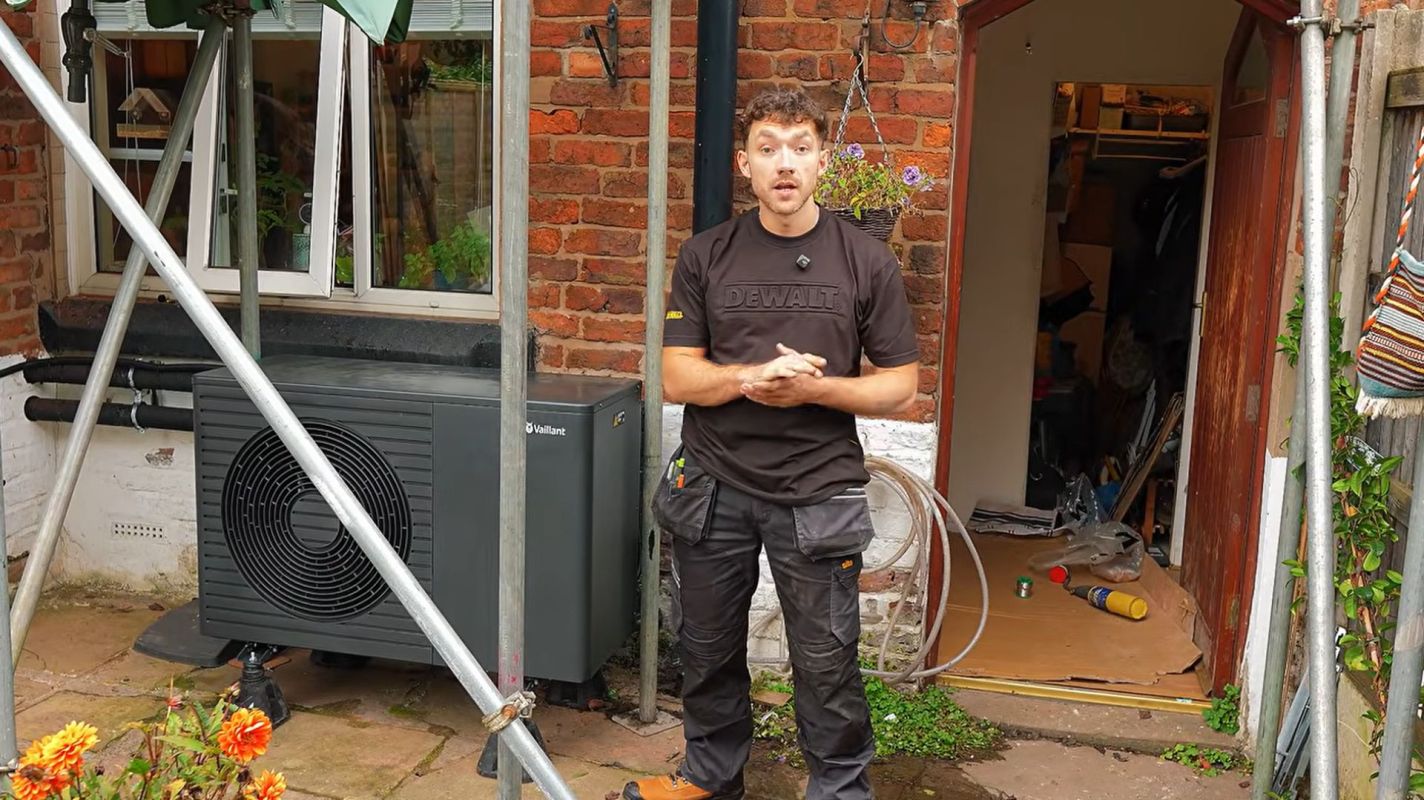
A heating retrofit in Stockport, England, is challenging the idea that a historic house has to be torn apart before switching from a gas boiler to an energy-efficient heat pump.
On YouTube, Lloyd's Gas & Renewables (@LloydsGasRenewables) broke down how the broader payoff of reducing utility costs and softening the impact of future energy-price increases was well within reach for the owners of a house from 1872.
Here's what to know
Lloyd's Gas & Renewables explained that the house was originally built for mill workers. The new owners were doing a complete renovation and taking the "right steps" to reduce utility bills.
One of those steps included switching to a heat pump for heating and cooling. That may sound like a major undertaking, but the installer said it is a "common misconception" that older houses can't transition to modern technology without ruining their character.
"What most people think when we're coming into a property like this, 'it's all floors up. It's all new pipe runs. … And it's loads of damage, and it's loads of disruption.' And it's just not the case," he explained. Instead, the crew focused on a limited set of updates, including a 22-millimeter flow-and-return line and 15-millimeter pipework to the radiators.
For homeowners exploring similar upgrades, Palmetto can help you understand your HVAC options and slash your energy bills with new, efficient HVACs and heat pumps. Its Comfort Plan network can help connect you with vetted installers.
More background
The project challenges two common myths: that older houses are poor candidates for heat pumps and that the equipment needs a lot of indoor room.
For this installation, the hot-water cylinder went into an outbuilding. The installer said similar cylinders can also be placed in kitchen cupboards, wardrobes, lofts, garages, or outhouses.
Save $10,000 on solar panels without even sharing your phone number Want to go solar but not sure who to trust? EnergySage has your back with free and transparent quotes from fully vetted providers in your area. To get started, just answer a few questions about your home — no phone number required. Within a day or two, EnergySage will email you the best options for your needs, and their expert advisers can help you compare quotes and pick a winner. Solar panels can save you more than $50k over their 25-year lifespan, and EnergySage can help you save as much as $10k on installation. Which begs the question — isn't that worth an email or two? |

To meet the flow rates specified in the design, the team also added four new radiators.
According to the video, the homeowner is also planning to add solar panels and battery storage in hopes of further lowering monthly energy costs.
What can be done?
With good design, properly sized emitters, and careful pipework changes, a retrofit can make a major difference without requiring a total teardown.
Timing also matters. The installer said renovations are often the ideal time to electrify, since any radiator swaps or pipework changes are easier to handle before finishes are completed.
Palmetto also offers another route for homeowners who want lower bills without paying everything up front. Palmetto's Comfort Plan includes $0-down options that can lower your heating and cooling costs by up to 50%, along with 12 years of free maintenance.
Homeowners can pair solar panels with electric appliances, like efficient HVACs, to drive their utility costs even lower. EnergySage offers free tools that let you compare competitive bids from local installers without giving up your contact information unless you choose to move forward. It can help you find the best system for your home and budget, saving you up to $10,000 on installations.
Where can I learn more?
For a closer look at how other households handle the switch, these stories explore older homes, costs, and installation tradeoffs.
• In the U.K., one homeowner found the switch gets messy even with a highly efficient heat pump.
• In a pre-WWI building, renovators delivered a myth-busting project for heat pump skeptics.
• Across Britain, officials proposed free home upgrades aimed at cutting household energy bills.
• Through EnergySage, homeowners can use their own expert energy adviser to compare heat-pump options.
• One homeowner wondered whether heat pumps actually save money before replacing their older heating equipment.

Get TCD's free newsletters for easy tips, smart advice, and a chance to earn $5,000 toward home upgrades. To see more stories like this one, change your Google preferences here.






