


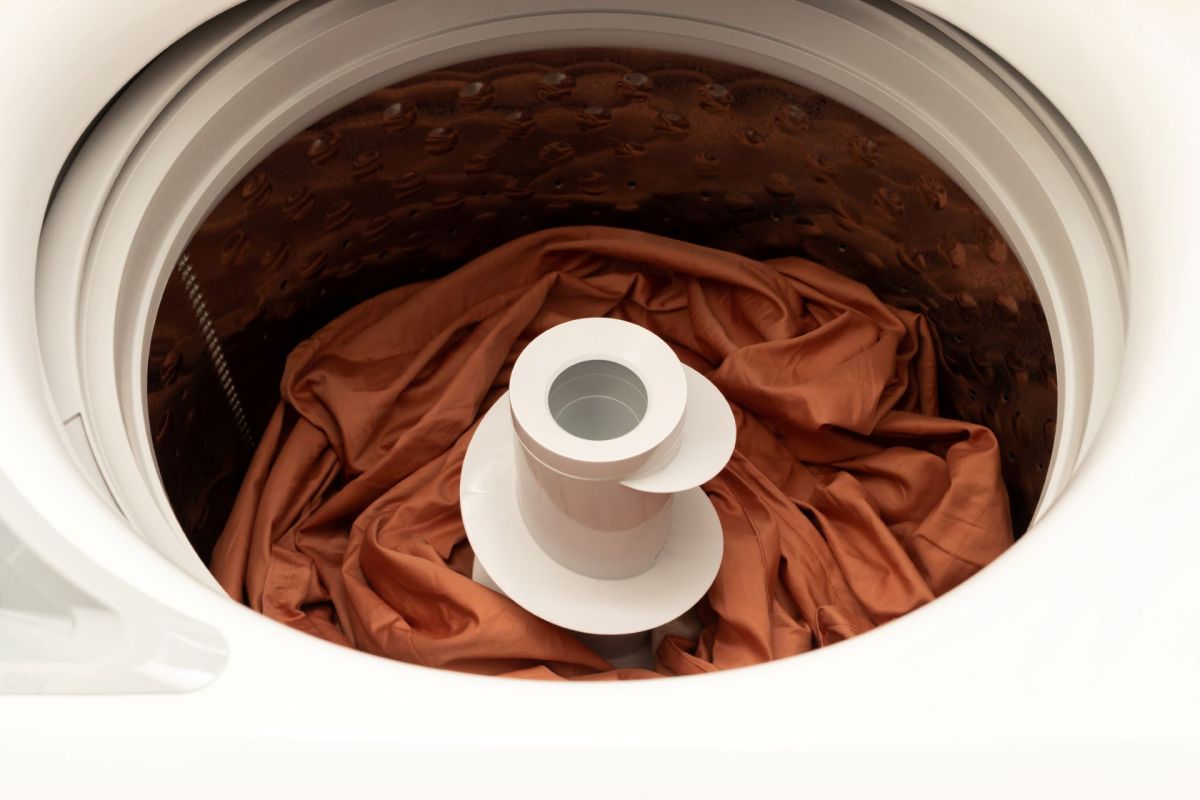
A video is drawing attention online for pointing out a simple yet effective feature on a 40-year-old GE washing machine and arguing that this is the kind of practical design that modern equipment lacks.
However, while people tend to wax nostalgic about the arguably better build quality of products from yesteryear, the clip also sets up a contrast between the appeal of older machines that were easier to clean and repair and the environmental concerns that such machines raise.
Here's what to know
In a TikTok post, small business McMullan Appliance and Mattress (@mcmullanappliance) shows an older GE washer taken from a customer's house.
@mcmullanappliance They don't make them like they used to. This old GE washing machine would circulate the wash water through an incredibly simple, effective, removable, cleanable, replaceable, and unscrewuppable lint filter. Did you have one of these doing your laundry? Did you know that since the majority of textiles are synthetic every single washer and dryer unavoidably become one of the top micro plastic generator? Every time you wash an article of clothing with synthetic content thousands of micro plastics are pumped down the drain or past your dryer filter and into the environment. That is why I believe that indoor dryer vents are a significant health hazard. Would a lint filter like this prevent that? HELL NO. If you had a filter fine enough to capture micro plastics you wouldn't be able to drain your water or dry your clothes. ##appliances##lint##microplastics##pollution##filter ♬ original sound - McMullan Appliance & Mattress
The system included a simple yet effective feature that moved wash water through a lint filter that could be removed, cleaned, and replaced. The filter was capable of catching hair and lint and keeping it separate from the laundry.
However, the post then takes an unexpected twist, using that feature to highlight the problem of microplastics being released into laundry water.
"Every time you wash an article of clothing with synthetic content thousands of micro plastics are pumped down the drain or past your dryer filter and into the environment," the video's caption said.
TCD Picks » Quince Spotlight
💡These best-sellers from Quince deliver affordable, sustainable luxury for all




These microplastic particles are much smaller than what an accessible filter like the one shown in the video was meant to trap.
"Would a lint filter like this prevent that?" the caption asked rhetorically. "HELL NO."
In fact, no such filter could exist.
"If you had a filter fine enough to capture micro plastics you wouldn't be able to drain your water or dry your clothes," McMullan Appliance said.
They don't make them like they used to
Despite the warnings about microplastics, many of the video's comments focused on the supposedly better quality of products made in the past.
"Back when stuff could be reasonably repaired and made to last," said one commenter.
"Now you're lucky if they last five years," said another.
Where can I learn more?
These stories take a closer look at the issue of microplastics being released while doing the laundry. They cover new filters, household microfiber risks, and simple maintenance that can keep machines running longer.
• At Penn State, engineers are testing clever ways to trap microplastics in washer wastewater.
• A fish-inspired design won $169,000 for capturing laundry microplastics before they leave home.
• Synthetic clothes shed tiny airborne and waterborne fibers that can end up in people.
• A simple habit can help owners add years to a washing machine's life.
• Repair pros warn fabric softener can freeze inside washer parts and cause damage.

Get TCD's free newsletters for easy tips, smart advice, and a chance to earn $5,000 toward home upgrades. To see more stories like this one, change your Google preferences here.






